What to Eat in Hoi An: Beyond Cao Lau and Chicken Rice
Beyond cao lau, Mi Quang and chicken rice, Hoi An's own dishes include banh dap with stir-fried clams, white rose cakes, banh xoai, Cam Nam corn che and the Tet cakes banh no and banh to. Banh mi is the one to check yourself: the shop reports found date from 2015.
In this guide
- The dishes at a glance
- Banh dap and hen xao: crackers, clams and a river island
- White rose cakes: a dish unique to Hoi An
- Banh xoai: a mango-shaped cake with no mango
- Che bap: corn soup from Cam Nam
- Banh no and banh to: the Tet cakes
- Banh mi: the one to check yourself
- Dishes the site already covers
- How to put a day together
- Common questions
Hoi An’s food is more than the three bowls everyone names. Besides cao lau, Mi Quang and chicken rice, the old port has a second shelf of small, local things. There are cakes steamed in a flower shape and a sandwich of rice crackers eaten with clams. There is sweet soup from the river island, and there are the sticky-rice sweets that Quang families put on the altar at Tet. This guide covers those dishes, and sends you to the full article when the site already has one.
The dishes at a glance
| Dish | What it is | When and where | Price |
|---|---|---|---|
| Banh dap with hen xao | Wet rice cake pressed between two grilled rice crackers, with stir-fried clams | Cam Nam, on the Thu Bon river | No sourced price |
| White rose cakes (banh bao banh vac) | Translucent, flower-shaped rice dumplings with shrimp or pork filling (as of April 2019) | The White Rose restaurant, 533 Hai Ba Trung Street (as of April 2019) | VND 3,000 at the source and VND 5,000-7,000 elsewhere (as of April 2019) |
| Banh xoai | Sticky-rice cake with peanut and sugar or sesame filling, no mango | Sold by street hawkers and small stalls | No sourced price |
| Che bap | Sweet corn soup from Cam Nam corn | Eaten hot, especially on a rainy afternoon | No sourced price |
| Banh no | Puffed sticky rice set in ginger sugar | Tet, from the tenth lunar month | No sourced price |
| Banh to | Sticky rice and sugar cake | Offerings, Tet and festivals | No sourced price |
| Banh mi | Hoi An’s bread rolls, famous through one shop | See the banh mi section | Unverified |
Banh dap and hen xao: crackers, clams and a river island
If you only try one new thing, make it banh dap.
It is a piece of wet rice cake set between two thin grilled rice crackers, and the wet cake inside is smeared with mashed mung bean before the whole thing is pressed together. The “dap” in the name means to beat: the maker taps the layers lightly by hand so the two crackers stick together. The usual partner is hen xao, stir-fried small clams, and the proper dip is nuoc mam cai, made from sugar, fried shallot, chopped pineapple, garlic and green chilli.
The clams come from Cam Nam, the land on the Thu Bon river where Con Hen (Clam Islet) lies. The little clams there have sweet, fragrant meat.
Hen xao eaten with rice cracker began as a countryside snack and became a speciality for visitors, served with pepper, chilli, lime and rau ram and a crisp black-sesame cracker. A 2015 VnExpress guide pointed to a shop called Ba Gia in hamlet 1 of Cam Nam commune for this dish; it is a lead, not a current recommendation, so confirm it is still open.
White rose cakes: a dish unique to Hoi An
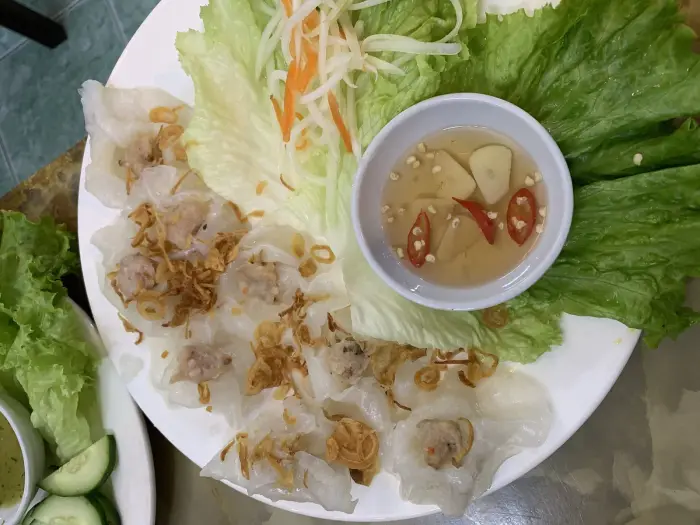
White rose cakes are a regional specialty unique to Hoi An. The wrapper is translucent and pinched into a flower, which gave the dish its English name. There are two kinds on one plate: banh vac is mainly shrimp, banh bao is pork with local seasoning. The shrimp filling is pounded river shrimp with pepper, garlic, shallot and lemongrass; the pork one uses pork, wood-ear mushroom and spring onion.
The cakes were made at the White Rose restaurant at 533 Hai Ba Trung Street, in a 2019 report. Other Hoi An shops order from it and resell, because people who tried to make their own failed to get the taste right. The price then was VND 3,000 each at the source and VND 5,000-7,000 elsewhere, as of April 2019. That is old money, so ask before you order.
Banh xoai: a mango-shaped cake with no mango
You will see banh xoai on the stalls of street hawkers and small roadside shops. Despite the name there is no mango in it; the name comes from the cake’s look. It is made from sticky-rice flour, sesame or sugar, and peanuts. No document records when it began, though local memory places it before 1975. Treat it as a pocket snack to buy as you walk, not a sit-down dish.
Che bap: corn soup from Cam Nam
The corn for che bap is grown in Cam Nam, on land built up by Thu Bon river silt, the same riverside district that gives banh dap its clams. Cam Nam still had nearly 100 corn-growing households in a July 2026 report, and a Cam Nam corn festival, reported in 2018, lets visitors cook dishes such as che bap themselves.
How it is cooked is where accounts differ. One July 2026 account cooks the corn with pandan leaf and sugar and no coconut milk at all, yet the same page later mentions the light richness of coconut milk in the cooled soup. So if you care, ask the seller. People in Hoi An usually eat it hot, especially on a lightly rainy afternoon.
Banh no and banh to: the Tet cakes
These two belong to the calendar rather than to a stall. Banh to is made from two main ingredients, sticky rice and sugar, and it has long been part of Quang offerings, Tet, festivals and welcoming guests. One report names it as made with dark sugar and fragrant sticky rice.
Banh no is the puffed one. It is made from sticky rice, white sugar, ginger and salt.
The rice is roasted until the grains burst, then picked clean of leftover husk. It is mixed into cooled ginger sugar, pressed into square moulds and dried over charcoal.
Tan Tho village in Duy Chau commune, Duy Xuyen district, is the only place in Quang Nam still keeping the traditional craft, as of January 2024. Its families start from the beginning of the tenth lunar month, and people buy the cakes to offer to their ancestors at Tet. Because it is a seasonal craft, expect to find it near Tet, not all year.
Banh mi: the one to check yourself
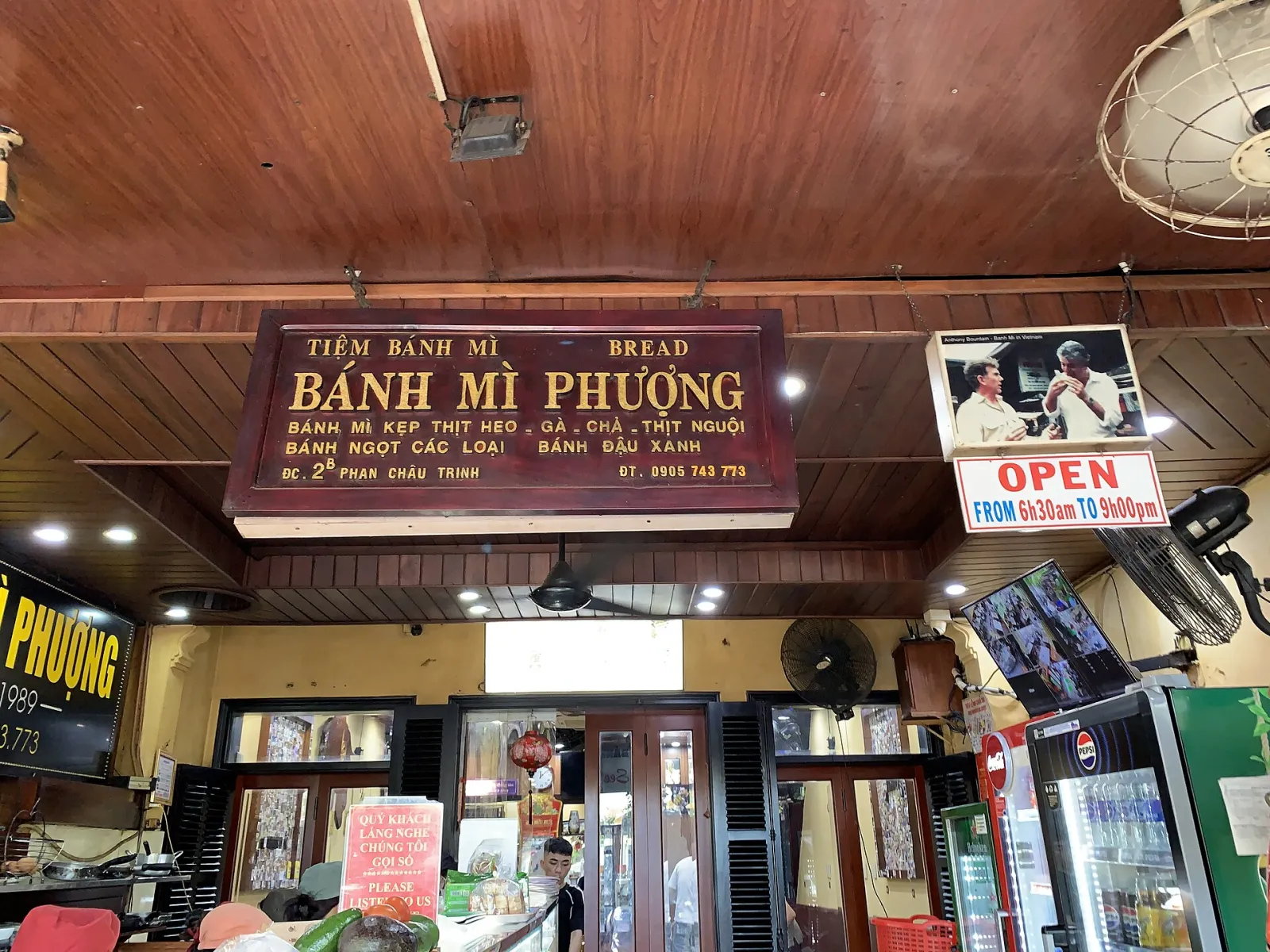
Banh mi is where we have the least to stand on. In 2015 VnExpress wrote that mention of Hoi An banh mi makes everyone think of Banh Mi Phuong, praised by foreign food experts.
The same piece put Madame Khanh on Tran Cao Van Street, a little away from the old quarter, a tiny shop with a plain cabinet. Tourists had nicknamed it the “Banh mi Queen”. Both reports are old, so we give no address, hours or price. Look both shops up on a map app before you walk over.
Dishes the site already covers
- Cao lau: the noodle of Hoi An town, chewy, dark yellow, made with ash water and eaten with pork, sprouts and herbs. Start here if you have one bowl.
- Mi Quang: the broad rice noodle of Quang Nam with a little thick sauce, peanuts and a sesame cracker; the article follows it to Phu Chiem village.
- Hoi An chicken rice: rice cooked in chicken broth with shredded chicken and herbs.
- Che luc tau xa: the thick mung-bean sweet soup that came with overseas Chinese traders. Pair it with the corn che above.
- Banh beo: small steamed rice cakes in bowls, cut with a bamboo knife in Hoi An.
- Hoi An chilli sauce: the jar to take home, from one family’s old house.
How to put a day together
Start with cao lau or Mi Quang for breakfast, take banh beo or banh xoai in the afternoon, and finish the evening with white rose cakes and a bowl of che. If you can spare the time, add a trip to Cam Nam for banh dap and clams. If your trip falls near Tet, add banh no and banh to; otherwise they are mostly gifts and altar food.
For a wider list of places to eat in Da Nang and Hoi An see danangoi.com/places/ (opens in a new tab).
Photos (1)
- Chainwit., CC BY 4.0 (opens in a new tab)
Not confirmed: No current address, hours or price for Banh Mi Phuong, Madame Khanh or Ba Gia; the reports are old. No sourced price for banh no, banh to, banh xoai, corn che or banh dap. Corn che and coconut milk: accounts differ. No heritage-portal source for banh no, banh xoai or corn che.
Common questions
What are the must-eat dishes in Hoi An besides cao lau?
Mi Quang, chicken rice, banh beo and che luc tau xa have their own guides on this site. The ones covered here are banh dap with stir-fried clams, white rose cakes, banh xoai, Cam Nam corn che, and the Tet cakes banh no and banh to.
What are white rose cakes?
They are also called banh bao banh vac. The wrapper is translucent and shaped like a flower, with a shrimp filling for banh vac and a pork filling for banh bao. A 2019 report listed the White Rose restaurant at 533 Hai Ba Trung Street as the maker that other shops buy from.
Is banh xoai made from mango?
No. The name comes from the cake's look. It is made from sticky-rice flour, sesame or sugar, and peanuts.
When do people eat banh no?
At Tet. Buyers take it home to offer to ancestors, and the one Quang Nam village still making it by the traditional method begins around the tenth lunar month.
Where does Hoi An's corn che come from?
The corn is grown at Cam Nam, on land built up by Thu Bon river silt. A July 2026 report counted nearly 100 corn-growing households still there.
Is Banh Mi Phuong still the place for banh mi in Hoi An?
A 2015 VnExpress piece said that mentioning Hoi An banh mi makes everyone think of Banh Mi Phuong. We found no newer sourced report on its address, hours or prices, so check before you go.
Read next
- Cao Lau Hoi An: History, Noodle Makers and Three PlacesVerified 18 October 2026
- Mi Quang: Origins, Phu Chiem Village, How It Is Made and Three ShopsVerified 18 October 2026
- Hoi An Chicken Rice: Origins, How It Is Made, Ba BuoiVerified 1 November 2026
- Che Luc Tau Xa: Hoi An's Cantonese Mung Bean DessertVerified 18 October 2026
General information checked against the sources listed above. Ticket prices, opening hours and rules change; check with the place before you go. See how guides are checked.
Spotted an error? Report it.