Mi Quang: Origins, Phu Chiem Village, How It Is Made and Three Shops
Mi Quang is the rice-noodle dish of Quang Nam: sheets steamed from rice flour, cut by hand, with a little thick sauce, herbs, peanuts and sesame cracker. The name points to Phu Chiem village in Dien Ban. A decision of 9 August 2024 put it on the national heritage list.
In this guide
- What goes in a bowl of Mi Quang
- Why it is called Mi Quang
- How old is Mi Quang
- A village dish, not a city dish
- Phu Chiem village: where the noodle left on a carrying pole
- Eating it the right way
- How the noodle is made
- Versions: from shrimp and pork to crab and jellyfish
- National intangible cultural heritage
- Three shops worth the trip
- Nu Do (Nu Đồ), Ngu Hanh Son, Da Nang
- Ba Minh (Bà Minh), Hoi An
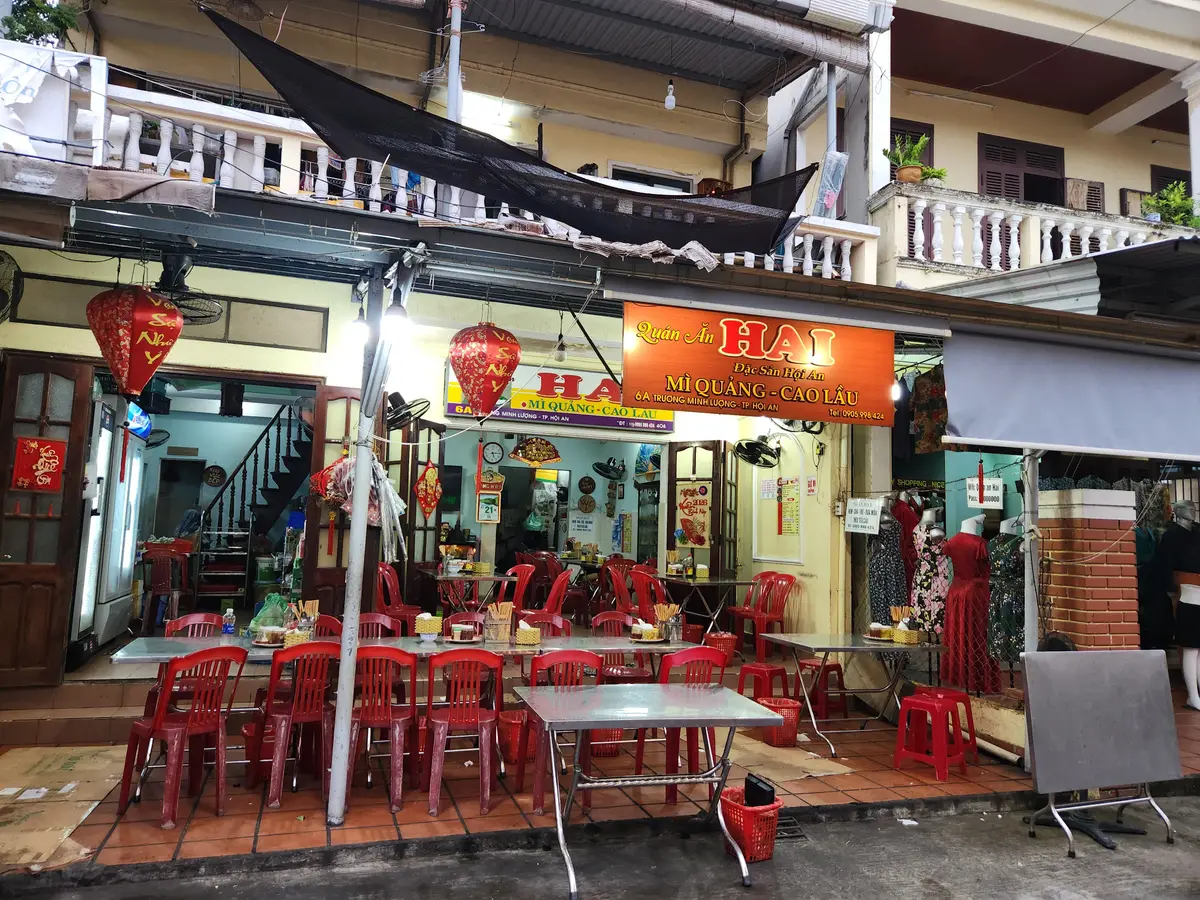
- Ong Hai (Ông Hai), Hoi An
- How much a bowl costs
- Common questions
What goes in a bowl of Mi Quang
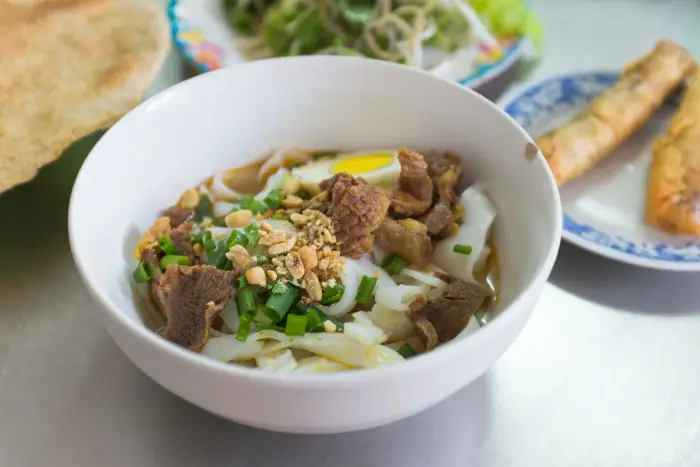
Mi Quang is a rice-noodle dish from Quang Nam. Connoisseurs line the bowl with fresh herbs, add the ivory-white noodles, ladle on just enough thick sauce, then mix everything together.
The sauce, called nhan (the filling), is the soul of the dish. Depending on the shop, it is shrimp simmered with pork, free-range chicken, or soft-shell river crab, a speciality of Nui Thanh. Fresh turmeric, lemongrass, pepper and pounded shallot fried in peanut oil season it.
On the side come fresh herbs, fish sauce, green chilli, sesame rice cracker, roasted peanuts and lime or vinegar. A proper bowl has crisp Tra Que herbs mixed with a little banana blossom and thin slices of banana stem. Leave out one of these and a true Quang person will tease the bowl at once.
Why it is called Mi Quang
“Mi Quang” is what outsiders call it. People in Hoi An and Quang Nam just say “mi”. The name is a recognition by the community of the dish’s Quang Nam roots.
VnExpress offers another reading: the name comes from the place that made this famous noodle, Phu Chiem village in Dien Ban. The two explanations do not exclude each other, and both lead back to the same land.
How old is Mi Quang
The date is unknown: no written source has been found that tells when the noodle appeared. A researcher at the Hoi An Heritage Management Centre looked at the ingredients, the method and the depth of tradition. His conclusion is that Mi Quang has been in Quang Nam for a very long time. Its age is closely tied to the age of the stone mills that grind rice batter.
The heritage dossier sets the dish in the busy trading port of Hoi An, 16th to 18th centuries. There it took in elements of several cuisines and formed its own identity. Chinese influence shows in the wheat-flour “Chinese noodle” and in the word mi. Japanese influence shows in udon.
Yet Mi Quang is a different dish. Those noodles are made from wheat flour, rolled into strands and boiled. Mi Quang is made from rice flour, steamed into round sheets, and only then cut into strands.
The method resembles the making of banh da in the north. Quang Nam cooks used an abundant local ingredient, rice flour, unlike northern wheat flour.
A village dish, not a city dish
In the past, noodle shops were never found in central Hoi An. The noodle was sold in the eateries of the market, or by travelling carriers who sat at some street corner every day.
The researcher describes Mi Quang and cao lau as dishes for two kinds of people: mi for ordinary villagers, cao lau for merchants and townsfolk.
Mi belongs to village life: it was made for death anniversaries. It also fed workers at harvest, when a house was built or a boat made.
The heritage dossier records it at everyday meals, festivals, Tet, death anniversaries and diplomatic events. In Hoi An the noodle used to be served in round earthen bowls. In Quang Ngai it was not warmly received and was made a little differently.
Phu Chiem village: where the noodle left on a carrying pole
Most Quang people say you have not eaten proper Mi Quang until you have eaten Phu Chiem noodles. Phu Chiem village in Dien Ban has become the “capital” of Mi Quang, with the trade kept through generations.
The village trade is the carrying-pole trade, and the pole led straight to Da Nang, which the French era still called Tourane.
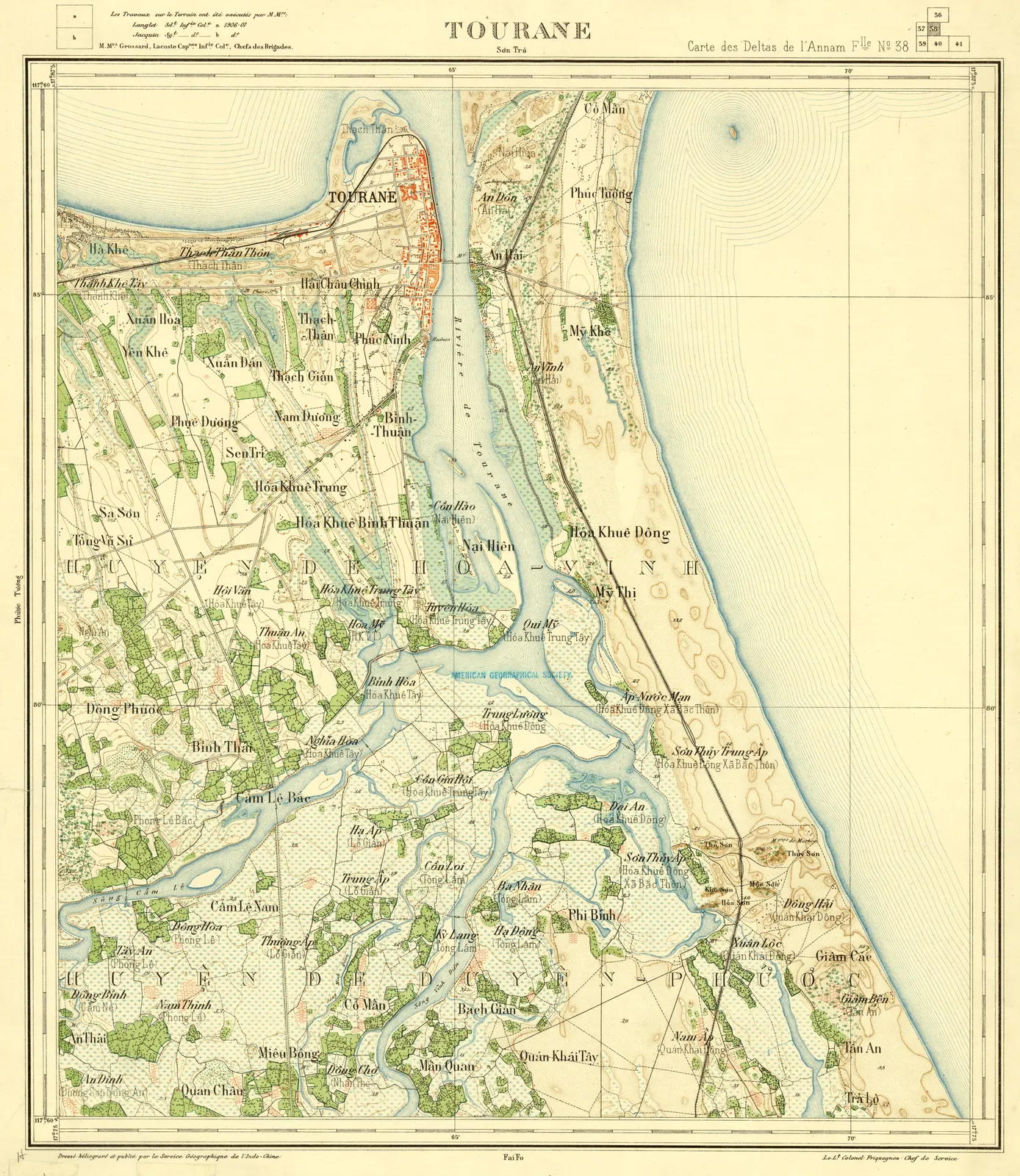
One end of the pole holds soft white noodles and fresh herbs, the other a glowing stove with a pot of hot sauce. No signboard is needed: connoisseurs know where it comes from. Every day, hundreds of carrying poles leave Phu Chiem, going as far as Tam Ky or out to Da Nang to sell.
The kilns of Phu Chiem stay lit, turning out thin white sheets that are still soft and chewy, from si rice grown along the Thu Bon river. The noodle is not cut by machine: skilled hands slice even, long strands.
The village sauce is thick and sweet from pounded fresh shrimp and field crab. A Phu Chiem bowl has red-simmered shrimp, pork with mild seasoning and one quail egg. The heritage dossier also notes quail eggs and finely ground peanuts in Phu Chiem style.
Eating it the right way
A bowl of Mi Quang is not a bowl of soup. Put the herbs at the bottom, the noodles on top, ladle on just enough sauce and mix. Beside it come sesame cracker, crunchy roasted peanuts, chilli, lime or vinegar. It can also be eaten without broth, as a salad.
Da Nang and Quang Nam both claim Mi Quang as a local treasure, so do not be surprised when both are proud of the same bowl.
How the noodle is made
The rice is soaked for 3 to 4 hours and ground fine with a stone mill. After just a few minutes, thin, tough, ivory-white sheets come out. The noodle, cooled by fan, keeps for 1 to 2 days without preservatives.
So the Mi Quang noodle is a sheet steamed first and sliced after, unlike strands rolled from wheat flour and boiled.
Versions: from shrimp and pork to crab and jellyfish
Mi Quang takes many fillings: chicken, shrimp and pork, snakehead, beef, frog, crab, jellyfish, vegetarian.
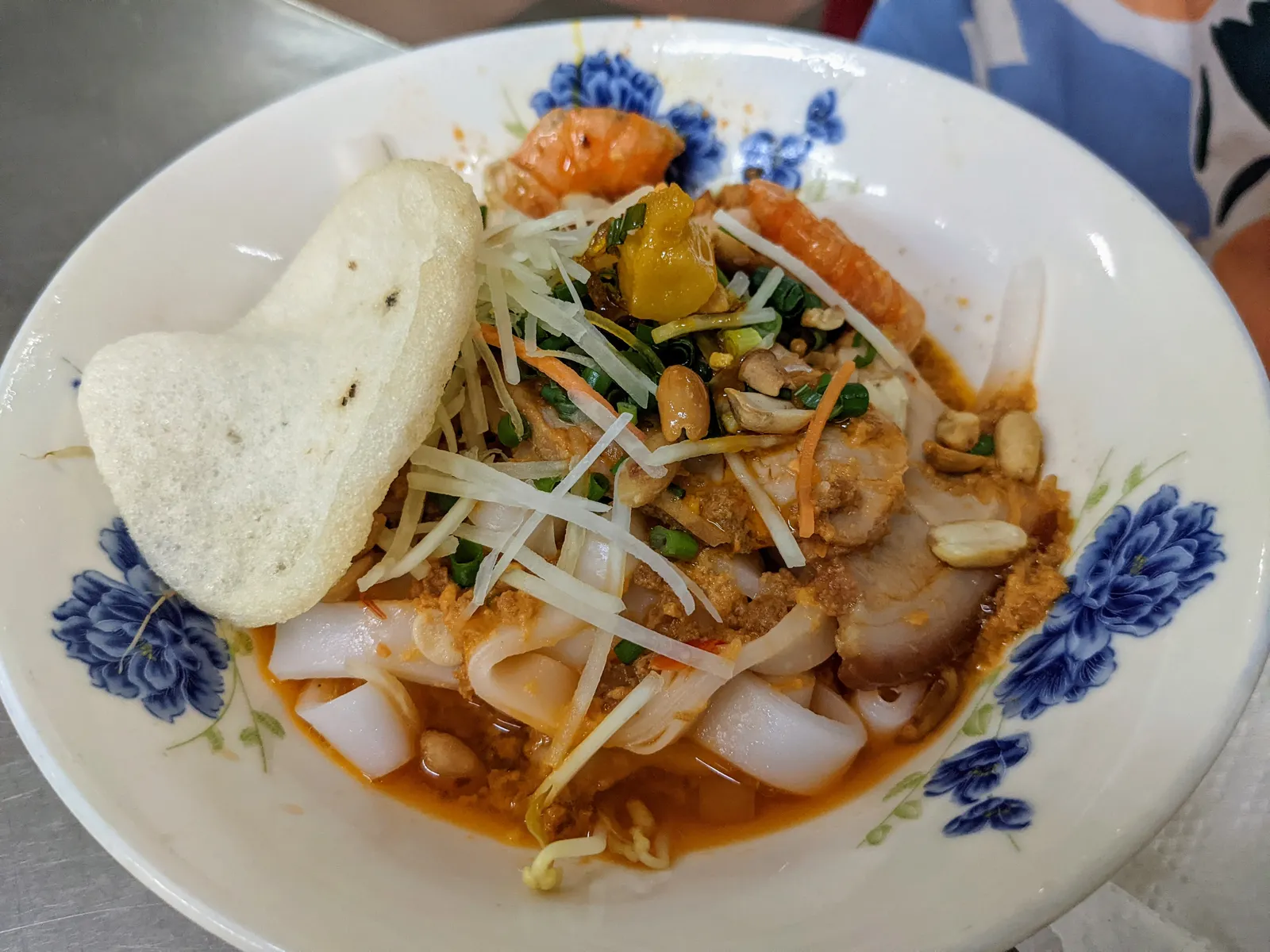
Hoi An added two things. Brackish estuary water raises shrimp, crab and fish of exceptional taste. And Hoi An gave Mi Quang its unusual jellyfish version. Once, noodle boats rowed around the river and estuary, a distinct mark of local food culture.
For the dish of Hoi An’s merchants, see Cao Lau.
National intangible cultural heritage
Mi Quang is on Vietnam’s national intangible cultural heritage list. The Ministry of Culture, Sports and Tourism entered it by a decision of 9 August 2024. The entry reads “Tri thuc dan gian My Quang tinh Quang Nam”: Mi Quang folk knowledge of Quang Nam province.
On 6 June 2025, Quang Nam province held the ceremony handing over the decision. Four households from Hoi An, Dien Ban, Duy Xuyen and Nui Thanh, representative of the trade, received it. In 2017, Prime Minister Nguyen Xuan Phuc invited Japan’s Prime Minister Abe Shinzo to Hoi An to taste Mi Quang.
Three shops worth the trip
The three shops here have a Google Maps rating of 4.5 or more and many reviews.
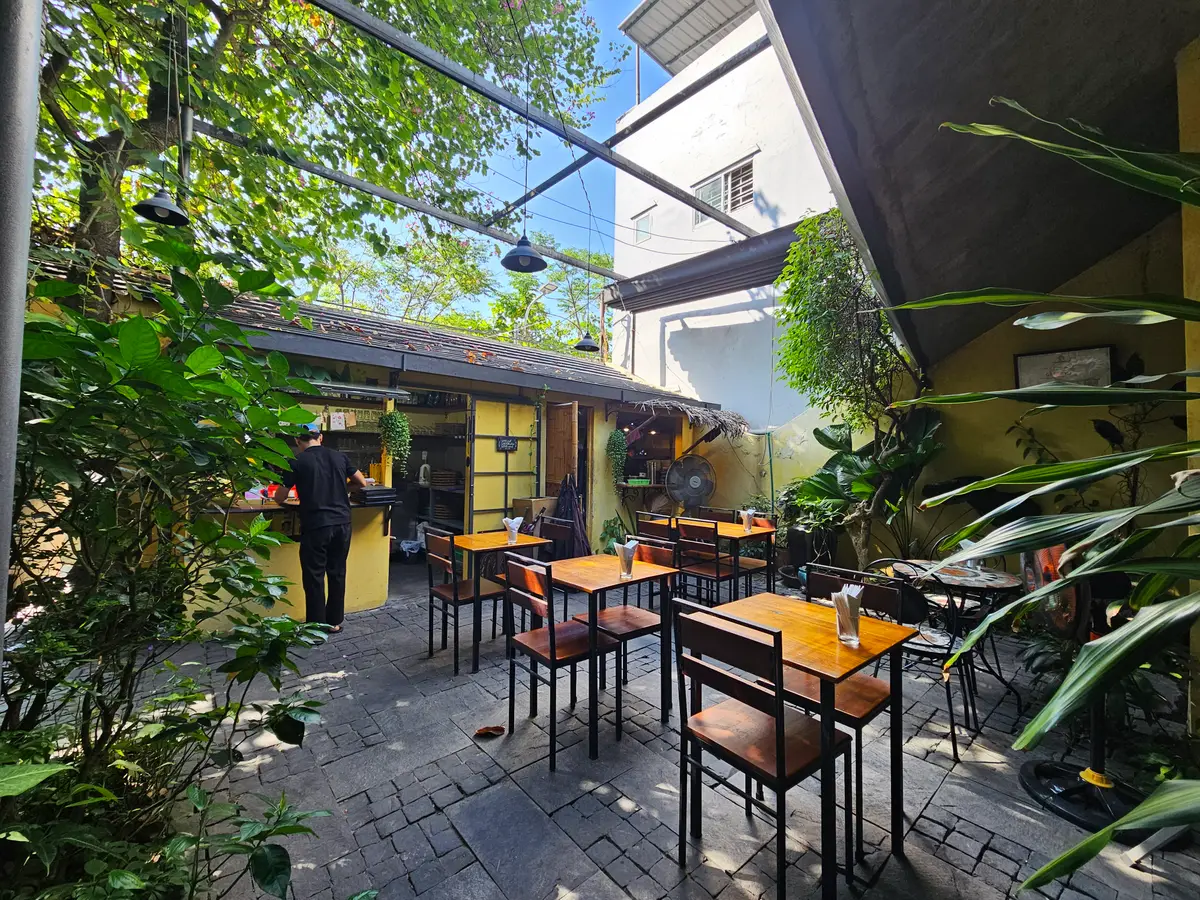
Nu Do (Nu Đồ), Ngu Hanh Son, Da Nang
The shop is at 11/1 Luu Quang Thuan Street, open 9 a.m. to 4 p.m.. Its Google Maps rating is 4.8 from 1,051 reviews. It serves four versions of the noodle in traditional bamboo baskets. MICHELIN inspectors say not to miss the snakehead fish version with its rich turmeric aroma.
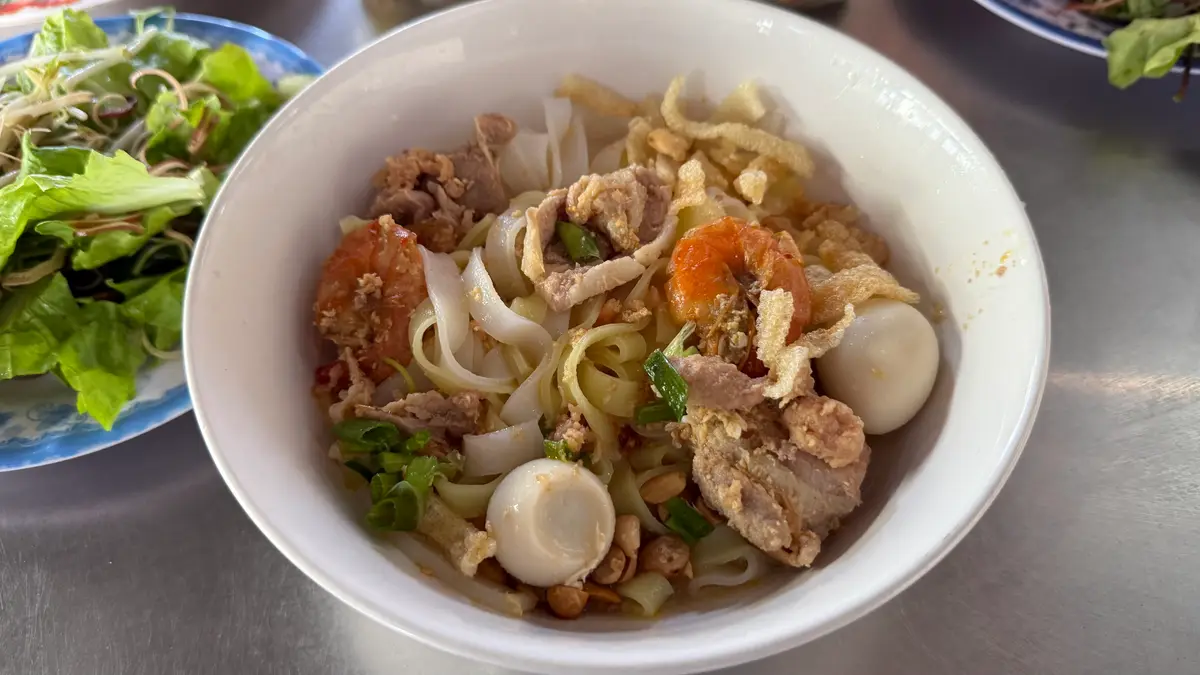
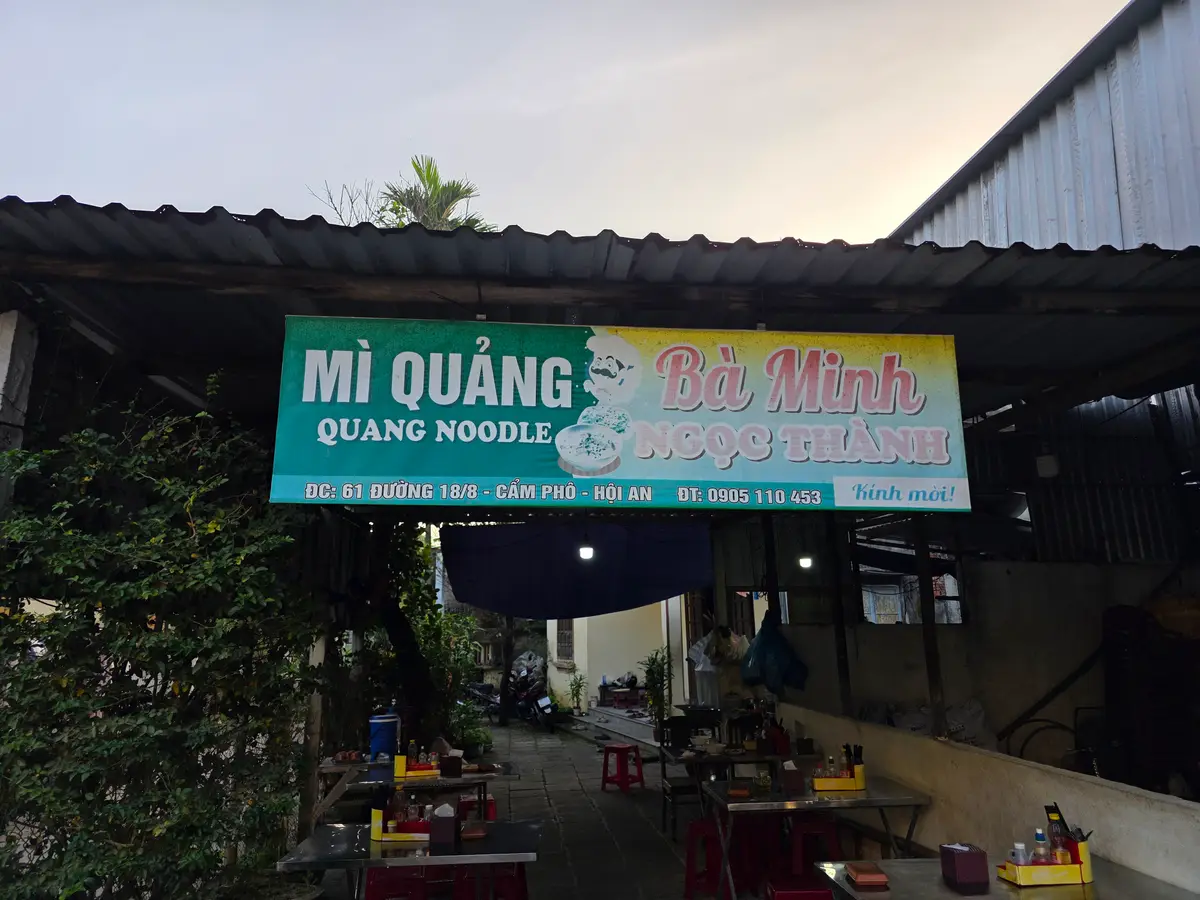
Ba Minh (Bà Minh), Hoi An
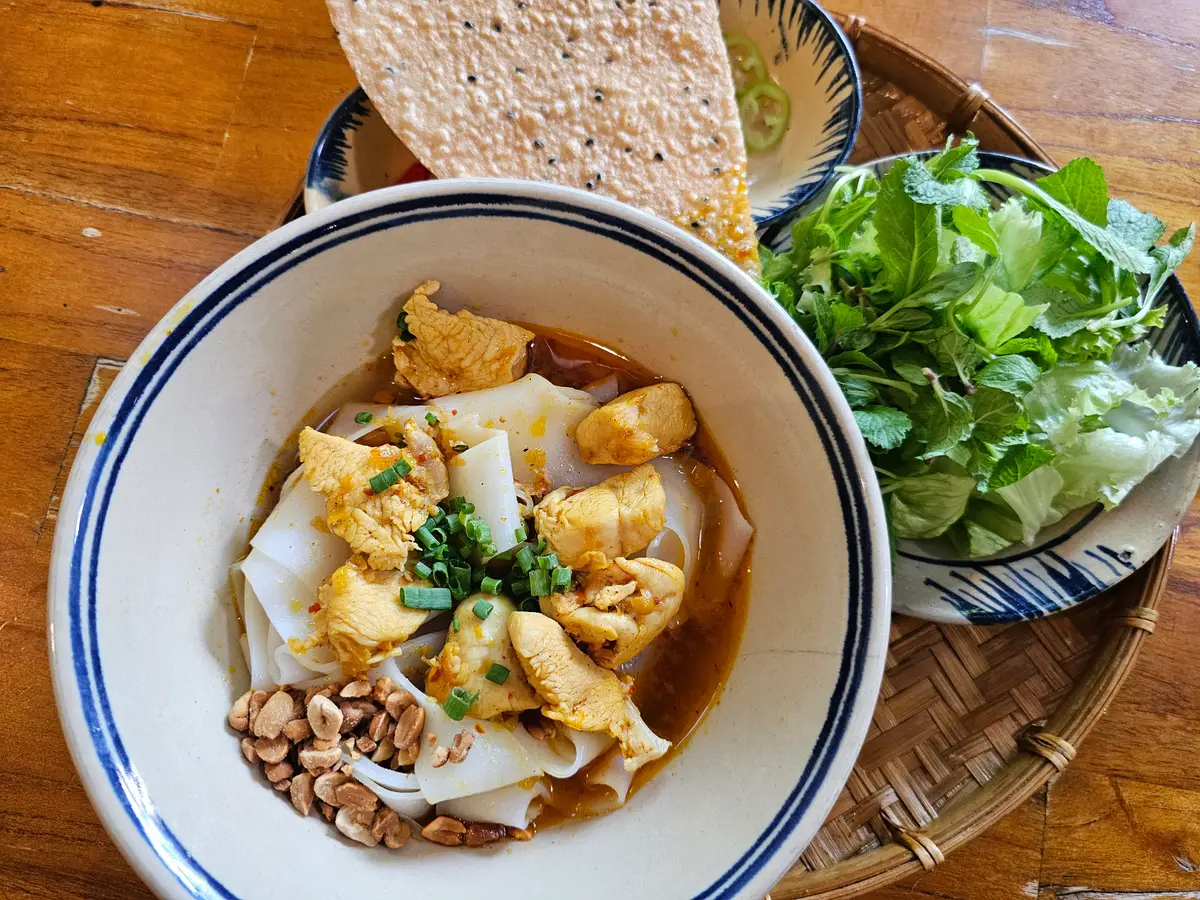
The shop is at 61 Duong 18/8 in Hoi An, open 6 a.m. to 10:30 a.m.. Its Google Maps rating is 4.9 from 265 reviews. It opens only in the morning, so go early.
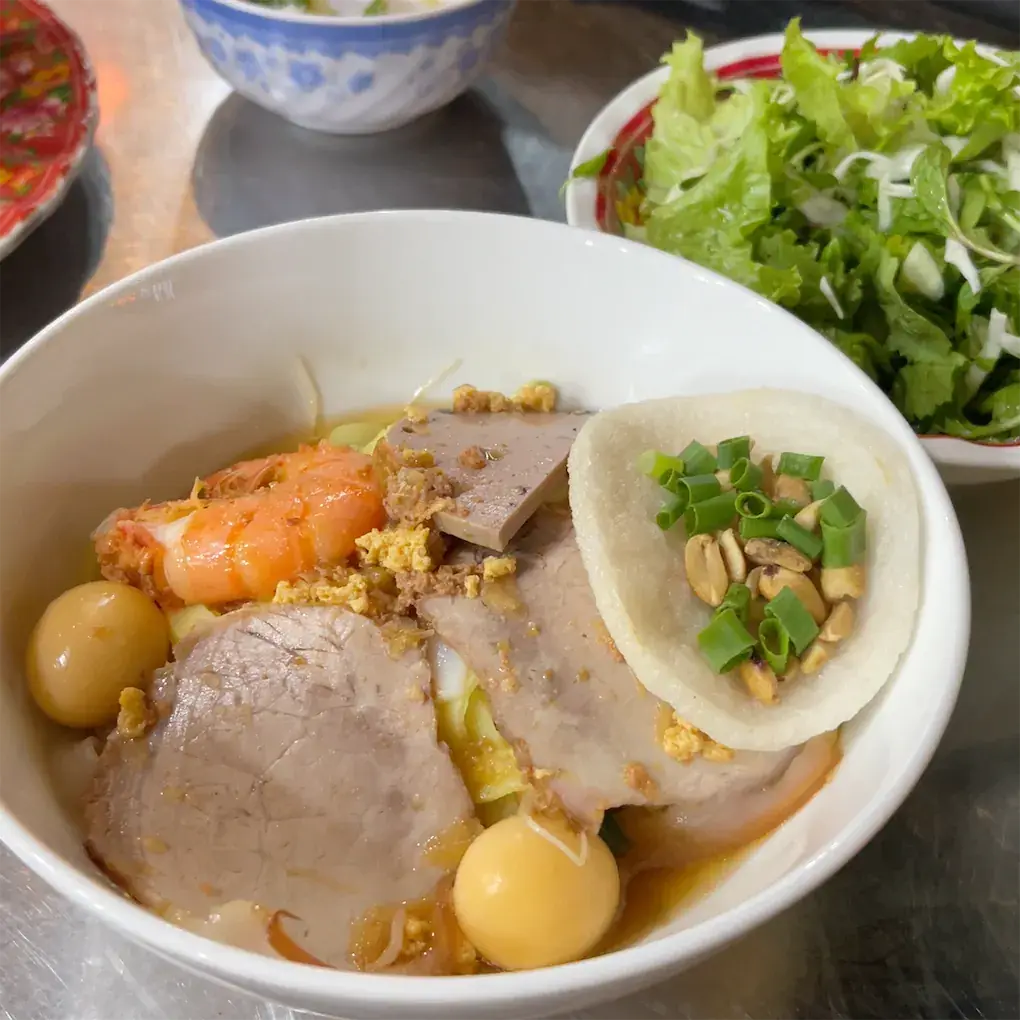
Ong Hai (Ông Hai), Hoi An
The shop is at 6A Truong Minh Luong Street, open 8 a.m. to 9 p.m.. Its Google Maps rating is 4.5 from 1,774 reviews, the most reviews of the three.
For more places to eat Mi Quang in Da Nang, see the guide on Da Nang Oi (opens in a new tab).
How much a bowl costs
A bowl at Ba Mua, 19-21 Tran Binh Trong Street, cost about VND 40,000 in June 2026. It came with peeled fresh shrimp, free-range chicken, chopped pork ribs and soft-yolk quail eggs.
Photo credits
- A bowl of Mi Quang with beef, peanuts and a rice cracker on the side: Wikimedia Commons — Christopher Crouzet (opens in a new tab) (CC BY-SA 4.0)
- Old map of Tourane (Da Nang) by the French Indochina geographic service: Wikimedia Commons — Service géographique de l'Indochine française (opens in a new tab) (Public domain)
- Mi Quang with pork and shrimp at Mi Quang 1A in Da Nang: Wikimedia Commons — Jpatokal (opens in a new tab) (CC BY-SA 4.0)
- Photos and clips uploaded to Google Maps (Nu Do on Google Maps (opens in a new tab), Ba Minh Mi Quang on Google Maps (opens in a new tab), Ong Hai Mi Quang on Google Maps (opens in a new tab)) by NAM LE TRUONG HOANG, Trang Vo, Google Maps contributor, Trang Nguyen.
Common questions
What is Mi Quang and which province does it come from?
Mi Quang is a rice-noodle dish of Quang Nam, eaten with a thick sauce, fresh herbs, peanuts and sesame cracker. Da Nang and Quang Nam both claim it as a local treasure.
How old is Mi Quang?
No written source answers that. Researchers only conclude that it has been in Quang Nam for a very long time, its age tied to the stone mills that grind rice batter.
Why is it called Mi Quang?
It is the outsiders' name; people in Hoi An and Quang Nam just say mi. The name is also tied to Phu Chiem village in Dien Ban.
Is Mi Quang recognised as national intangible cultural heritage?
Yes. The Ministry of Culture, Sports and Tourism entered it by a decision of 9 August 2024, under the name Mi Quang folk knowledge of Quang Nam province.
Which village is called the capital of Mi Quang?
Phu Chiem village in Dien Ban has become the capital of Mi Quang, with the trade kept through generations.
Is Mi Quang a soup?
Connoisseurs ladle on just enough thick sauce and mix everything together. It can also be served as a broth-less salad.
What do you eat with Mi Quang?
The sides are fresh herbs, fish sauce, shallot-peanut oil, green chilli, sesame rice cracker, roasted peanuts and lime or vinegar.
How much does a bowl of Mi Quang cost in Da Nang?
A bowl at Ba Mua, at 19-21 Tran Binh Trong Street, cost about VND 40,000 in June 2026.
Read next
- Cao Lau Hoi An: History, Noodle Makers and Three PlacesVerified 18 October 2026
- Banh Beo of Quang Nam: From Hue Bowls to Hoi An and Da NangVerified 18 October 2026
- Banh Kho Me Cam Le: the Seven-Fire Cake of QuangVerified 18 October 2026
- Banh Trang Cuon Thit Heo: Dai Loc Roots and Tuy Loan Rice PaperVerified 18 October 2026
General information checked against the sources listed above, not legal advice for your situation. Rules and office practice change; confirm with the relevant office or a licensed adviser before you act. See how guides are checked.
Spotted an error? Report it.