Cao Lau Hoi An: History, Noodle Makers and Three Places
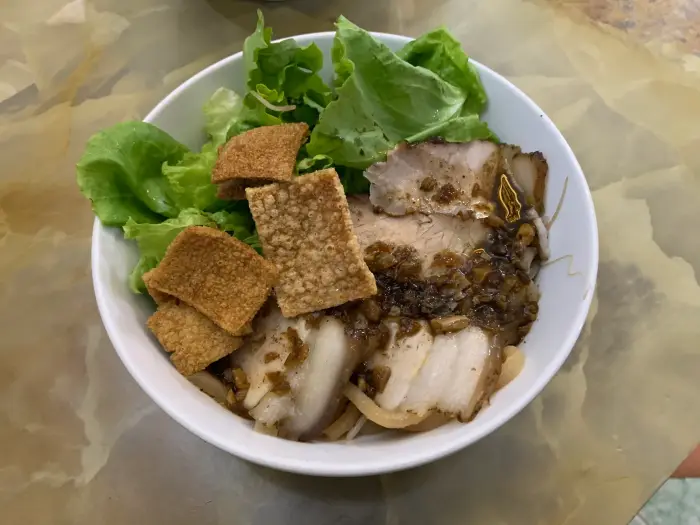
Cao lau is the noodle of Hoi An town, grown up with a trading port that peaked from the 17th to the 19th century. The noodle is dark yellow and chewy, made from rice soaked in ash water, and served with pork, sprouts and herbs. A bowl cost about VND 30,000 to 35,000 in March 2023.
In this guide
- What cao lau is
- Cao lau grew up with the Hoi An port
- Japanese, Chinese or Vietnamese?
- What the name cao lau means
- The first shop owners
- The noodle workshops of Cam Chau
- The Ba Le well, Cu Lao Cham ash and the water
- Cao lau or Mi Quang?
- Eating a bowl
- Where to eat cao lau in Hoi An
- Cao Lau Thanh
- Cao Lau Ba Le
- Cao Lau Di Hat
- Heritage status
- Common questions
What cao lau is
Cao lau is the town dish of Hoi An and a long-standing local trade. It belongs to the town, while Mi Quang belongs to the countryside. It is the food symbol of Hoi An’s heritage.
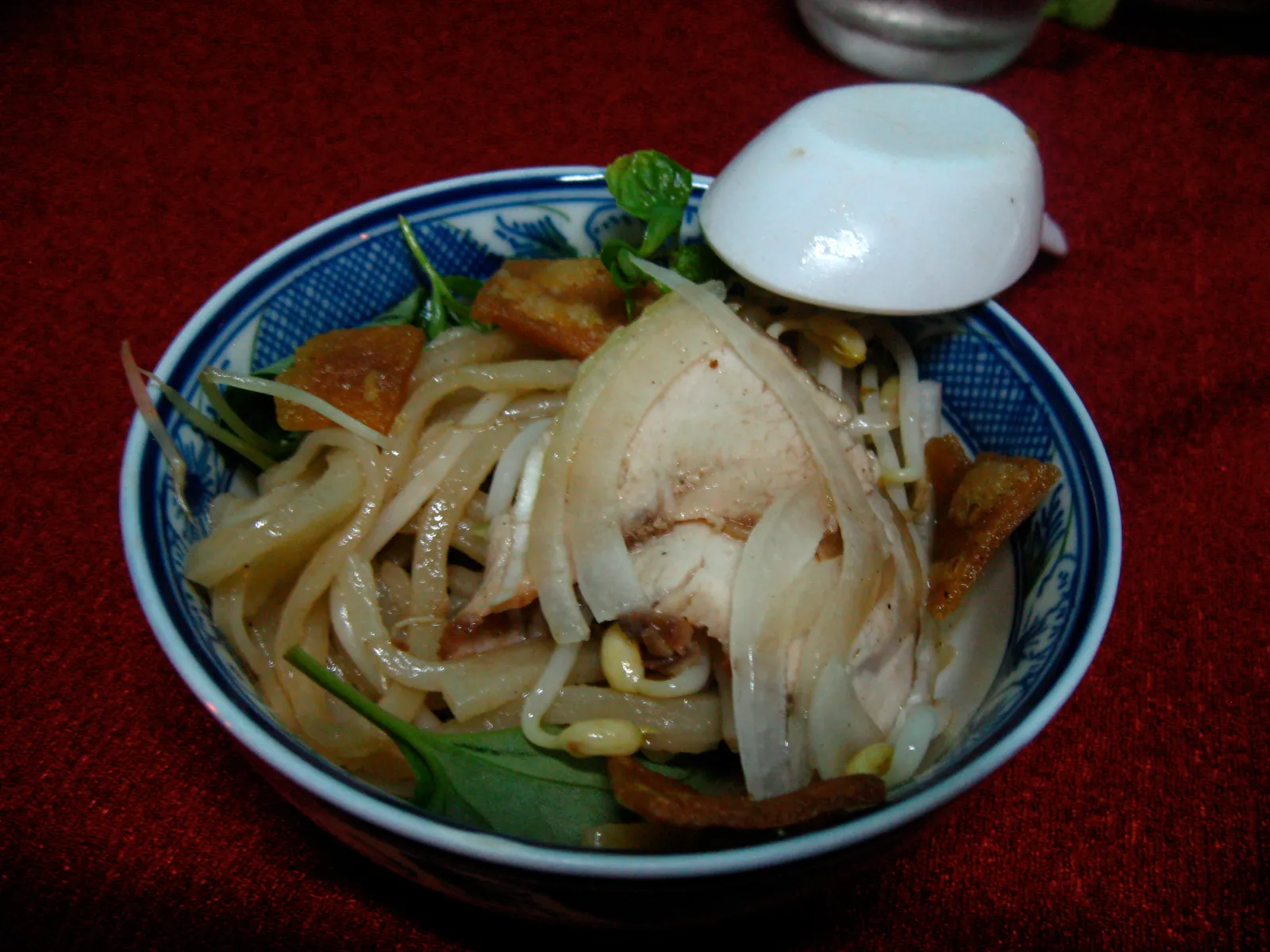
The noodle is dark yellow and firmer than Mi Quang noodle. It is chewy and crunchy, with a taste of ash water.
A bowl holds pork, bean sprouts, fresh herbs, crisp fried pork fat and seasoning. The herbs and lettuce come from Tra Que vegetable village. The sauce is neither too dry nor as plentiful as in a noodle or pho broth.
Cao lau grew up with the Hoi An port
To understand cao lau, start with the port. Historians hold that the Hoi An trading port took shape in the late 16th century, on the Thuan Quang land of the Nguyen lords. From then on Hoi An had two self-governing quarters, one Japanese and one Chinese. The Japanese quarter appeared and prospered in the first half of the 17th century and lasted to the end of that century.
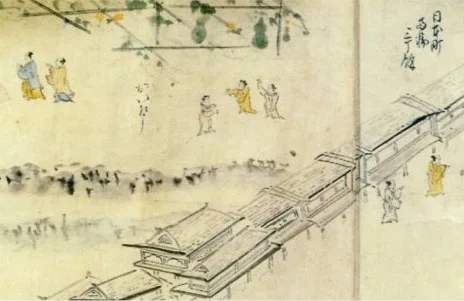
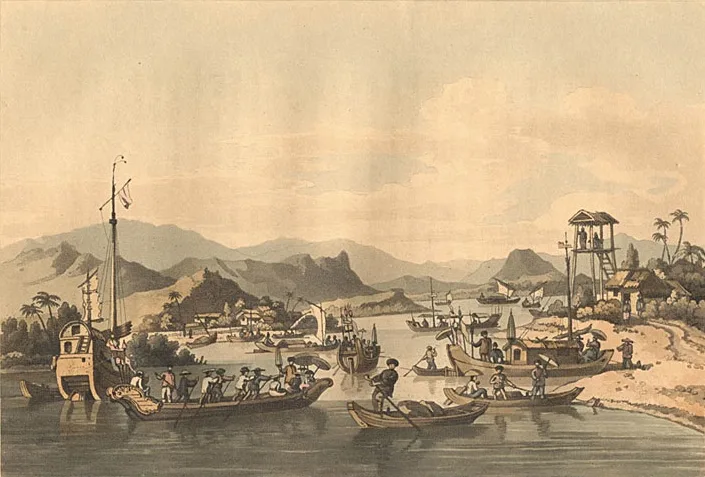
The Hoi An heritage centre’s inventory sheet says the town and port reached their peak from the 17th to the 19th century. Merchants came from China, Japan, Portugal, Spain, the Netherlands, Britain and France.
A Vietravel article places cao lau in the old town from the 17th century, when the port opened. The inventory, drawing on written records and oral memory, finds the dish common in Hoi An for at least over one hundred years.
The port did not last. The silting of Cua Dai was one of the factors in the port’s decline. That story is told in Hoi An history and Hoi An Ancient Town. Cao lau stayed, because by then it had become the dish of the people of Hoi An.
Japanese, Chinese or Vietnamese?
Cao lau belongs to no single people.
The inventory concludes that it is the result of an exchange of food traditions from Vietnamese, Chinese and Japanese sources.
Rolling and steaming the noodle resemble how Japanese udon is made. The grinding and preparation resemble Mi Quang in a few points. The Chinese community says cao lau is not their dish. Many of the old cao lau shops and today’s noodle workshops are Vietnamese-owned.
Hoi An people took cooking experience from Chinese and Japanese noodle dishes and made the noodle their own.
The aim was a dish for diners from many places, quick to prepare and able to keep for a long time without spoiling or losing quality. What came out of that is neither the Chinese wonton nor the Vietnamese Mi Quang, because the ingredients and method differ.
What the name cao lau means
The two words Cao Lau first meant houses with an upper floor. The word later came to mean smart eating houses, then shifted once more to mean the food itself. The dictionary Dai Nam quoc am tu vi (1895-1896) by Huynh Tinh Paulus Cua defines cao lau as a storeyed house. It adds that this is usually understood as a place where guests buy cakes and food.
The sense of “dish” appeared early. The poet Tran Te Xuong put cao lau in a verse with the line “Cao lau hay an quy” (he often eats cao lau and skips the bill). A woodblock print in Henri Oger’s early 20th-century series on popular life shows four diners in turbans and long tunics around a table full of bowls.
Some say the dish got its name because it was sold upstairs. That is not right, because most cao lau shops in Hoi An have always sold on the ground floor.
The first shop owners
Hoi An people have a saying: “Cao lau ong Canh, Tam Tam banh xeo”. Another goes: “Chua Cau, Am Bon, cao lau Nam Co”.
Mr Canh and Mr Nam Co were well-known cao lau shop owners in the first half of the 20th century. Mr Nam Co’s real name was Nguyen Tro. By the memory of his daughter, her grandfather Mr Bon Nien already made cao lau and his own noodle, and passed the trade to Mr Tro.
Mrs Tran Thi No (known as Ba Trai) is a well-known noodle maker. Counting from her grandfather, her family’s craft is more than 100 years old. Hoi An once had only two or three cao lau shops, and now has more than 10 that specialise in it.
The noodle workshops of Cam Chau
The cao lau trade has two stages: making the noodle and making the dish. The noodle is the hard part.
Good rice is soaked in clear ash water, for about 3 hours, then poured into a stone mill and ground to batter. The batter is stirred, kneaded, rolled thin and cut into strips. The tools include a stone mill, a batter pan, a rolling table and pin, a cutting board and bamboo steaming trays.
When the town made its inventory in 2013, Hoi An still had 3 noodle workshops selling about 300 kg a day.
They were Mrs Tran Thi No’s and Mr Ta Ngoc Trai’s in Truong Le, Cam Chau ward, and Mr To Van Binh’s in Ben Tre, Cam Ha. Each workshop had 3 to 5 people handling the steps from milling to kneading, steaming, rolling and cutting. Only about 4 people mastered the noodle-making experience.
The trade passes down in families from father to child. By the inventory, only Mrs Trai’s household still did every step by hand.
The noodle keeps for a few days without spoiling. The town market, Tan An, Vien Giac and Cam Chau markets sell it almost every day. Many Hoi An families buy the noodle at the market at festivals and Tet and cook cao lau at home.
The Ba Le well, Cu Lao Cham ash and the water
Many say cao lau needs wood ash from Cu Lao Cham mixed with Ba Le well water.
That was true of the past. Noodle makers used Ba Le water, clear and low in alum, to filter the ash for soaking the rice. The wood came from Cu Lao Cham. For the island, see Cu Lao Cham.
By 2013 the workshops used ash water bought from Taiwan or China, and industrial ash water was steadily replacing wood-ash water.
The well itself dates from about the 8th to 9th century, the Champa period. It sits in a small lane off Tran Hung Dao Street, with walls of fired brick stacked without mortar.
The water is still clear, but the water carriers who gave the place its soul have thinned out. Each morning one carrier pulls a cart with 5 to 6 cans to a few cafes and businesses that want the well water.
Cao lau or Mi Quang?
The two bowls differ mainly in the noodle.
- Colour and bite. Cao lau noodle is dark yellow, chewy and crunchy, not soft like pho or Mi Quang noodle. A Mi Quang bowl is built with ivory-white noodles.
- Setting. Mi Quang and its trade belong to villages; cao lau belongs to the town.
For the full Mi Quang story, see Mi Quang.
Eating a bowl
Add grilled rice cracker, chilli sauce, lime and vinegar at the table. For the sauce, see Hoi An chilli sauce. The dish has also changed a little: the fried pork fat is now replaced by crisp pieces of cao lau noodle.
A bowl of cao lau cost around VND 30,000 to 35,000 in March 2023.
Where to eat cao lau in Hoi An
Places here score 4.6 stars or more on Google Maps with many reviews. Details come from each place’s Google Maps page on 18 October 2026.
Cao Lau Thanh
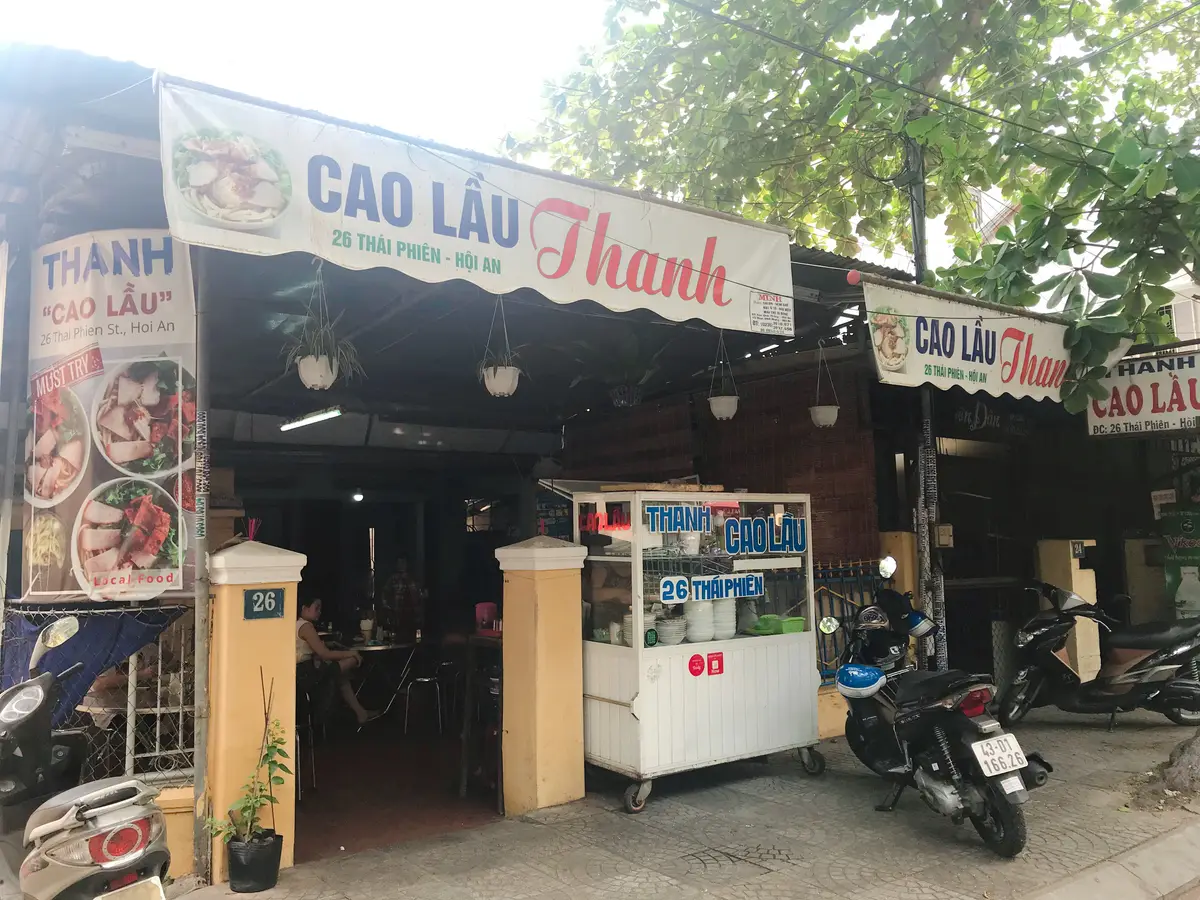
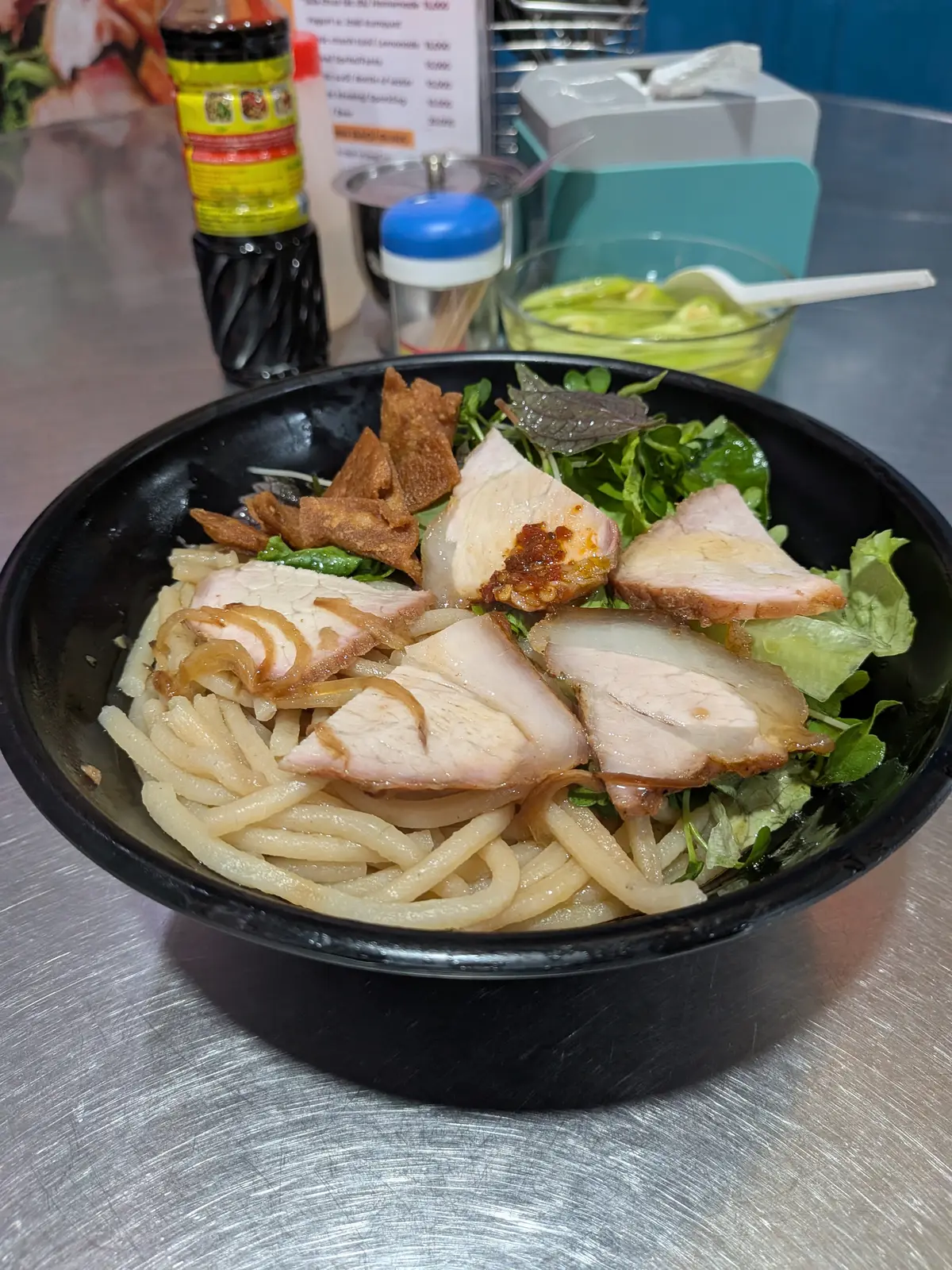
Cao Lau Thanh (Quán Cao Lầu Thanh) is listed in the heritage inventory as “cao lau ba Thanh (26 Thai Phien)”, one of the well-known shops of Hoi An. It is at 26 Thai Phien. Google Maps rates it 4.6 stars from 2,592 reviews. It opens 7:00 to 19:00 every day.
Cao Lau Ba Le
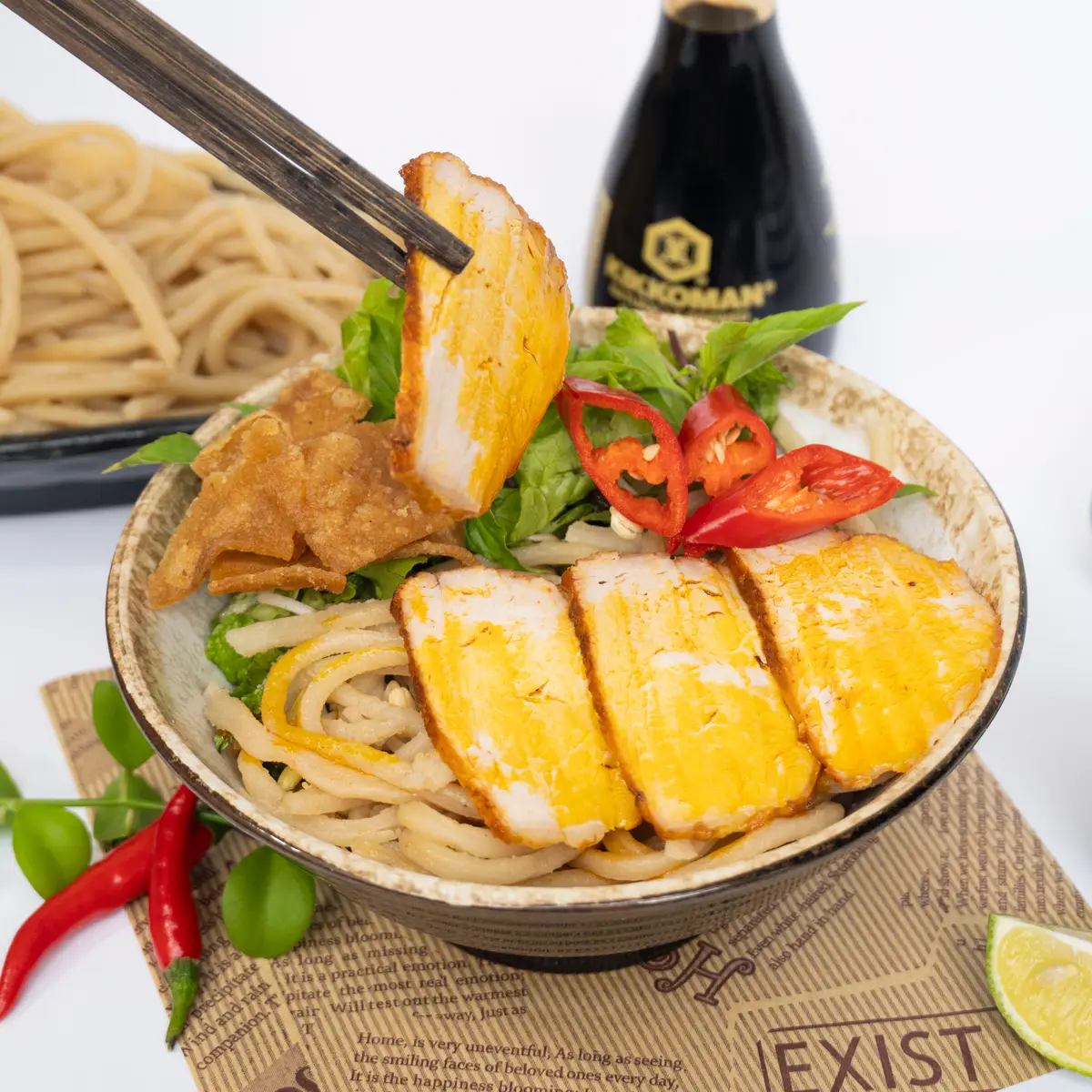
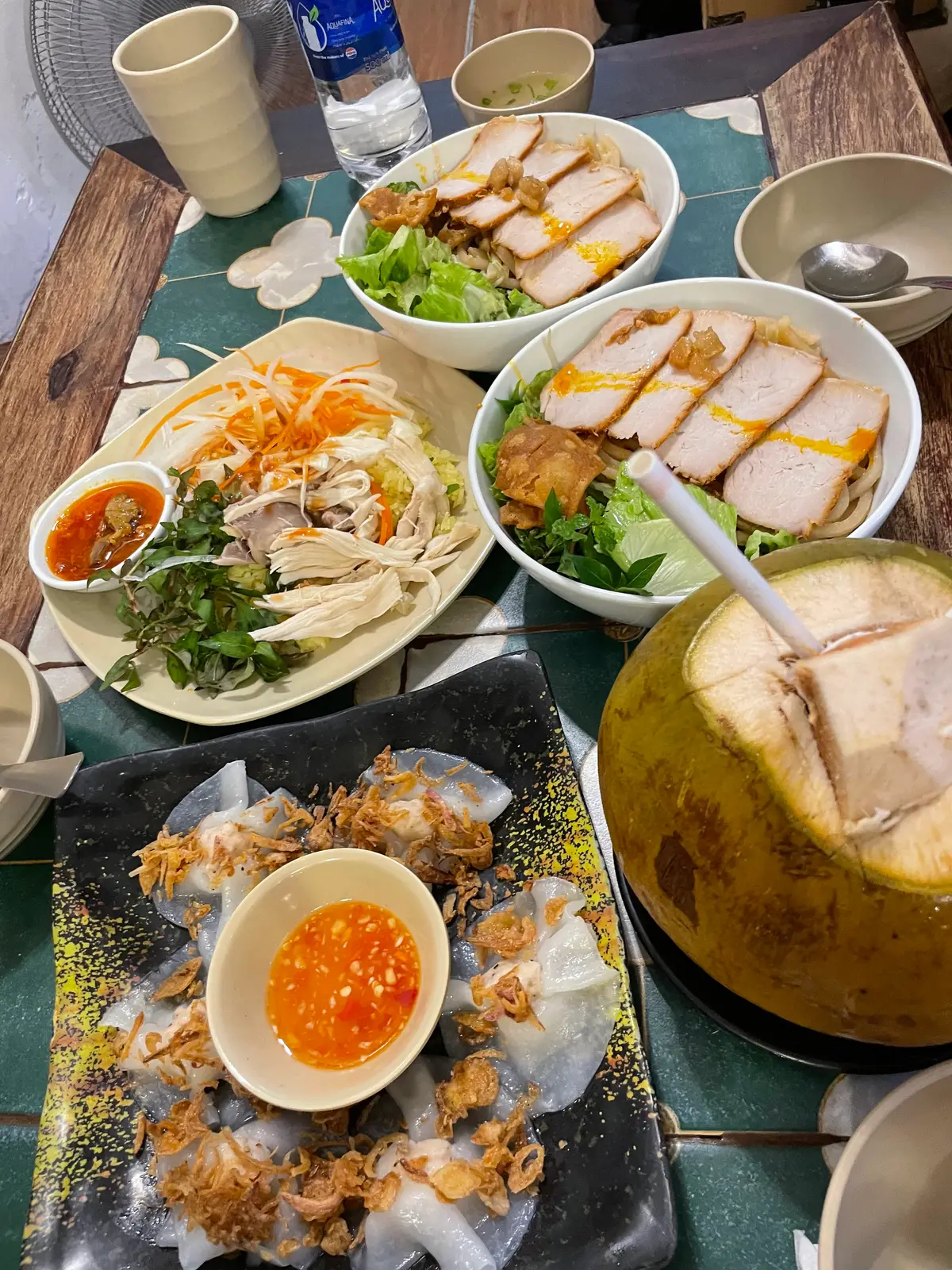
Cao Lau Ba Le (Quán Cao lầu Bá Lễ) is named for the Ba Le well, which sits in a small lane off Tran Hung Dao Street. The shop is at 49/3 Tran Hung Dao. It holds 4.7 stars from 2,798 reviews.
It opens 11:00 to 21:30 from Monday to Friday. On Saturday and Sunday it opens earlier, from 8:30 to 21:30.
Cao Lau Di Hat
Cao Lau Di Hat (Cao lầu Dì Hát 55 năm) carries its age in the name: 55 years. It is at 4 Thai Phien. Its rating is 4.6 stars from 136 reviews. It opens in the evening, 17:00 to 22:00.
Heritage status
The Hoi An heritage centre’s 2013 inventory classes the cao lau trade as a traditional craft. At that time, no dossier for the heritage list had been made. The sheet also names a worrying risk: the noodle technique is shifting to modern, mechanised methods instead of by hand as before.
Photo credits
- A bowl of cao lau in Hoi An, with sliced pork and crisp fried pork fat: Wikimedia Commons — Chainwit. (opens in a new tab) (CC BY 4.0)
- The Japanese quarter of Hoi An with its covered bridge, from a 17th-century Japanese scroll: Wikimedia Commons — scroll painting of the Japanese quarter of Hoi An, 17th century, public domain (opens in a new tab) (Public domain)
- The river at Faifo (Hoi An) in John Barrow's account of a voyage to Cochinchina: Wikimedia Commons — John Barrow, A voyage to Cochinchina (1806), public domain (opens in a new tab) (Public domain)
- Cao lau noodles are thick and flat, served with meat, sprouts and herbs: Wikimedia Commons — Dragfyre (opens in a new tab) (CC BY-SA 3.0)
- Photos and clips uploaded to Google Maps (Thanh Cao Lau on Google Maps (opens in a new tab), Ba Le Cao Lau on Google Maps (opens in a new tab)) by Quan Cao Lau Thanh, Google Maps contributor, Quan Cao lau Ba Le, Vivien Uyen Phuong.
Common questions
Where does Cao Lau come from?
Cao lau is the dish and trade of Hoi An town, where the trade has long existed. The heritage inventory calls it the food symbol of Hoi An's heritage.
What does the name cao lau mean?
The two words Cao Lau first meant houses with an upper floor, then smart eating houses, then the dish itself. The idea that the dish was sold upstairs is wrong, because most cao lau shops in Hoi An sell on the ground floor.
Is Cao Lau Japanese or Chinese?
Cao lau is the result of an exchange of Vietnamese, Chinese and Japanese food traditions. The Chinese community says it is not their dish, and the rolling and steaming of the noodle resemble Japanese udon.
What is the difference between Cao Lau and Mi Quang?
Cao lau noodle is dark yellow and firm, with an ash-water taste, while Mi Quang noodle is ivory-white and soft. Mi Quang belongs to the countryside, cao lau to the town.
What is the Ba Le well in Hoi An and is it still used for Cao Lau?
It is a brick well from about the 8th to 9th century, in a lane off Tran Hung Dao Street. Noodle makers used its water in the past, but today they use bought ash water.
How much does a bowl of Cao Lau cost?
A bowl of cao lau cost around VND 30,000 to 35,000 in March 2023.
Where can I buy cao lau noodles, and how long do they keep?
The big Hoi An markets, such as the town market, Tan An, Vien Giac and Cam Chau, sell the noodle almost every day. It keeps for a few days without spoiling.
Where to eat Cao Lau in Hoi An?
Cao Lau Thanh at 26 Thai Phien is named in the heritage inventory. Cao Lau Ba Le at 49/3 Tran Hung Dao holds 4.7 stars. Di Hat at 4 Thai Phien opens in the evening.
Read next
- Hoi An History: The Faifo Trading Port and Old TownVerified 18 October 2026
- Hoi An Old Town: Heritage, Assembly Halls, TicketsVerified 18 October 2026
- Cu Lao Cham: History, Monuments, Boats and Calm SeasonVerified 18 October 2026
- Mi Quang: Origins, Phu Chiem Village, How It Is Made and Three ShopsVerified 18 October 2026
General information checked against the sources listed above, not legal advice for your situation. Rules and office practice change; confirm with the relevant office or a licensed adviser before you act. See how guides are checked.
Spotted an error? Report it.