Hoi An Chilli Sauce: The Trieu Phat Family Jar
Trieu Phat chilli sauce is one family's jar, made at the old house at 41 Nguyen Thai Hoc, Hoi An, under a brand dated 1941. Fresh chillies are simmered with oil, garlic, sesame, salt and sugar to a family recipe, made by hand, not industrially. It keeps about 6 months on the shelf, a year in the fridge.

In this guide
What Hoi An chilli sauce is
In Quang Nam, Hoi An chilli sauce (tương ớt phố Hội) goes with chicken rice, tre, beef sausage, mi Quang, bun bo and rice porridge. It is not smooth like ordinary chilli sauce, but it has a pull of its own. Thick as it is, it is closer to jam than to sauce.
This page is about the Trieu Phat (Triều Phát) family at 41 Nguyen Thai Hoc, and then how to eat the sauce and where to buy it.
From a herbal shop to a jar of sauce
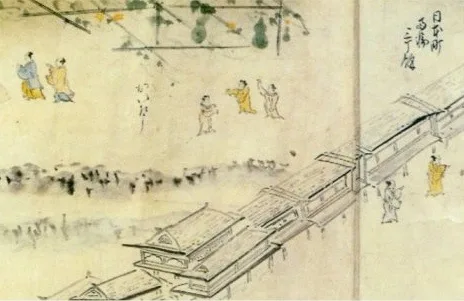
The family elders tell it this way: about 150 years ago, when Hoi An was a busy trading port, the Trieu Phat family earned its income from a Chinese-medicine shop. What that port was like is told in Hoi An history and Hoi An ancient town.
Besides weighing and selling herbal medicine, the elders of that time also made chilli sauce. At first it was for the household, then as gifts for relatives, and later to sell on order.
When the brand began is less certain. The maker dates Trieu Phat to 1941 and has been handed down from parent to child at a single address. But the current owner, Ms Linh, herself does not know exactly which year the brand began.
The old house at 41 Nguyen Thai Hoc
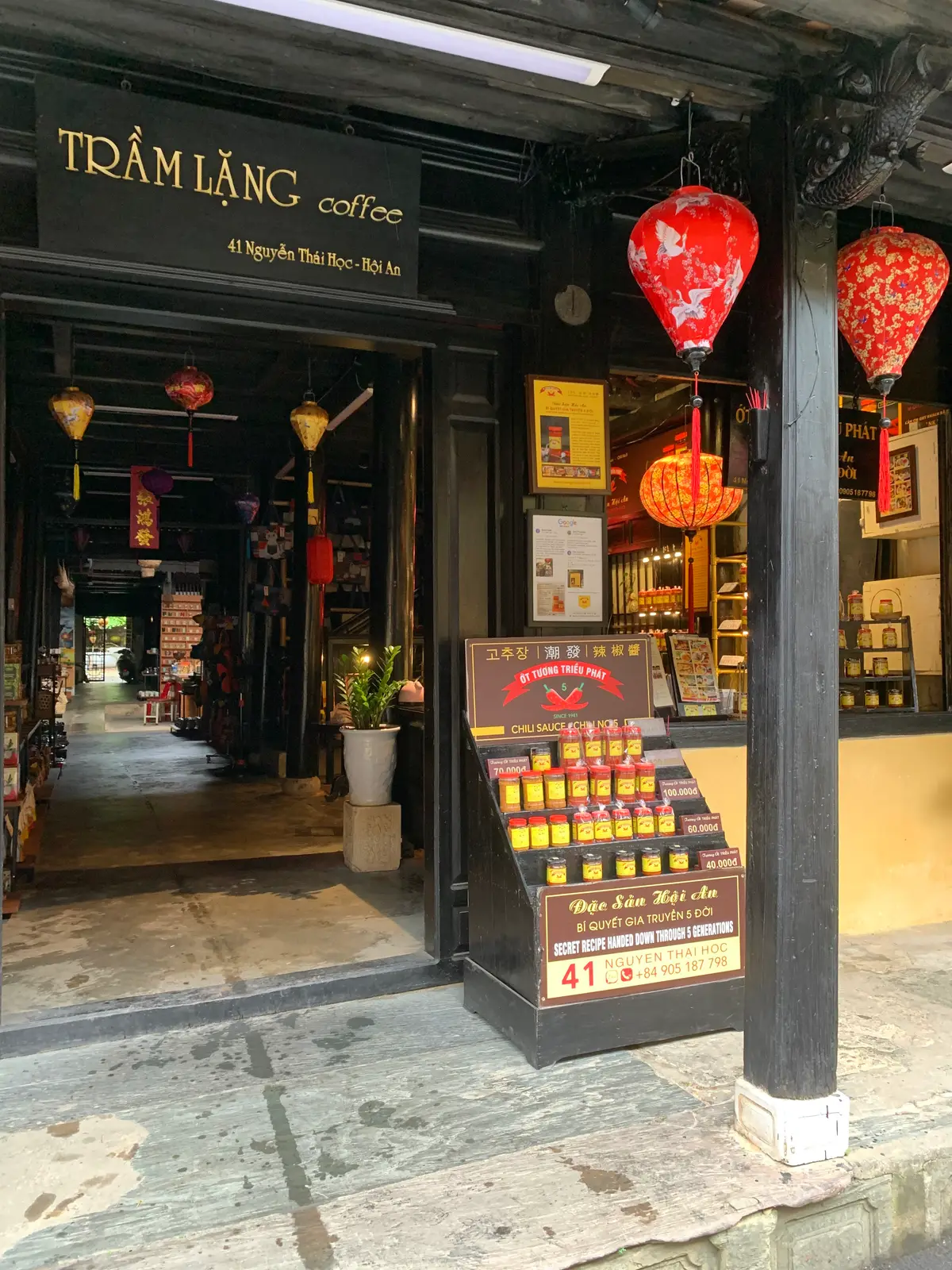
The Trieu Phat name has been tied for generations to an old house of more than 200 years at 41 Nguyen Thai Hoc. The maker says this is where the 2002 film The Quiet American was shot. The compound holds the Tram Lang (Trầm Lặng) café and the Trieu Phat chilli sauce counter.
Older sources place the address in Minh An ward. That ward has since been merged into a new ward named Hoi An.

Most visitors touring the old town stop at this house of more than 200 years to taste the family’s chilli sauce.
How the sauce is made
The most important step in making the sauce is choosing the chilli variety, says Ms Linh. The chillies are grown in areas near Hoi An such as Dien Ban and Dai Loc. The family buys the whole crop from growers in Go Noi, Dai Loc, where the chillies come out ripe but firm and fresh, without scarred skin.
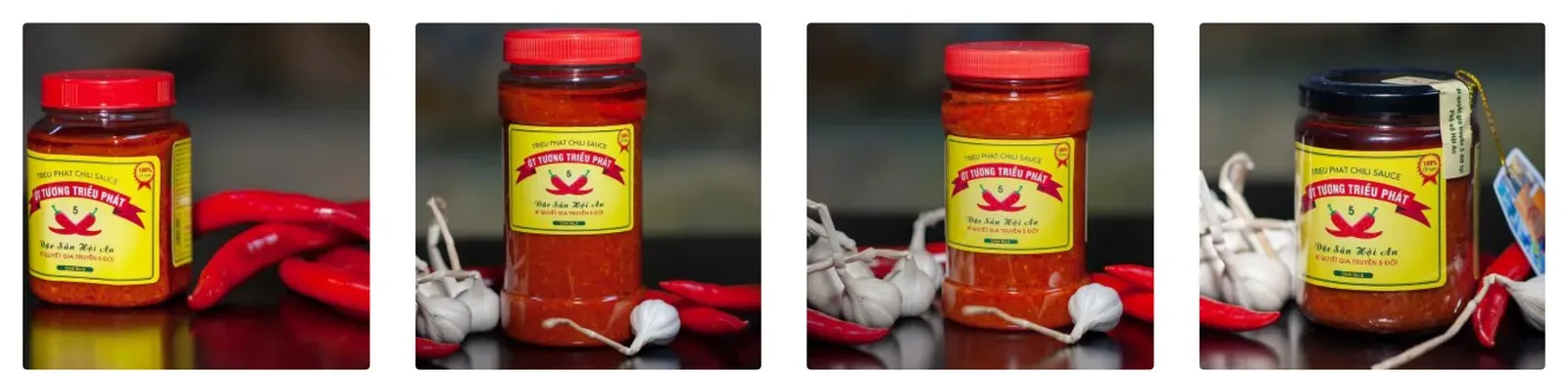
The product is made from 100% fresh chillies, blanched so they lose the harsh pungent smell, then ground and cooked. The finely ground chilli is simmered with oil, garlic, sesame, salt and sugar to the family’s own recipe. To this day the sauce is made by hand to a secret recipe, not mass-produced in a factory.
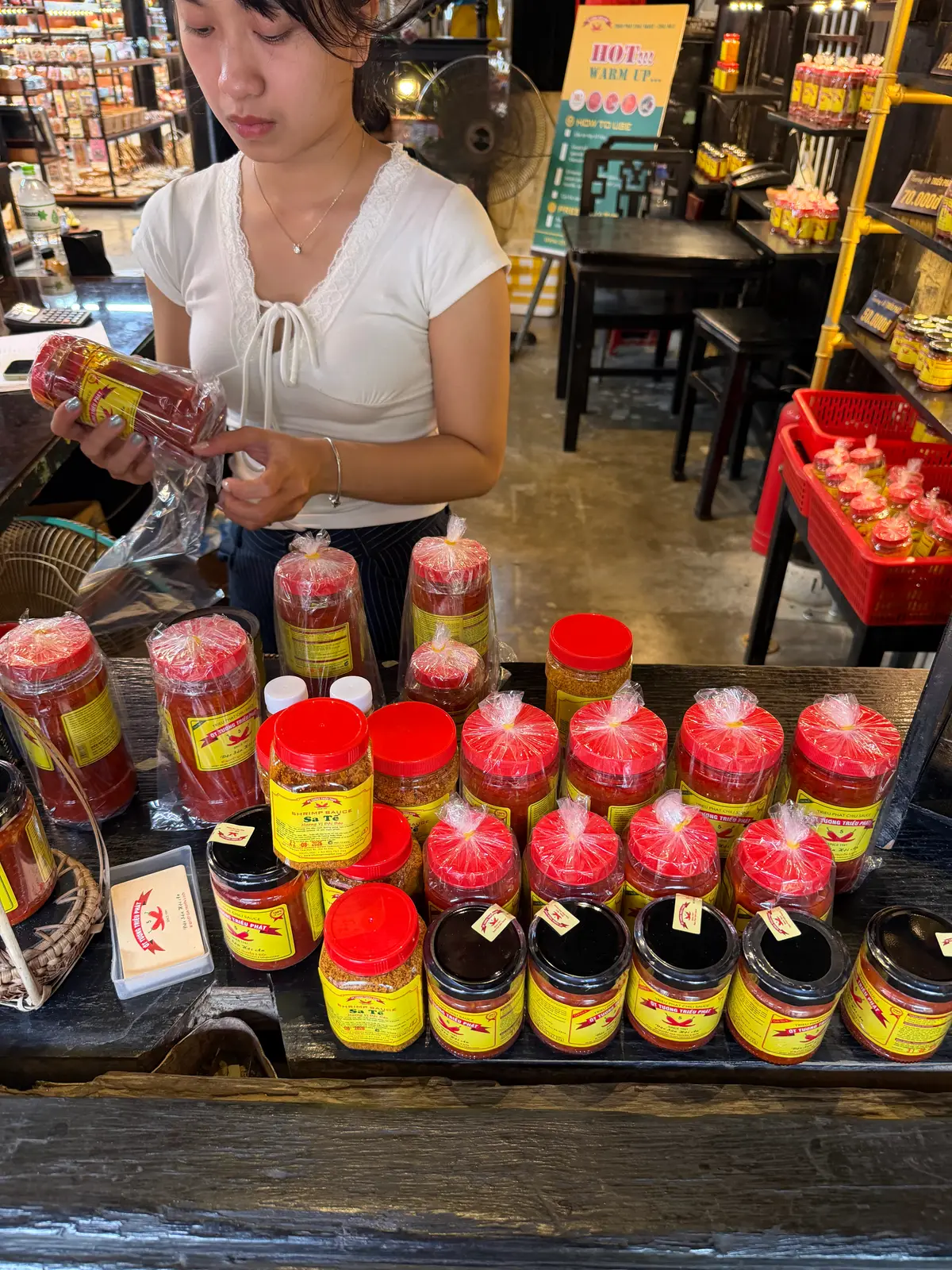
The shop also makes sa te (chilli satay paste). It was once dropped because the process is fussy and hard work; Ms Linh has now resolved to bring it back. She also developed a sa te product line.
Who keeps the craft today
Ly Hong Linh (Lý Hồng Linh), born in 1983, is the one who stepped forward to grow the family brand. After 11 years in banking, she left her job to follow the craft of chilli sauce. Today Trieu Phat also offers a glass jar that customers can choose and reuse.
What to eat the sauce with
The maker suggests eating it with Hoi An chicken rice, cao lau, mi Quang, pho and Hoi An banh mi. Its list also includes instant noodles, grilled squid, squid salad, beef sausage, salads and boiled pork.
You can use it as a colouring marinade for grilled food, or cook it into bun bo, banh canh and braised pork. The maker also says the sauce takes away the fishy smell of fish and frog dishes.
Making Hoi An-style chilli sauce at home
VnExpress published a recipe that uses 200 g of horn chillies, large and thick-fleshed, a mild kind. The chillies are blanched for about 3 minutes, then dropped into iced water to keep their colour. The mixture is simmered over low heat for about 45-50 minutes until thick.
One batch kept in the fridge lasts about a month. This is the newspaper’s own home recipe, not the Trieu Phat recipe.
Storing it and taking it home
The sauce is handmade, with no preservatives, and has a shelf life of about 6 months at room temperature and up to 1 year in the fridge. The best place for it is somewhere cool, out of direct sun. Once opened, it is best kept in the fridge.
Shake the jar before use, because the layer of oil on top keeps the sauce fresh and stops it oxidising. Take only as much as you need onto a dish and finish it the same day. Do not pour leftovers back into the jar. Wipe the mouth of the jar with a tissue dampened with a little alcohol before use.
Many visitors treat the sauce as a speciality to buy and bring home as a gift. Eater wrote in 2020 that Vietnam’s post office will not ship this kind of sauce, so carry it with you.
Where to buy it
Only one place is worth naming: the original shop, the one the maker and the press both name, rated 4.9 stars on Google Maps.
Trieu Phat chilli sauce shop
The shop sits inside the old house at 41 Nguyen Thai Hoc, Hoi An. It is rated 4.9 stars from 24 reviews on Google Maps. Most visitors to the old town stop here to taste the sauce before they buy.
To find somewhere to eat cao lau or mi Quang and try the sauce at the table, see the listings on danangoi.com (opens in a new tab).
More Quang Nam-Da Nang food
- Banh kho me Cam Le, the Da Nang charcoal-baked sesame cake.
- Cao lau, the Hoi An noodle dish this sauce goes with.
- All food pages.
Photo credits
- The river at Faifo (Hoi An) in John Barrow's account of a voyage to Cochinchina: Wikimedia Commons — John Barrow, A voyage to Cochinchina (1806), public domain (opens in a new tab) (Public domain)
- The Japanese quarter of Hoi An with its covered bridge, from a 17th-century Japanese scroll: Wikimedia Commons — scroll painting of the Japanese quarter of Hoi An, 17th century, public domain (opens in a new tab) (Public domain)
- Nguyen Thai Hoc Street in Hoi An old town, where the Trieu Phat shop stands: Wikimedia Commons (opens in a new tab), Christophe95 (CC BY-SA 4.0)
- Photos and clips uploaded to Google Maps (Trieu Phat Chilli Sauce Shop on Google Maps (opens in a new tab)) by Nguen Nguen, Ha Tran.
Common questions
What is Hoi An chilli sauce, and how is it different from ordinary chilli sauce?
Hoi An chilli sauce is not smooth like common chilli sauces; it is thick, with a character of its own. Trieu Phat sauce is made from 100% fresh chillies, blanched so they lose the harsh pungency, then ground and cooked, and simmered with oil, garlic, sesame, salt and sugar.
How old is Trieu Phat chilli sauce?
The maker's page dates the brand to 1941, while the current owner says even she does not know the exact year. The elders say the sauce goes back about 150 years, to when the family ran a Chinese-medicine shop.
What do you eat Trieu Phat chilli sauce with?
Hoi An chicken rice, cao lau, mi Quang, pho, banh mi, instant noodles, grilled squid, beef sausage, salads and boiled pork. It also works as a marinade for grilled food or in bun bo, banh canh and braised pork.
How long does the sauce keep, and how should I store it?
About 6 months at room temperature and up to 1 year in the fridge. Once opened, the fridge is best. Unopened, keep it somewhere cool, out of direct sun.
Where do I buy Trieu Phat chilli sauce in Hoi An?
At the shop at 41 Nguyen Thai Hoc, in the house of more than 200 years. Rated 4.9 stars from 24 reviews on Google Maps.
Is it a good gift, and can I post it home?
Many visitors buy it as a speciality to take home as a gift. Vietnam's post office will not ship this kind of sauce, so carry it with you.
Can I make Hoi An-style chilli sauce at home?
Yes. A recipe published by VnExpress uses horn chillies, blanched for about 3 minutes, then simmered for about 45-50 minutes. It keeps in the fridge for a month.
Read next
- Hoi An History: The Faifo Trading Port and Old TownVerified 18 October 2026
- Hoi An Old Town: Heritage, Assembly Halls, TicketsVerified 18 October 2026
- Cao Lau Hoi An: History, Noodle Makers and Three PlacesVerified 18 October 2026
- Mi Quang: Origins, Phu Chiem Village, How It Is Made and Three ShopsVerified 18 October 2026
General information checked against the sources listed above, not legal advice for your situation. Rules and office practice change; confirm with the relevant office or a licensed adviser before you act. See how guides are checked.
Spotted an error? Report it.