Banh Trang Cuon Thit Heo: Dai Loc Roots and Tuy Loan Rice Paper
Banh trang cuon thit heo is thinly sliced boiled pork belly rolled in rice paper with raw herbs and dipped in mam nem. Once known only in Quang Nam and Da Nang, it has Dai Loc as its cradle. The Tuy Loan rice paper craft joined the national heritage list by Decision 374 on 21 February 2024.
In this guide
- Roots: from Dai Loc down to the city
- The craft: Tuy Loan village
- What comes on the plate
- The pork: belly or hai dau da
- Mam nem: the bowl that makes the dish
- How to roll and dip
- Choosing a place, and prices
- Three places in Da Nang
- Dai Loc Nang Tho 3 (Đại Lộc Nàng Thơ 3): a Quang Nam name
- Bep Be Anh (Bếp Bé Anh): boiled pork and mackerel
- Donald Trung: the self-serve herb bar
- Common questions
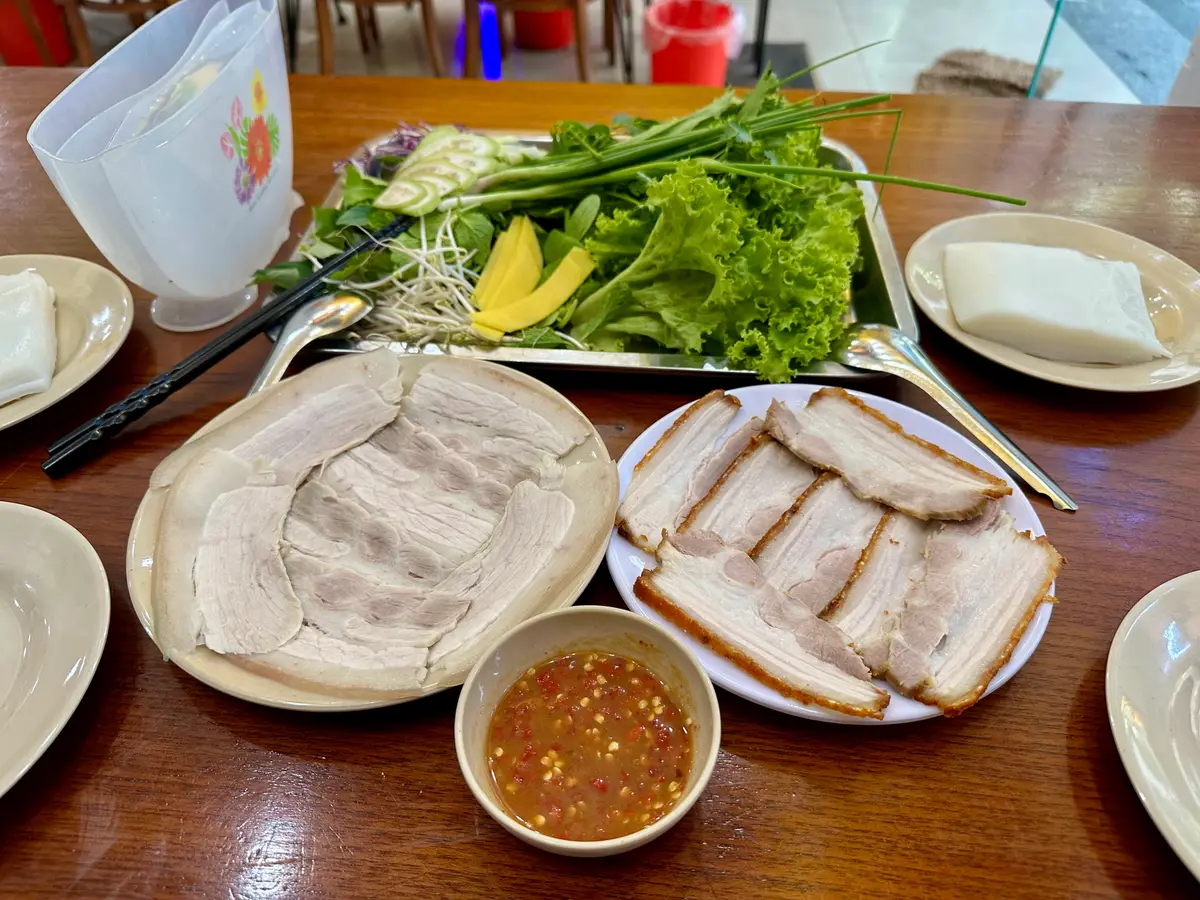
Banh trang cuon thit heo (bánh tráng cuốn thịt heo) is just what the name says. Banh trang is the rice paper, thit heo is the pork belly, and cuon is the roll. The pork is lightly seasoned, boiled until tender and cut into sliver-thin slices. You roll it yourself at the table, with raw herbs and a bowl of mam nem (mắm nêm).
It sounds plain. Behind the plate lies a road from Dai Loc (Đại Lộc) down to the coast, and an old rice paper village in Hoa Vang (Hòa Vang).
Roots: from Dai Loc down to the city
The dish was once known only to Quang Nam and Da Nang residents. Banh trang thit heo is now famous across Da Nang and Quang Nam. Ask where the roll was cradled and people point to Dai Loc in Quang Nam.
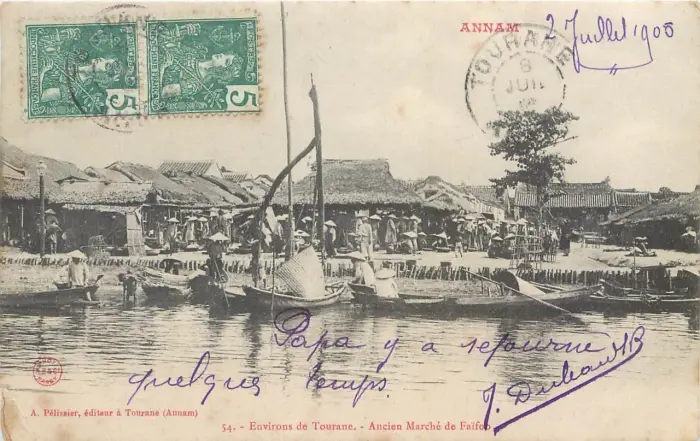
To see Dai Loc, follow National Road 14B toward Ai Nghia town and cross Giao Thuy bridge. Under the bridge the Vu Gia and Thu Bon rivers meet. From there only the Thu Bon carries the water out to sea, by way of Cua Dai and Hoi An. Hoi An still keeps the marks of its old trading port; read more in the history of Hoi An.
A Quang Nam writer in Phap Luat TP.HCM admits he once felt “shy” that boiled pork rolled with raw greens and mam nem is ranked a speciality. Then he stops at a shop in Ai Nghia and sees a full plate. The pigs, he hears, are raised at home on rice bran cooked with vegetables. The mam there is made from mackerel, a deep, salty red.
The slices are thick and as long as a hand span, and the roll ends with a chilli that comes down from the Dong Giang mountains.
Down in Da Nang the dish has a chapter of its own. There was a time when the city was famous for boiled-pork rice paper rolls in Khue Trung ward, then in Cam Le district.
The craft: Tuy Loan village
Tuy Loan (Túy Loan) village in Hoa Phong (Hòa Phong) commune, Hoa Vang, was formed more than 500 years ago. The rice paper craft there is long established and tied to the southward expansion of the nation, and to the old village of Tuy Loan. The brand is known for the taste of rice, sesame, ginger, garlic, fish sauce, salt and sugar.
National heritage. On 21 February 2024 the Minister of Culture, Sports and Tourism issued Decision 374, adding the traditional Tuy Loan rice paper craft to the national intangible heritage list. On 5 October Hoa Phong commune held the ceremony announcing the decision. Since 2014 the district had asked the commune to draw up a project to develop the traditional rice paper village.
Da Nang now has 7 national intangible heritages, among them the Nam O fish sauce craft. The culture sector asked for a preservation project tied to community tourism.
The people who keep it. Hoa Phong still has 15 households keeping the traditional craft. Of these, 5 make it regularly by the traditional method, 1 makes commercial paper with machines, and the rest work by season. Several generations of a family pass the craft down, father to son.
Every Tet more than 40 households in the commune spread rice paper. Households using the traditional method received about 30 million dong each in support.
How it is made. The rice is the village’s 13/2 rice, mixed with white sesame at 1 ang of rice to 12 lon of sesame. The maker needs three skills: spreading, peeling and smoking the paper. Tuy Loan paper is not sun-dried but dried over glowing charcoal.
A good sheet takes 5 or 6 seasonings: fish sauce, salt, sugar, garlic, ginger and sesame. For villagers it is indispensable on death anniversaries, at ancestor offerings and at holidays and Tet.
The sheet used for rolling pork has a different character: thin, and dried in the dew for chewiness and to avoid cracking when rolled. Dai Loc rice paper is famous for being soft and tasty. Crisp grilled rice paper goes with mit tron, and the charcoal-baked cake of Da Nang has its own page: banh kho me Cam Le.
What comes on the plate
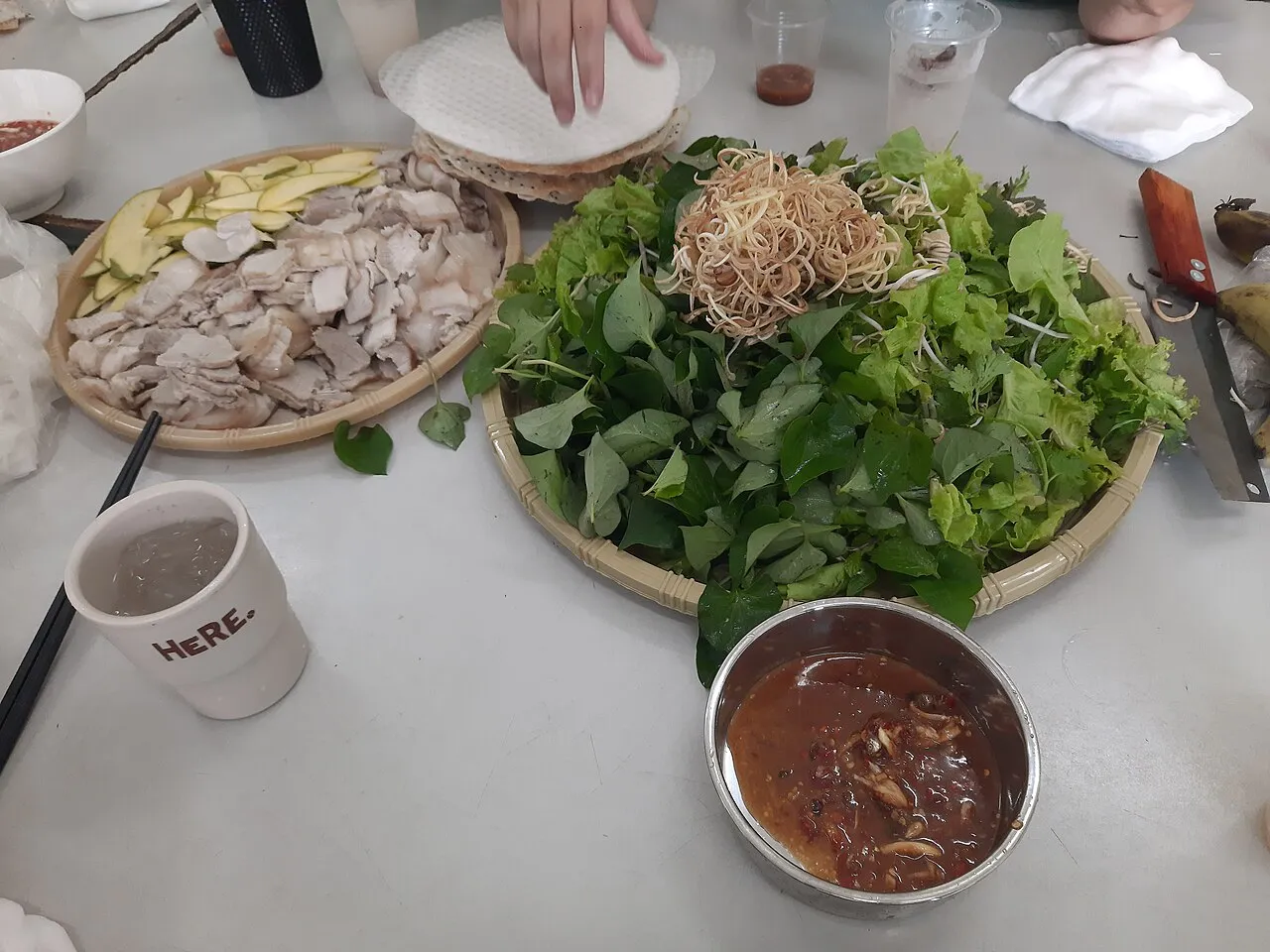
The core of the dish is simply boiled pork rolled with raw greens and mam nem. A full spread usually has:
- Boiled pork belly, sliced very thin.
- Raw herbs such as lettuce, cucumber, perilla, Thai basil, banana blossom, mint and coriander.
- Thin slices of green banana for a mild astringent taste.
- A hot plate of sheet noodles (mi la) served with it.
- A bowl of mam nem, the only dipping sauce.
The plate of herbs is one green in many shades: the jade of cucumber, the purple-green of perilla, the young green of lettuce. Mi la leaves are hard to peel apart unless you lay the rice paper gently onto them.
The pork: belly or hai dau da
The pork is usually belly or hai dau da, boiled just done so it stays tender, sweet and not dry. “Hai dau da” means each slice keeps a layer of skin and fat at both ends. Good pork is moderately tender, not dry or crumbly. A few shops also sell roast pork next to the boiled.
Mam nem: the bowl that makes the dish
Mam nem is a fermented fish sauce from Quang Nam. It uses whole fermented anchovies and is more like a paste than a liquid. It is made with chilli and garlic and finely chopped pineapple for a sweet-sour note. Good mam smells mild and rich, not harsh.
Each place has its own fish: in Ai Nghia it is mackerel.
How to roll and dip
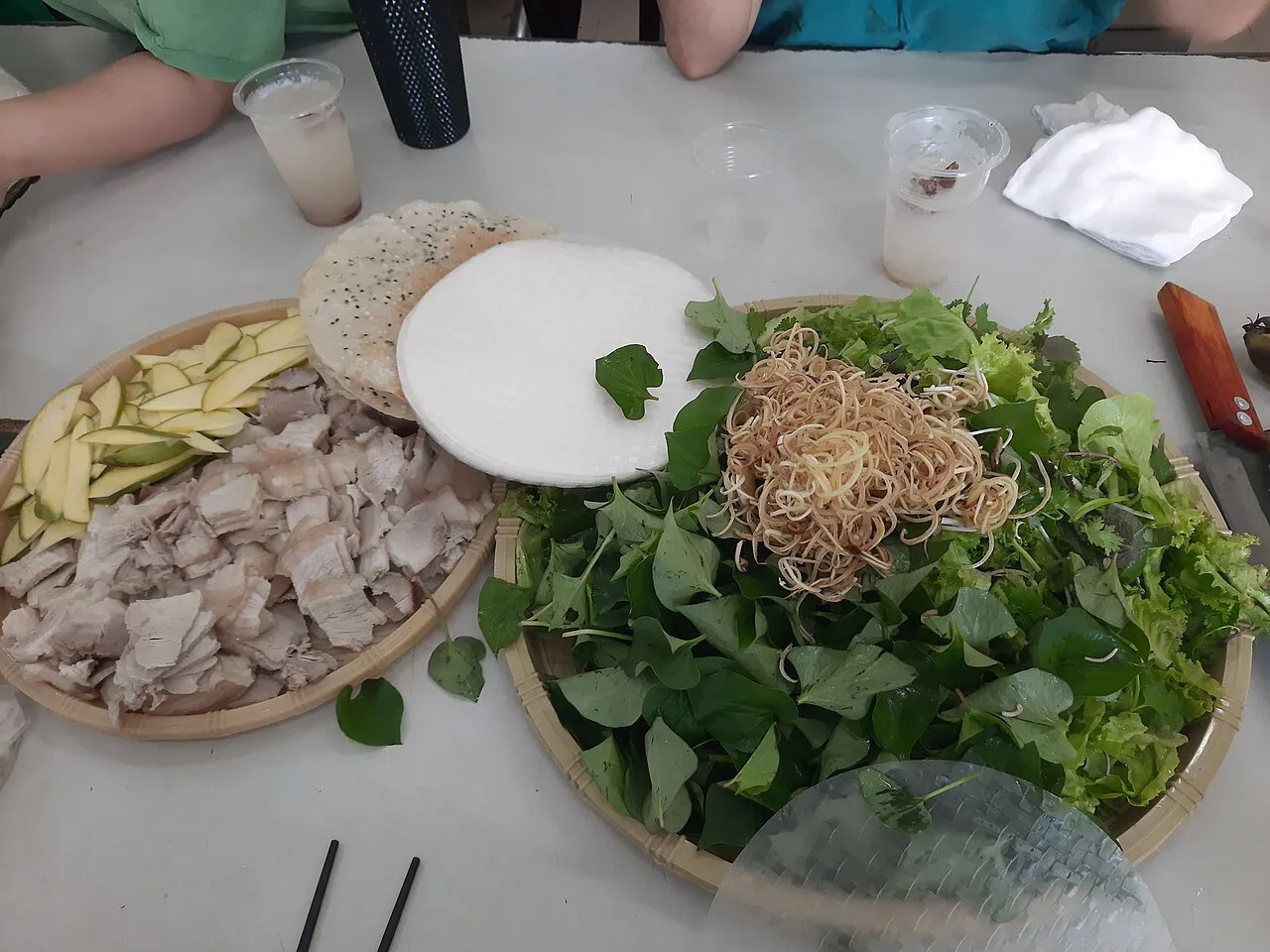
- Dip the rice paper in cold water briefly. It does not stick and stays soft without turning chewy.
- Lay a layer of noodle sheets on the paper first.
- Add the pork and herbs.
- Roll a small parcel right in your hand.
- Dip one end of the roll into the mam nem.
- If you like heat, bite a chilli between rolls.
Eat it the same day as mi Quang and cao lau for the full taste of Quang. For something steamed and small, add banh beo.
Choosing a place, and prices
The herbs are clean, green and complete with the central Vietnam range; the pork is tender, not dry; the mam smells mild, rich but not harsh. All three show on the table, even in an unfamiliar shop.
A roast pork portion costs about VND 85,000 at Dai Loc Nang Tho 3 and VND 95,000 at Donald Trung, as Google Maps diners paid.
Three places in Da Nang
Every place below has a Google Maps rating of 4.5 or above and hundreds of reviews. Each is a reason to go, not a ranking.
Dai Loc Nang Tho 3 (Đại Lộc Nàng Thơ 3): a Quang Nam name
The shop is at 103 Trung Nu Vuong, Hai Chau, open 6:30 am to 9 pm daily, rated 4.7 from 699 reviews. One diner writes that Dai Loc pork rice paper is a speciality of Dai Loc district in old Quang Nam province.
Dai Loc is a local place name, so many shops on this street share it. That makes it easy to mistake the shop opposite, so match the address. It has an air-conditioned space; on a busy holiday, one diner waited a while for all the dishes.
Bep Be Anh (Bếp Bé Anh): boiled pork and mackerel
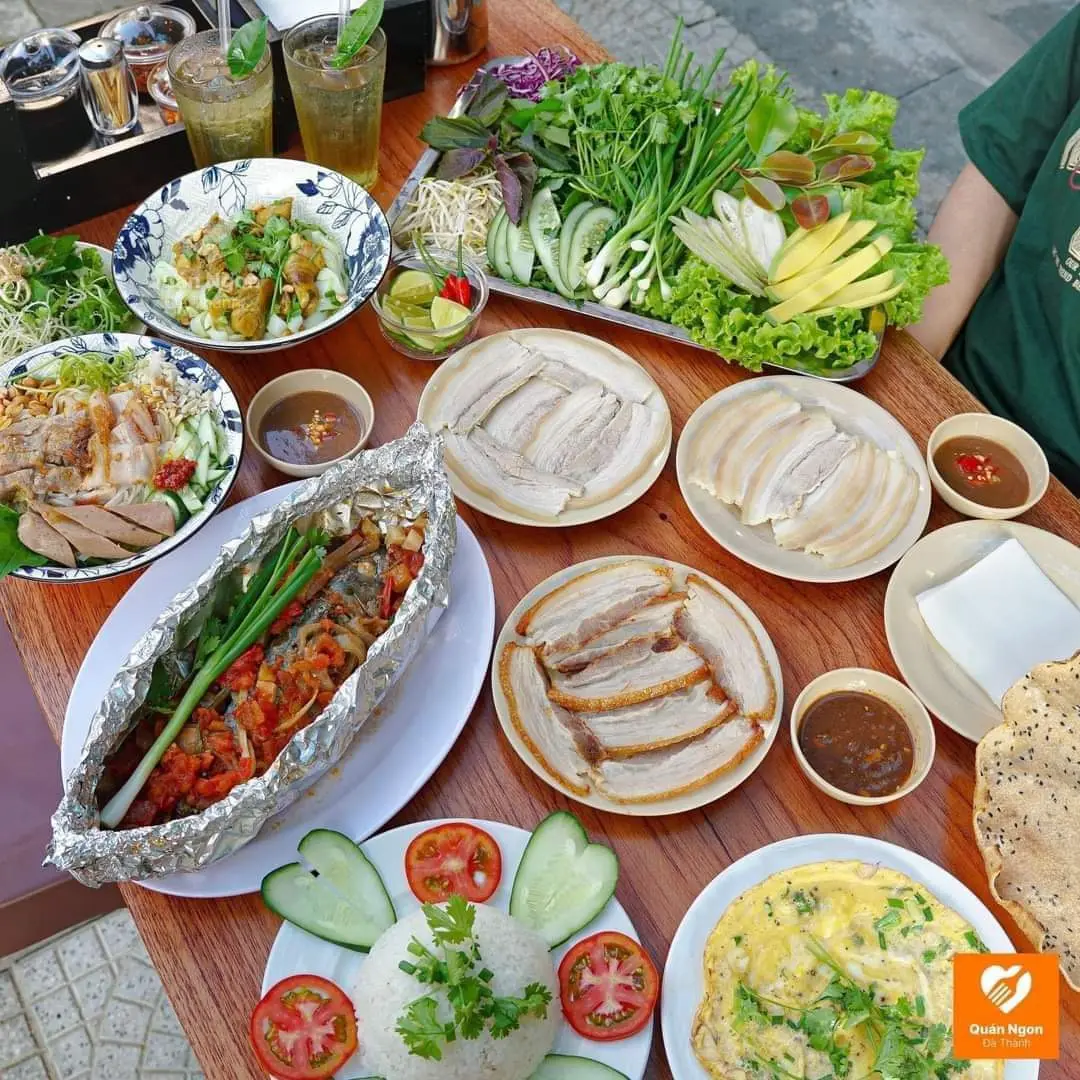
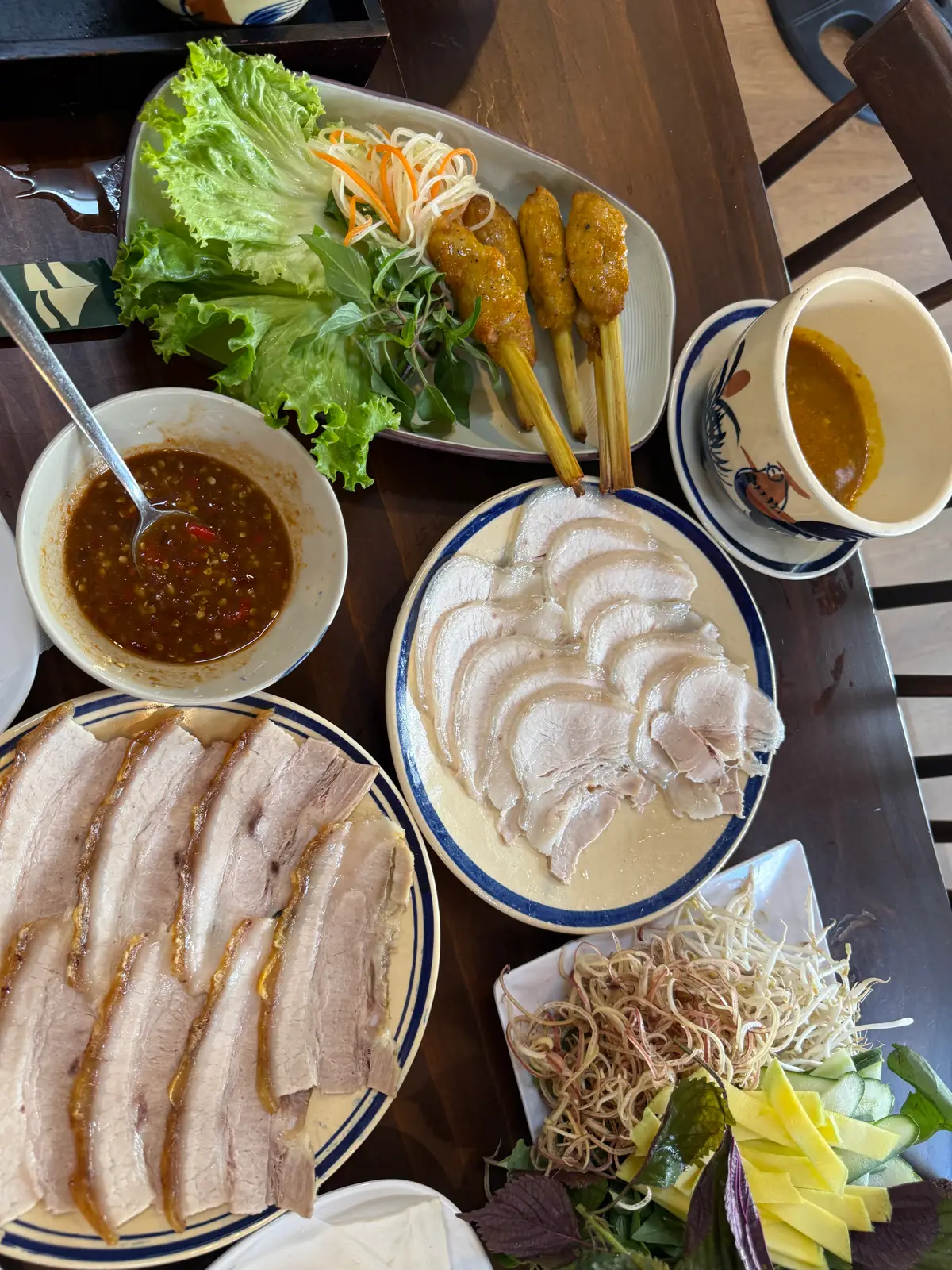
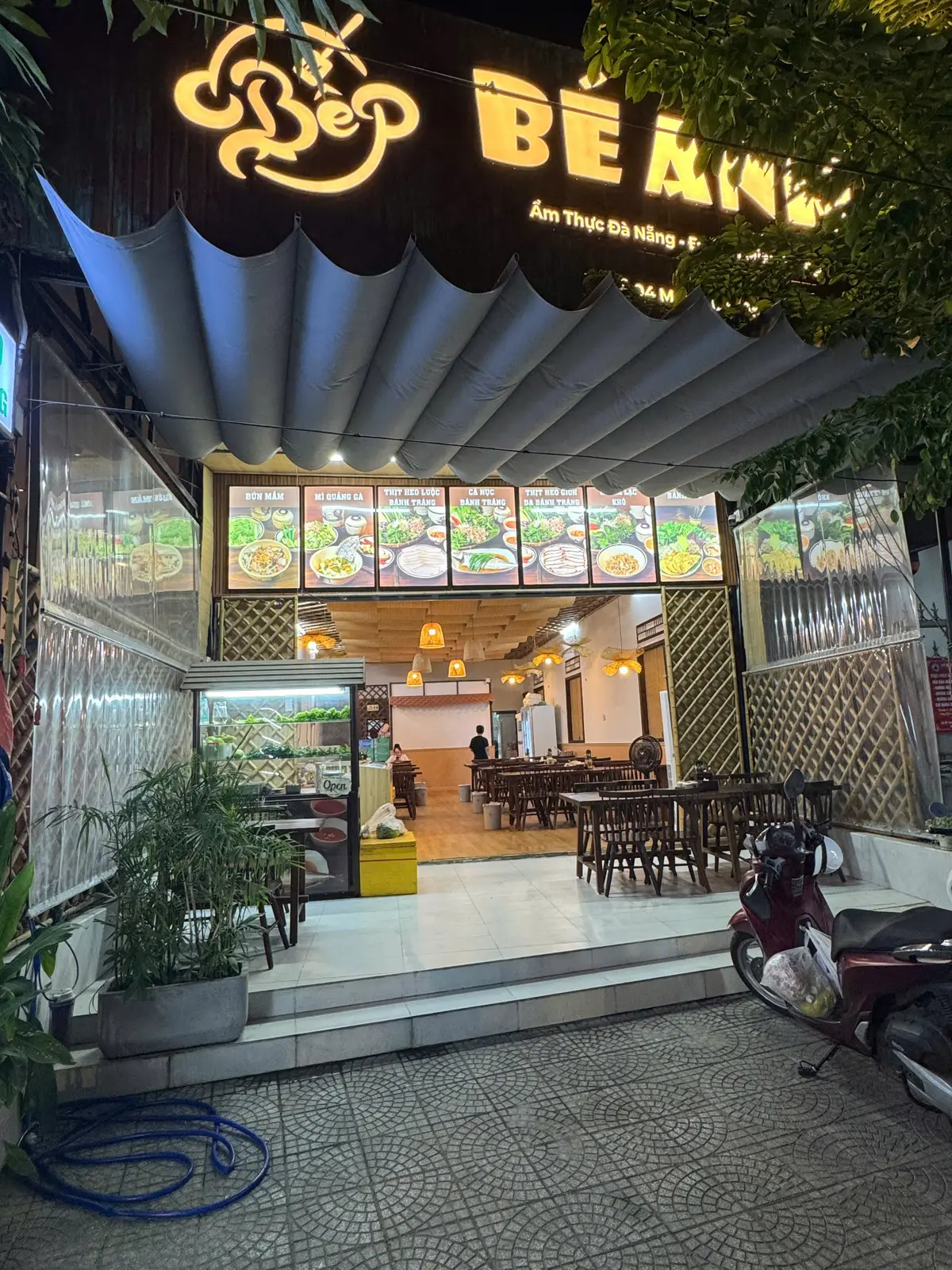
The shop is at 04 Mai Thuc Lan, Ngu Hanh Son, open 10 am to 9 pm and closed on Sunday. It is rated 4.9 from 696 reviews. Diners praise juicy boiled pork and fresh mackerel, rich with mam nem; a large portion for two is enough at a fair price.
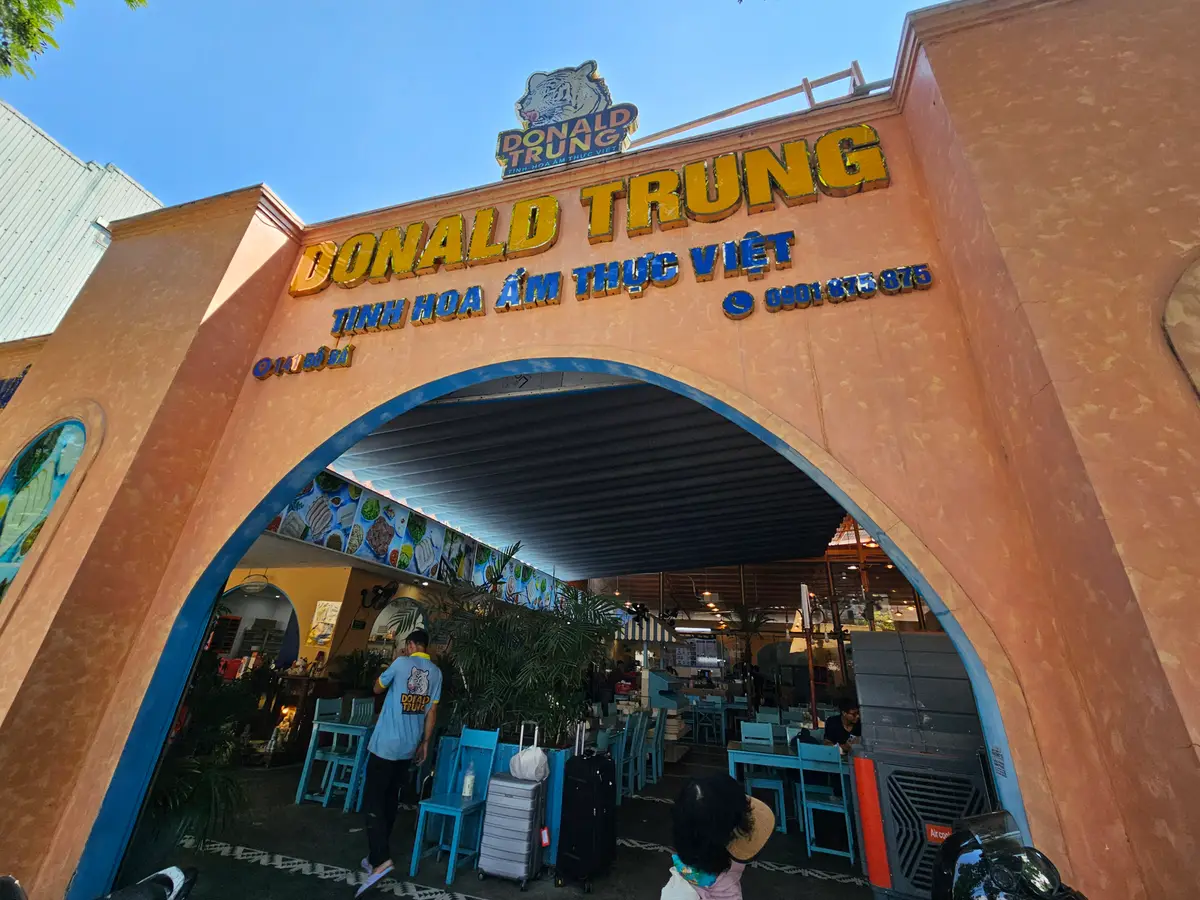
Donald Trung: the self-serve herb bar
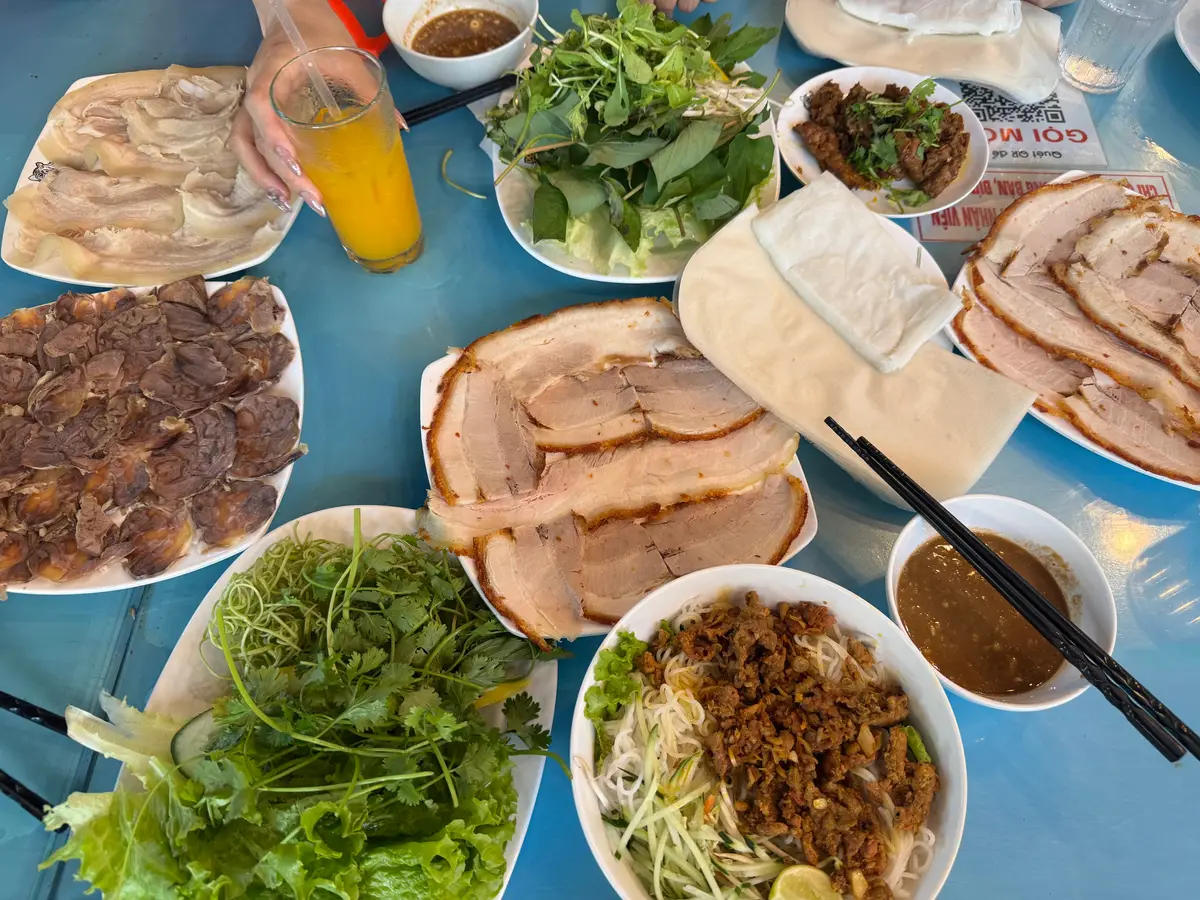
The shop is at 141 Do Ba, Ngu Hanh Son, open 7 am to 10 pm daily. It is rated 4.5 from 2,261 reviews.
The herbs sit at a self-serve counter and you take as much as you like. There is an air-conditioned area and an outdoor area, and a hand washing station for before and after the meal. Eating alone, order half of each dish.
For more places in Da Nang, see danangoi.com/places/ (opens in a new tab).
Photo credits
- A riverside market at Faifo (Hoi An) on a French-era postcard from the series "Environs de Tourane": Wikimedia Commons (opens in a new tab), Unknown author (Public domain)
- The pork roll spread: boiled pork, raw herbs and lettuce, rice paper and a bowl of brown dipping sauce: Wikimedia Commons (opens in a new tab), Le Huynh Bo (CC BY-SA 4.0)
- A sheet of rice paper ready for the pork and herbs to be rolled in: Wikimedia Commons (opens in a new tab), Le Huynh Bo (CC BY-SA 4.0)
- Photos and clips uploaded to Google Maps (Dai Loc Nang Tho 3 on Google Maps (opens in a new tab), Bep Be Anh on Google Maps (opens in a new tab), Donald Trung on Google Maps (opens in a new tab)) by BANH TRANG THIT HEO DAI LOC - QUAN NANG THO 3 - 103 Trung Nu Vuong, Kim Ngan Trinh, My Hanh Chung, Bep Be Anh - Thit Heo Banh Trang & Dac San Da Nang, Stephen Le, Google Maps contributor.
Common questions
What is banh trang cuon thit heo?
It is boiled pork rolled in rice paper with raw greens and dipped in mam nem. The pork is lightly seasoned, boiled until tender and cut into sliver-thin slices, and the herbs are eaten raw.
Where does banh trang cuon thit heo come from?
It comes from Quang Nam and Da Nang, where it was once known only to residents and is now famous across both. Dai Loc in Quang Nam is regarded as the cradle of the roll.
What does hai dau da pork mean?
It is boiled pork whose slices keep a layer of skin and fat at both ends. The pork is usually belly or hai dau da.
What do you dip banh trang cuon thit heo in?
Mam nem is the only dipping sauce for the dish. It is a fermented fish sauce from Quang Nam, made with chilli, garlic and finely chopped pineapple.
How long do you dip the rice paper?
A quick dip in cold water is enough: the paper does not stick and stays soft without turning chewy.
Is the Tuy Loan rice paper craft a heritage item?
Yes. The traditional Tuy Loan rice paper craft in Hoa Phong commune, Hoa Vang, joined the national intangible heritage list by Decision 374 on 21 February 2024.
How much does a roast pork portion cost?
A roast pork portion cost VND 85,000 at Dai Loc Nang Tho 3 and VND 95,000 at Donald Trung for Google Maps diners.
Why do so many Da Nang restaurants share the name Dai Loc?
Dai Loc is a local place name anyone may use. Trung Nu Vuong street alone has two or three shops with it, so match the address before you go in.
Read next
- Hoi An History: The Faifo Trading Port and Old TownVerified 18 October 2026
- Nam O Fish Sauce: Old Village, Families and FermentingVerified 18 October 2026
- Mit Tron: Quang Nam's Kitchen-Corner Jackfruit SaladVerified 18 October 2026
- Banh Kho Me Cam Le: the Seven-Fire Cake of QuangVerified 18 October 2026
General information checked against the sources listed above, not legal advice for your situation. Rules and office practice change; confirm with the relevant office or a licensed adviser before you act. See how guides are checked.
Spotted an error? Report it.