Banh Kho Me Cam Le: the Seven-Fire Cake of Quang
Banh kho me is a square cake, about 4 cm a side, baked over charcoal, dipped in ginger syrup and coated in sesame. Legend ties it to rations for Quang scholars walking to the Hue exams. The village craft dates from the mid-twentieth century. A small box cost VND 50,000 in December 2024.
In this guide
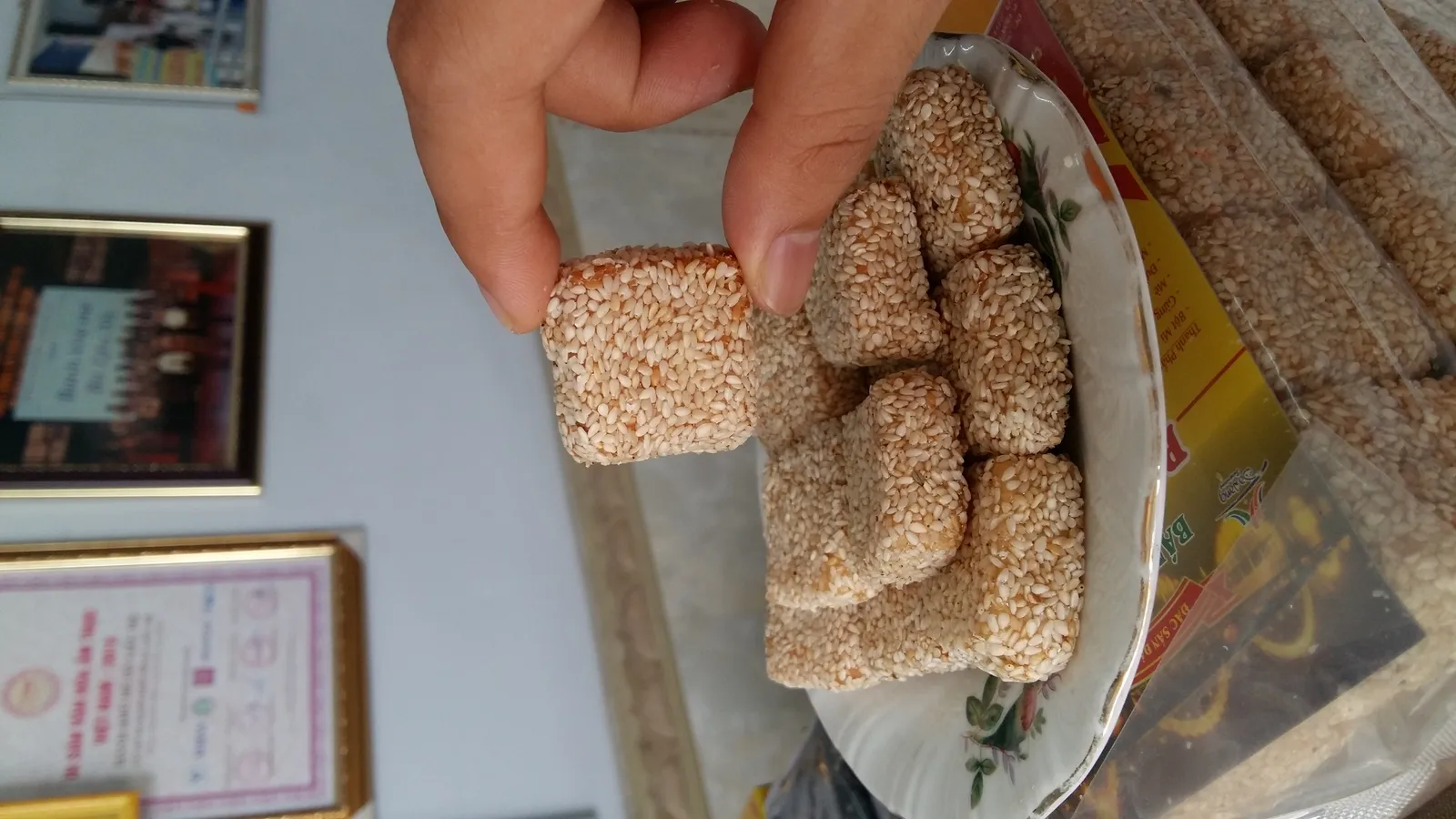
Banh kho me (bánh khô mè) is a square cake, about 4 cm a side. It is baked over charcoal, dipped in ginger sugar syrup and coated in sesame. Bite in and it is crisp, with soft sugar threads, nutty, gently sweet, smelling of ginger and roasted sesame. It is also called the “seven-fire” cake.
Cam Le (Cẩm Lệ) is now the name of a ward. The wards Hoa Tho Tay, Hoa Tho Dong and Khue Trung were merged into a new ward named Cam Le. According to the city’s news page in 2011, the traditional craft village lies near Cam Le market, in the Cam Bac (Cẩm Bắc) area of Hoa Tho Dong ward. That ward is now part of Cam Le ward.
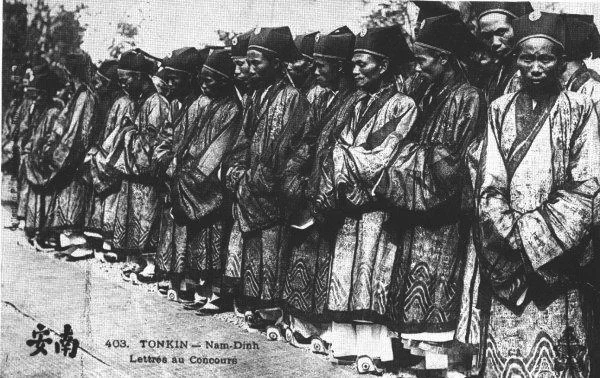
The cake of the exam candidates
The story goes that in the old days, scholars from Quang who wanted to pass the exam and become mandarins carried their tents and mats. They walked 15-20 days to the capital, Hue, to sit the test. To lighten their husbands’ load, capable wives thought up a cereal flour, called “lo”, which needed only sugar mixed in when eaten.
Then, in Hoa Quy (Hòa Quý) village in Da Nang, one woman had the idea of turning the “lo” flour into banh kho me. It became dry rations for her husband on his way to the exam. When he passed and returned as a prefect, he always served guests that humble cake, a way of honouring his wife’s effort.
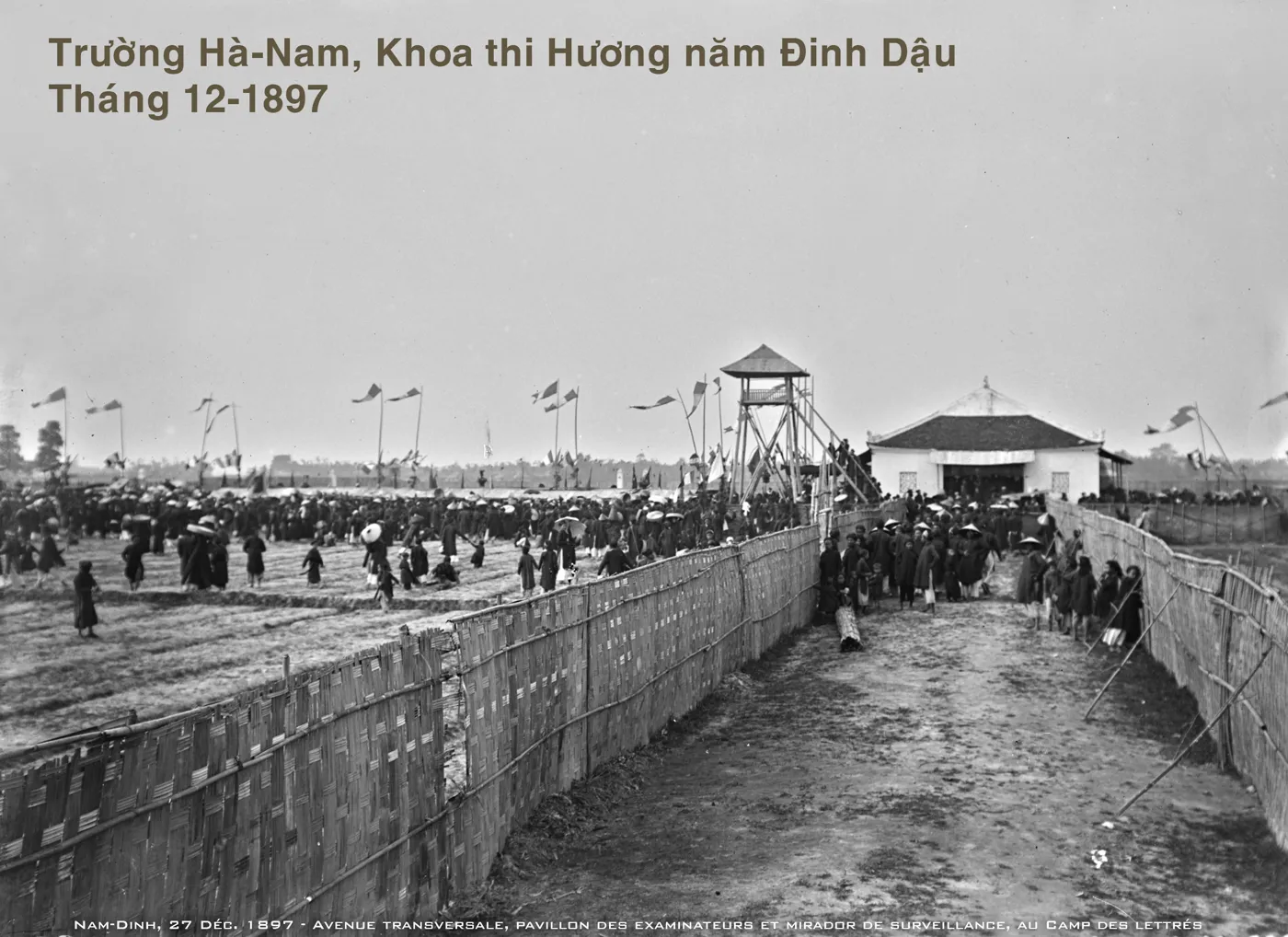
That is the legend. The newspaper Tuoi Tre records it as a family-recipe cake that appeared in the nineteenth century, first made as a dry cake that keeps well on long journeys.
From roasted grain to a square cake
Old farmers of Quang land say the first form of the dry cake was roasted rice or glutinous-rice grains. They were pounded, mixed with sugar and scooped up with a jackfruit leaf. Eaten in a hurry, or while talking, it easily made people choke. So the flour was sieved into a mould of square cells, like a pressed cake, lined underneath with coarse cloth.
Cake dipped in roasted glutinous rice becomes banh kho no, while cake dipped in sesame is banh kho me. The two cakes differ in the outer coat.
Why it is called the seven-fire cake
Cooking turned into baking over the charcoal of the cooking stove, from a strong fire to a medium and then a low fire, to keep the cake crisp and airy.
From these cook-and-bake steps the cake came to be called “banh bay lua”, the seven-fire cake. It is baked 7 times to reach its nutty, gently sweet taste.
At Quang Chau (Quang Châu), Mrs Nguyen Thi Nghi (Nguyễn Thị Nghĩ) has more than 40 years in the trade. The cake must be baked over the fire seven times to reach its crispness and aroma. Today the process has been simplified: steaming over water, then baking three times.
Two craft villages: Cam Bac and Quang Chau
In the Nguyen period, banh kho me from Quang Chau in Hoa Chau (Hòa Châu) commune, Hoa Vang district, became famous and grew into a craft village. Each year local officials offered it to the court.
The craft in Cam Bac - Hoa Tho and in Quang Chau village - Hoa Chau both date from the fifties of the twentieth century. Hoa Chau commune has since been merged into a ward named Hoa Xuan.
Since 1998 local authorities have supported the Cam Le craft so that the traditional village could develop. In the past the cake was made only at Tet; now the charcoal stoves glow all year.
The craft has thinned. At its height there were 150 households; in 2011 only about 20 were left, and 10 of them made the cake regularly. In December 2024, Quang Chau had only a few workshops still making it by hand in the traditional way.
The cake has stayed part of local life across many generations. For the village women, the work gives them income to buy more for Tet.
What goes in it and how it is made
The cake is made from rice, glutinous rice, sesame and refined sugar. The rice must be good rice, washed clean and milled to a fine flour. The white rice and glutinous rice are soaked for about an hour, drained, then milled.
The worker sieves the flour into a mould of square cells and uses a small bamboo stick to level and shape the surface. The Ba Lieu Me (Bà Liễu Mẹ) workshop makes it entirely by hand in 7 steps. They run from choosing good rice and milling to shaping in the mould, steaming, sieving the flour and baking evenly over two fires.
The baking is done wholly over charcoal. Electric drying, coal or other fuels do not give the required result. While baking, the fire is adjusted to keep the cakes crisp and unburnt.
After baking, the squares are dipped in a ginger sugar syrup that pulls into soft, clear, glistening threads, and finally coated in sesame. The sesame sticks thanks to a pure young sugar, soft like malt syrup. The centre is spongy, and when you break the cake the sugar pulls into golden threads. The Ba Lieu Me process uses no preservatives.
Ba Lieu, who took the cake beyond the village
Say Cam Le sesame cake and people think of Ba Lieu’s at once. Ba Lieu’s real name is Huynh Thi Dieu (Huỳnh Thị Điểu), born in 1946. She spent more than 20 years improving processing, packing and marketing, spreading the cake across the country and abroad. In 2011 Ba Lieu was the most reputable brand on the market.
The workshop now has 6 sesame-cake products with a 4-star OCOP certificate. Beside the traditional rice cake it makes brown-rice, white-sesame and black-sesame lines.
Tet is the peak season. At Tet the workshop made 400,000 to 500,000 products. In the latest season, Tet orders rose about 30% on the year before, averaging 3,000 to 4,000 products a day. The market is still mainly Da Nang, and the cake is also distributed to many provinces and cities.
How to eat banh kho me
The cake is made for festivals and the Lunar New Year, and is used in ancestor worship. Have it with hot tea. The square cake has a colour said to symbolise earth.
The cake does not like wind: if 12 pieces are not finished at once, the rest turns soft and runs with moisture, and the taste is lost. That is why the cakes are packed 24 small separate pieces to a box.
Price and where to buy
In December 2024, Quang Chau makers sold a small box at VND 50,000 and a large box at VND 70,000. Ba Lieu packs 24 small separate pieces to a box, which keeps for about five months. Some overseas Vietnamese and customers abroad choose Ba Lieu Me cake as a Tet gift.
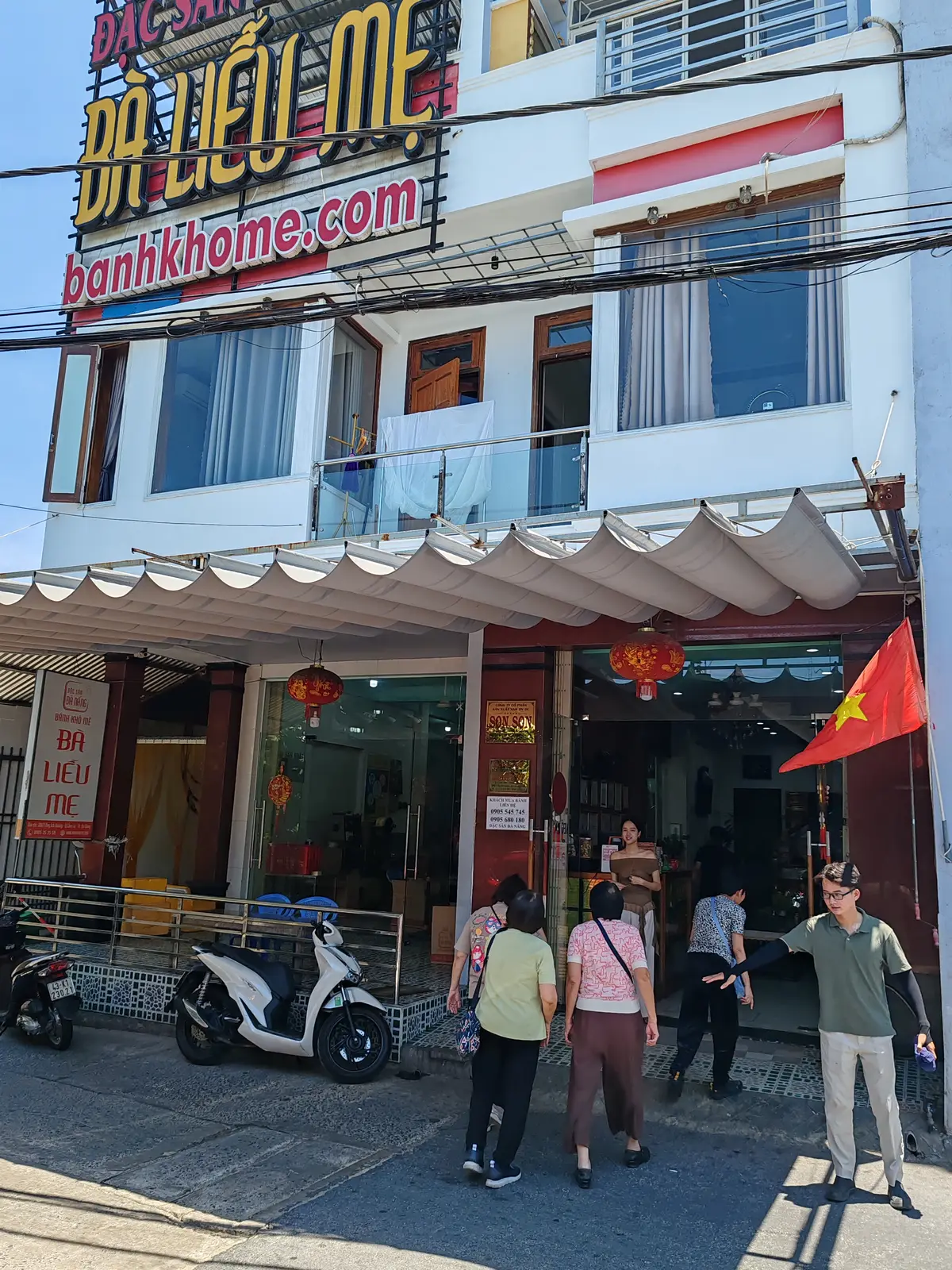
Only one place is named here: Ba Lieu Me, the most reputable brand of the Cam Le craft village. It is rated 4.5 stars from 103 reviews on Google Maps.
Ba Lieu Me sesame cake
The workshop is at 200/1 Ong Ich Duong street (Ông Ích Đường), Cam Le ward. It holds 4.5 stars from 103 Google Maps reviews.
For places to eat in Da Nang to go with the cake and tea, see the listings at danangoi.com (opens in a new tab).
More Quang Nam-Da Nang food
- Hoi An chilli sauce, another jar to carry home.
- Cao lau, the Hoi An noodle dish.
- All food pages.
Photo credits
- Scholars lined up for the regional examination at Nam Dinh in the north, late nineteenth century; an illustration of the old exam world, not Quang scholars: Wikimedia Commons: Vietnamese candidates for the imperial examination, Nam Dinh postcard, late nineteenth century, public domain (opens in a new tab) (Public domain)
- The Ha Nam examination ground at the Huong exam of the late nineteenth century, a camp of scholars fenced with bamboo (northern Vietnam): Wikimedia Commons: Truong thi Ha Nam, Khoa thi Huong (Gallica/BnF source), public domain (opens in a new tab) (Public domain)
- Banh kho me: a square cake coated in sesame seeds: Wikimedia Commons (opens in a new tab), Huynh Duc Sol (CC BY-SA 4.0)
- Photos and clips uploaded to Google Maps (Ba Lieu Me Sesame Cake Workshop on Google Maps (opens in a new tab)) by Winston music.
Common questions
What is banh kho me Cam Le and where is it made?
A square cake baked over charcoal, dipped in ginger sugar syrup and coated in sesame. The traditional village lies near Cam Le market, and Quang Chau village in Hoa Chau also makes it.
Where does banh kho me come from?
In the legend, Quang scholars walked 15-20 days to Hue to sit the exam. Their wives made a cereal flour to lighten the load. A woman in Hoa Quy village turned it into sesame cake as rations for her husband. Another source dates the cake to the nineteenth century.
Why is it called the seven-fire cake?
The cake moved from cooking to baking, from a strong fire to a medium and then a low one. From these steps it came to be called banh bay lua. It is also baked seven times to turn crisp and fragrant.
What is Cam Le now?
A ward. The wards Hoa Tho Tay, Hoa Tho Dong and Khue Trung were merged into a ward named Cam Le. The Ba Lieu Me workshop is in Cam Le ward.
How much does banh kho me cost?
In December 2024, Quang Chau makers sold a small box at VND 50,000 and a large box at VND 70,000.
How do you eat banh kho me and how long does it keep?
Have it with hot tea. The cake does not like wind: if 12 pieces are not finished at once, the rest turns soft and runs with moisture. Ba Lieu's box of 24 small separate pieces keeps about five months.
Is banh kho me a good gift to take home?
Some overseas Vietnamese and customers abroad choose Ba Lieu Me cake as a Tet gift. The workshop packs it in a box of 24 small separate pieces.
Does banh kho me contain preservatives?
The Ba Lieu Me process is mainly traditional handwork and uses no preservatives.
Read next
- Hoi An Chilli Sauce: The Trieu Phat Family JarVerified 18 October 2026
- Cao Lau Hoi An: History, Noodle Makers and Three PlacesVerified 18 October 2026
- Banh Beo of Quang Nam: From Hue Bowls to Hoi An and Da NangVerified 18 October 2026
- Banh Kho Me Cam Le: the Seven-Fire Cake of QuangVerified 18 October 2026
General information checked against the sources listed above, not legal advice for your situation. Rules and office practice change; confirm with the relevant office or a licensed adviser before you act. See how guides are checked.
Spotted an error? Report it.