Dien Hai Citadel: Da Nang's Fort of the First Defence
Dien Hai Citadel is a Nguyen-dynasty fort in central Da Nang. It began in 1813 as an outpost on the Han River bank and was moved inland and rebuilt in brick in 1823. It was the forward post of the defence against the French-Spanish fleet, and it was ranked a special national monument on 25 December 2017.
In this guide
A fort at the mouth of the Han
Dien Hai Citadel (Thanh Dien Hai) sits in the middle of modern Da Nang, between glass office towers and the city’s administrative centre, and it is easy to walk past without knowing what it is. It belongs to the same harbour story as the Franco-Spanish landing at Da Nang, and its brick walls are among the few surviving traces in the city of the first fighting.
The name tells you its job. Before the first foreign warships arrived, the Nguyen court already treated the Han River mouth as the gateway to Hue, and it put forts on both banks. Dien Hai, “sea-guarding”, was the main one on the west bank.
From riverside outpost to brick citadel
Work on the first outpost began in 1813, in the 12th year of Gia Long, on the left bank of the Han River. That bank was close to the water, and in 1823 the outpost was moved inland and rebuilt in brick on a high mound; in 1835 it was renamed Dien Hai Citadel. One newspaper dates the first outpost a year earlier, but the other pages we read agree on the later year.
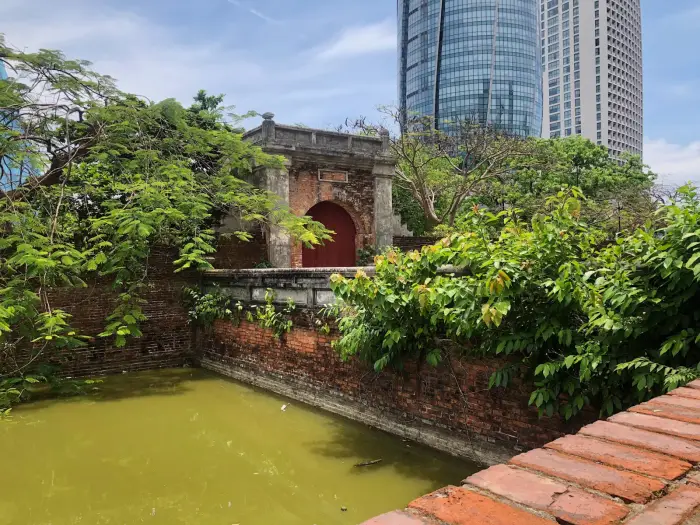
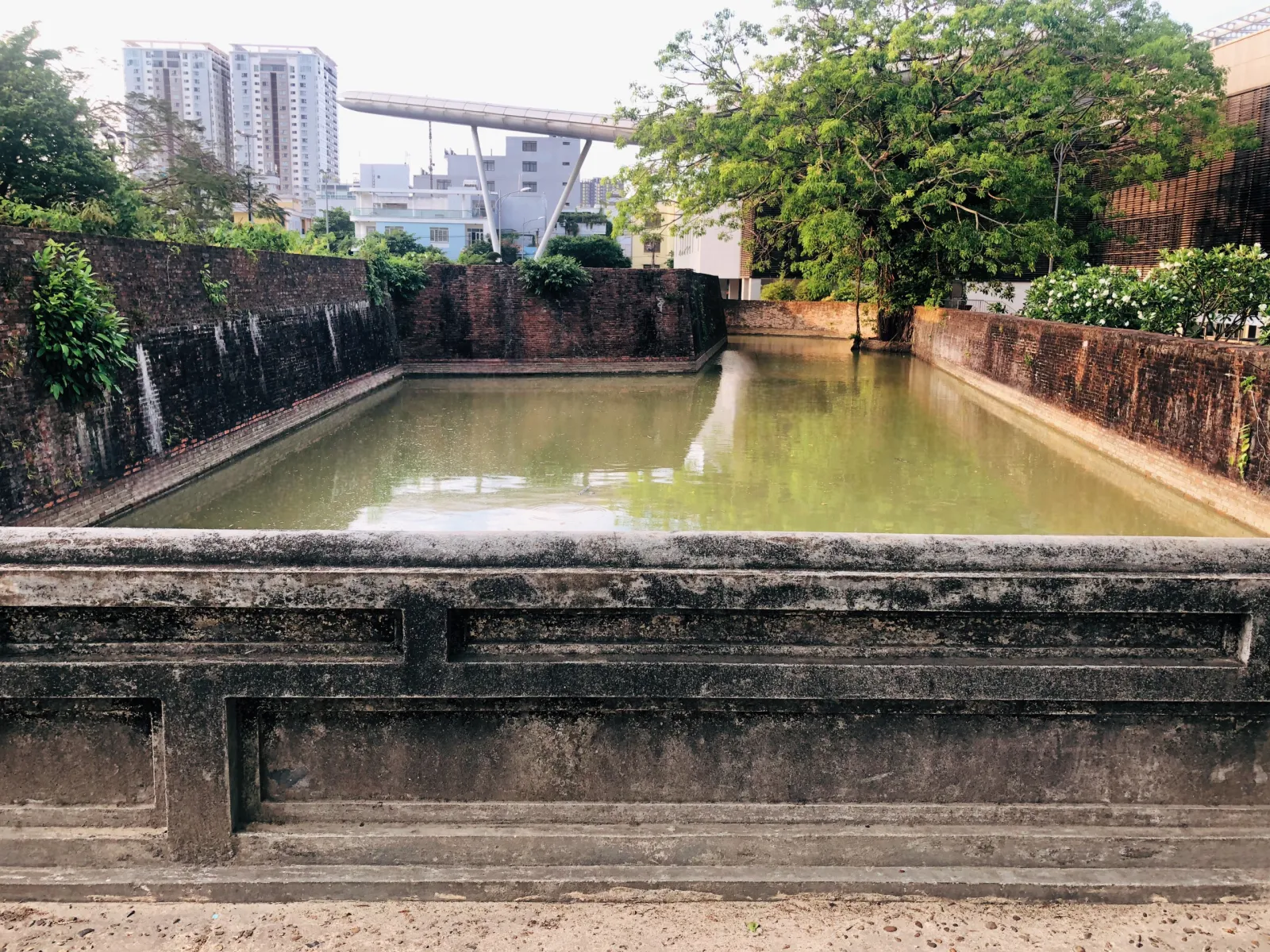
The plan follows a square, Vauban-style design, and the citadel was equipped with 30 emplacements for large cannon. In 1847 it was enlarged to a perimeter of 556 m, with walls over 5 m high and a moat 3 m deep. It had two gates, the main one facing south and another facing east.
The defence against the fleet
On 1 September 1858 the French-Spanish force attacked Da Nang with 14 ships. Dien Hai became the forward post of the defence: it pinned the invaders down for more than a year and a half. The defence was led by General Nguyen Tri Phuong together with other generals.
The campaign ended without the quick result the allied command had wanted. According to the city’s own account of the 2018 ceremony, the force withdrew from Da Nang on 23 March 1860 after a year and a half bogged down. Accounts differ by a day on the exact date, so check it before you quote it. For the ships, maps and period images, see the picture history of the landing.
Hospital, workshop and neglect
Once Da Nang became a French concession, the citadel changed use. In 1895 the French took it to build a military hospital, and in doing so destroyed the old structures inside. A chapel the French added to the hospital was demolished in 1998. The wider story of that period is in French Tourane.
After 1975 a pharmaceutical enterprise used the citadel as a drug-processing workshop. The city built the Da Nang Museum on the citadel site in 2007, and the museum was inaugurated and opened to visitors in 2010.
Monument status
The Ministry of Culture and Information recognised the citadel as a national historic monument on 16 November 1988, and a monument plaque was fixed on 25 August 1998. The Prime Minister decided to rank it a special national monument on 25 December 2017. The city held the ceremony to receive the certificate on 29 March 2018 and began the restoration project the same day.
Restoration
Phase 1 started on 29 March 2018 with a budget of 102.7 billion dong. The city moved 80 households and 3 state agencies out of the core and buffer zones, then invested over 100 billion dong in restoring high walls and a deep moat.
On 6 May 2022 the city approved phase 2, a total investment of over 84.2 billion dong,, scheduled to run until 2024. It plans to rebuild the east gate, the bridge at the west gate and the flag tower in the south, and an underground exhibition house so that it does not block the view of the whole monument. It also dismantles the Da Nang Museum building inside the citadel, and the city decided to move the museum to 42 Bach Dang.
Cannon and what to look for
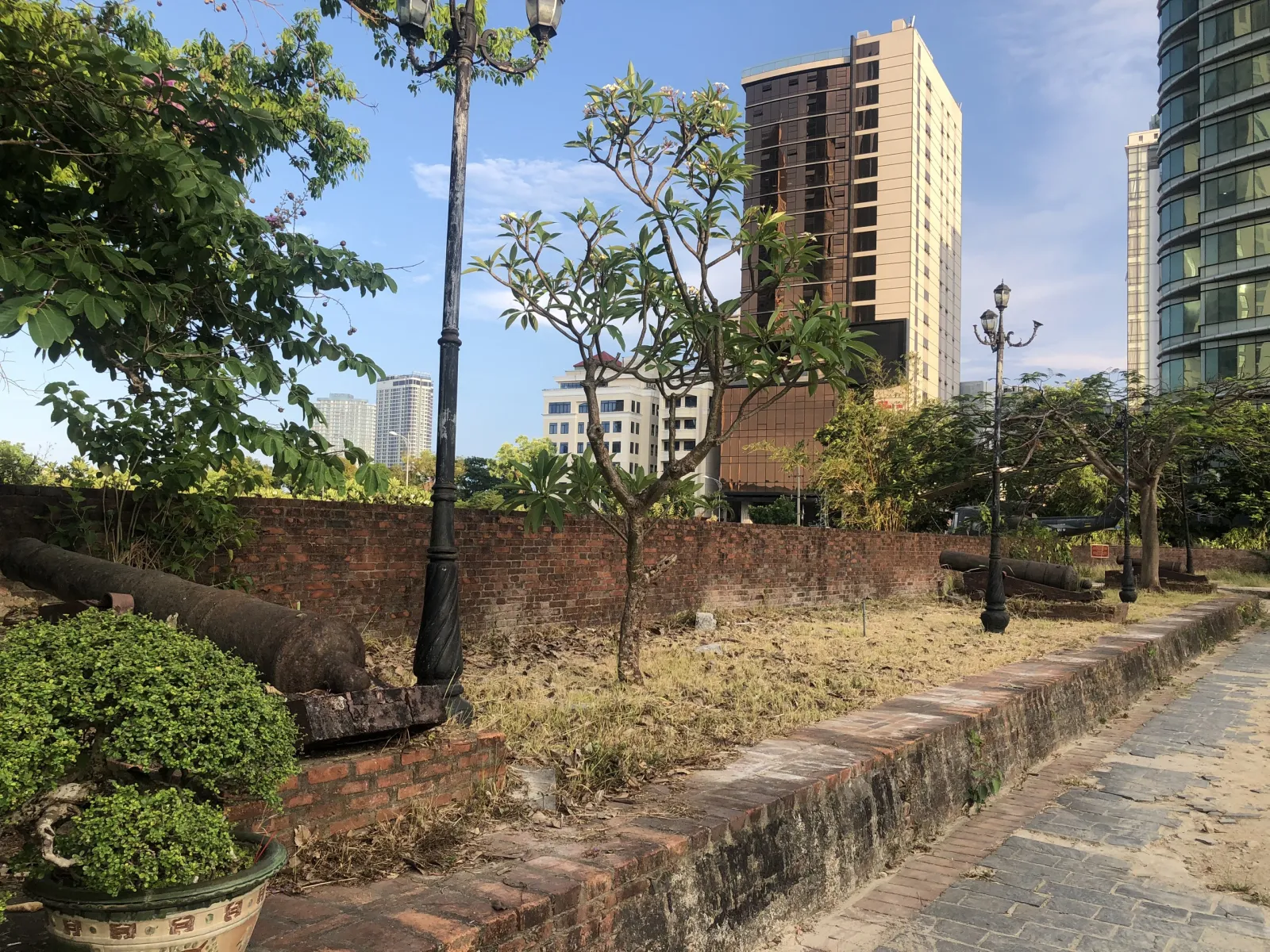
Iron cannon are the objects most people remember. Seven cast-iron cannon found in the citadel grounds are managed by the Da Nang Museum, and the collection stood at 14 pieces when phase 2 was approved.
Visiting
The monument zone covers 26,519 square metres and is bordered on the north by Ly Tu Trong street. It now lies in Hai Chau ward. Walk the walls and the moat, then continue along the river to the other places in the story.
Treat the details of a visit with care. We found no dated source for opening hours, a ticket price or a reliable street address. Ask your hotel or check locally on the day, because the restoration works change what is open.
Read next
For the French years that followed, read French Tourane. For the landing itself, see the picture history of the landing.
Photos (1)
- Botminh24, CC BY 4.0 (opens in a new tab)
Not confirmed: No dated source gave opening hours, a ticket price or a reliable street address. Whether the restoration phase is finished, and whether the museum building inside the walls is gone, is unconfirmed. The allied withdrawal date differs by a day between accounts.
Common questions
When was Dien Hai Citadel built?
Work on the first outpost began in 1813, the 12th year of Gia Long, on the left bank of the Han River. In 1823 it was moved inland and rebuilt in brick, and in 1835 it was renamed a citadel.
What happened here during the French-Spanish attack?
The French-Spanish force attacked Da Nang with 14 ships on 1 September 1858. Dien Hai became the forward post that pinned the invaders down for more than a year and a half, under General Nguyen Tri Phuong among others.
What did the French do with the citadel?
In 1895 they took it to build a military hospital and destroyed the old structures inside.
Is it a special national monument?
Yes. It was recognised as a national monument on 16 November 1988, and the Prime Minister decided to rank it a special national monument on 25 December 2017.
Can I visit, and what does it cost?
The walls and moat are in the middle of the city, and a restoration phase was approved in May 2022 and scheduled to run until 2024. We found no dated source for opening hours, a ticket price or the current state of the grounds, so check locally before you go.
Read next
- Da Nang Under Attack: The Landing in Old Prints and MapsVerified 18 October 2026
- French Tourane: The Chessboard Town on the Han RiverVerified 18 October 2026
- Dien Hai Citadel: Da Nang's Fort of the First DefenceVerified 1 November 2026
- Hoi An History: The Faifo Trading Port and Old TownVerified 18 October 2026
General information checked against the sources listed above. Ticket prices, opening hours and rules change; check with the place before you go. See how guides are checked.
Spotted an error? Report it.