Dong Duong Buddhist Monastery: History, Tara and Thap Sang
King Indravarman II founded the Dong Duong monastery in 875, as an inscription on the site records. Almost nothing is left: one brick wall of the gate tower, Thap Sang, stands under a metal frame. A decision of 22 December 2016 made it a special national monument. The Tara bronze is at the Da Nang Cham museum.
In this guide
What Dong Duong is
Dong Duong (Đồng Dương) was a Buddhist monastery of the Champa kingdom. It lies in Dong Duong commune, Da Nang city, in what used to be Thang Binh (Thăng Bình) district of Quang Nam. When the administrative units were merged, the new commune took the same name as the monument.
If you know My Son, think of its Buddhist counterpart. My Son is the Hindu sanctuary, and Dong Duong is where a Champa king built for the Buddha. The museum places it on the plain, about 20 km south of the My Son valley. Today it is far humbler than My Son, and this page tells you what is left before you decide to go.
Built in 875 by Indravarman II
An inscription found at the site records that in 875 King Indravarman II built a Buddhist monastery and a temple of the protector bodhisattva Laskmindra Lokesvara Svabhyada. The museum calls this bodhisattva a form of Avalokitesvara, or Quan The Am in Vietnamese. The inscription and the sculptures both show that this was Mahayana Buddhism.
Under Indravarman II the Champa capital moved north from the Panduranga region to the Amaravati region and was renamed Indrapura. It is tempting to put Indrapura at Dong Duong, but a 1996 survey concluded that Dong Duong was purely a Buddhist sanctuary and that the city itself must have been a larger area outside it. French scholars read the village name as “sacred field”.
A closed monastery, laid out on an east-west line
Excavations in the early twentieth century show how big the place was. The French scholar Finot published 229 artefacts in 1901, and Parmentier then dug on a large scale in 1902. The monastery sat inside a rectangular outer wall of about 155 m by 326 m, and the main temple area and nearby towers were strung along an east-west axis about 1,300 m long.
The finds included the foundations of monks’ quarters and a lecture hall, which led researchers to call it an ideal closed monastery for training monks. Almost all of that is now underground or gone, so most of what we know comes from those early excavation records.
The Dong Duong style
Scholars named the sculpture and architecture found here the Dong Duong style, and it is the reason art historians still care about the site. It arose from the middle to the late ninth century. You can spot it in a few features: a wide flat nose, high eyebrows that join in the middle, and ornament built from curling leaves rolled out to both sides.
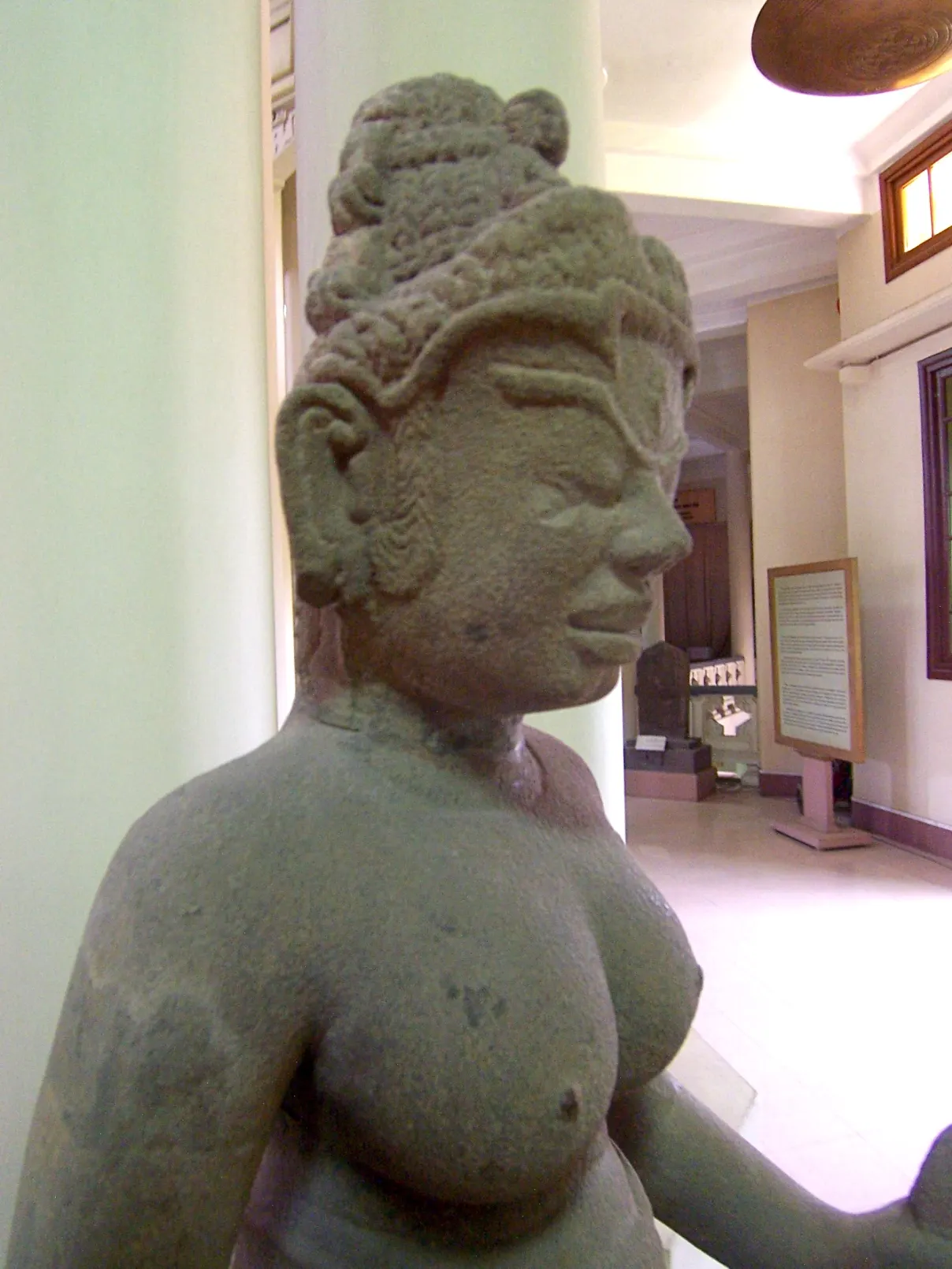
The style did not stay at Dong Duong. It appears on temples and sculpture across many provinces, from Quang Binh to Khanh Hoa. That is why a ruin with one wall left still counts as a reference point for Cham art.
The bronzes, the altar and where they are now
The best-known piece is the Tara, a solid bronze statue 114 cm tall that villagers found near the main temple in 1978. Archaeologists rate it the largest bronze statue of Champa art and one of the most important bronze works of South-East Asia of its time. The face shows the Dong Duong style: heavy joined eyebrows, a wide nose, thick lips, a diamond-shaped third eye and a high hair bun topped by an Amitabha Buddha.
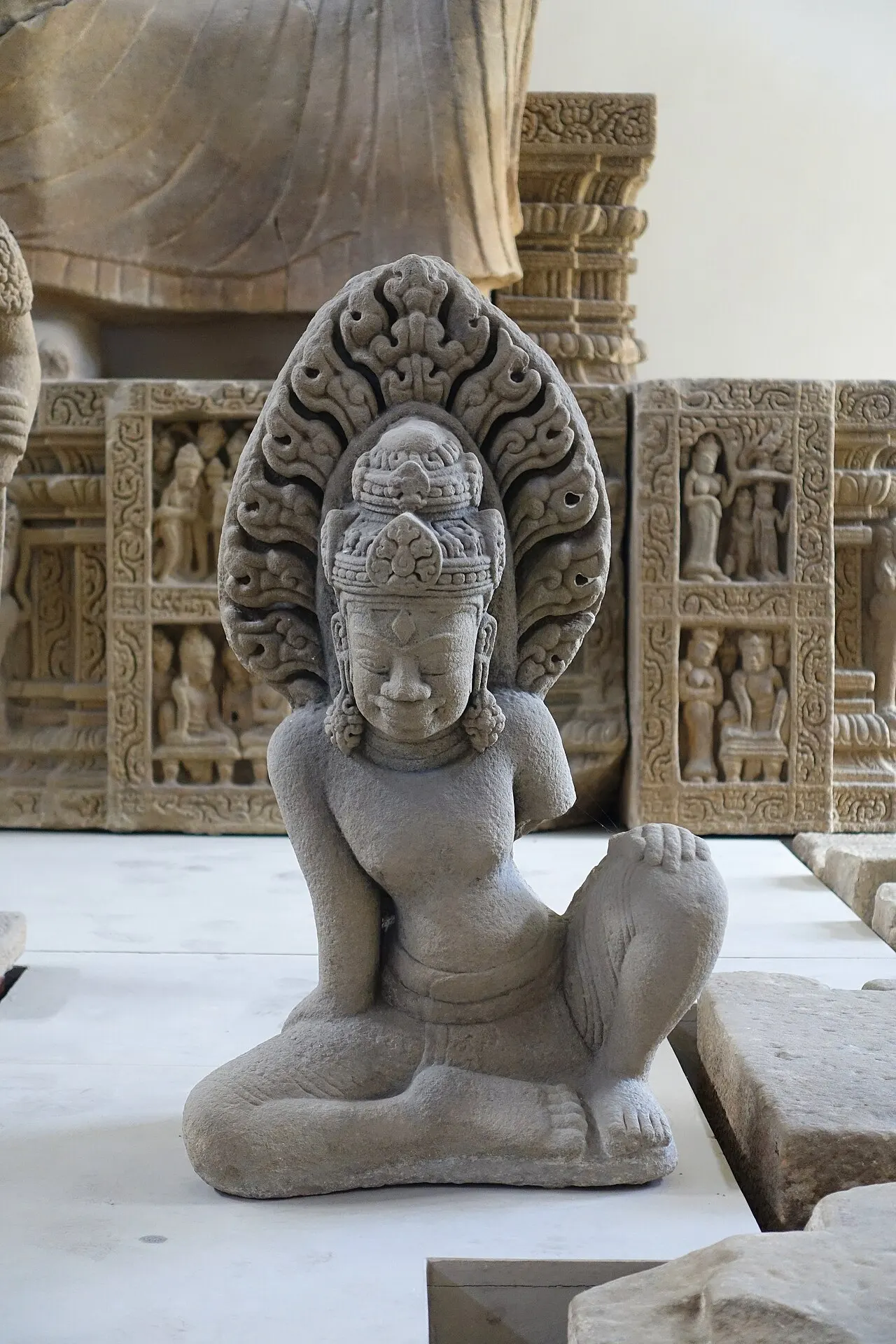
The Tara is kept at the Da Nang Museum of Cham Sculpture. Be careful here: the museum says it is especially rare and shown only at important museum and city events, so you may not find it on a normal visit.
The museum also keeps the Dong Duong altar, carved with scenes from the life of the Buddha, which became a national treasure in 2018. It was found in 1902 in the main western tower area, where the bodhisattva Lakshmindra Lokeshvara is believed to have been worshipped, and it is made of 24 stone blocks fitted together. In total, two national treasures from the monastery are kept at the Da Nang museum.
A third national treasure is not in Da Nang. Of the hundreds of artefacts found here, 3 are national treasures, and the third is a bronze Shakyamuni Buddha 108 cm tall that Henri Parmentier found in 1911. Researchers date it to about the fifth to early sixth century, in the Indian Amaravati style, probably brought by sea trade, so older than the monastery. VietNamNet’s caption places it at the Ho Chi Minh City Museum of History. Press accounts differ on which bronze is which, so treat the names with care.
To see the pieces from Dong Duong and from My Son side by side, start with the Cham Sculpture Museum, which has a room for each site.
What war and time left
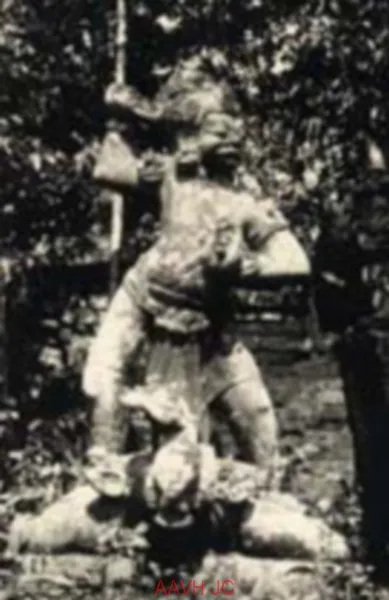
The site was heavily damaged by nature and war. Only a wall fragment of a tower, known locally as Thap Sang (Tháp Sáng), remains, with foundations and a few decorations. Thap Sang is the gate tower of the monastery. Even that wall is at risk, and in many parts of the grounds vegetation has taken over, and people have farmed, dug and reused old bricks.
A wooden support went up around the tower in 2010 and had failed by 2013. In October 2013 a metal frame replaced it, and it is still there. In 2016 the former Quang Nam province paid nearly VND 5 billion for a protective wall, a gateway and an internal path into the monument.
Special national monument status
Dong Duong has been a national monument since 2001. The Prime Minister ranked it a special national monument by a decision dated 22 December 2016.
Thang Binh district held the ceremony to hand over the certificate on the morning of 7 December, in 2019. That is why some articles say “December 2019” and others say 2016: one dates the ceremony and the other the decision. The ranking has not brought quick funding: a Da Nang city leader said in May 2026 that conservation still does not match the site’s stature.
Restoration news, 2025 to 2026
The protected zone covers 5.3 ha, and an early 2024 report counted 11 households, 112 graves and farmland and forest inside it. The locality could spend only about VND 20 million a year to clear vegetation around the tower.
The main project is the repair of Thap Sang. It was budgeted at VND 12 billion (as of October 2024) and includes excavation around the tower base over about 500 square metres. As of late 2025 the city was moving its schedule from 2023-2025 to 2023-2026. The planned work includes propping the tower body against collapse, restoring the foundation and door steps, removing the current iron frame, termite control and consolidating the brick surface.
On 15 May 2026 Da Nang held a national workshop on Dong Duong, with more than 200 delegates. One key request was an early master plan for conservation and restoration. Proposals included a Buddhist Culture Museum inside the monument zone and a study of a World Heritage nomination, a long process that comes after research, protection and management. One heritage expert suggested linking Dong Duong with My Son and other Cham sites into a “Champa heritage corridor”. As of November 2026 the newest reports still describe plans, not building work.
How to visit, and what is left to see
Go with the right expectations. What you can see is one brick wall under a metal frame, foundations and a fenced site with a path in. The same expert who proposed the corridor called mass tourism unsuitable here, because little architecture remains, and the protection of the monument must come before tourism. So think of Dong Duong as a short stop for people who care about Cham history, not as a full-day destination.
The site is in Dong Duong commune, Da Nang. Opening hours, tickets and transport are not published anywhere we looked, so ask locally and look up the monument’s name on Maps before you set out. Because the grounds are open vegetation, bring a hat and water.
Pair it with the stronger sites. My Son Sanctuary is the main Cham site of the region, and Cham towers in Quang Nam covers Bang An, Khuong My, Chien Dan and Tra Kieu. Visit the Cham Sculpture Museum in Da Nang first or last, because that is where Dong Duong’s best art lives.
Photos (3)
- Unknown photographer (Sallet fonds, 1930), Public domain (opens in a new tab)
- DoktorMax, Public domain (opens in a new tab)
- Daderot, CC0 (opens in a new tab)
Not confirmed: Opening hours, ticket prices and visiting rules are not published in anything we read, so ask locally before you go. Distance from Hoi An is also unstated. Building work on Thap Sang is not confirmed. Press names the 1 m bronze differently, as Tara or as a Buddha; this page follows the 2026 VietNamNet account of two statues.
Common questions
When was the Dong Duong monastery built, and by whom?
In 875, by King Indravarman II, according to an inscription found at Dong Duong. It was a Buddhist monastery plus a temple of the protector bodhisattva Laskmindra Lokesvara Svabhyada.
What is the Dong Duong style?
It is the name scholars gave to the sculpture and architecture found here, dated to the middle to late ninth century. Look for a wide flat nose, high eyebrows that join in the middle and curling-leaf ornament.
Where is the Dong Duong Tara statue now?
The Tara is kept at the Da Nang Museum of Cham Sculpture. The museum says it is shown only at important museum and city events.
What can I see at Dong Duong today?
A wall fragment of the gate tower, Thap Sang, plus foundations and a few decorations. The tower is braced by a metal frame put up in October 2013.
Is Dong Duong a national monument?
Yes. It has been a national monument since 2001, and a Prime Minister decision of 22 December 2016 ranked it special national.
Is the monastery being restored?
A VND 12 billion project for Thap Sang was in preparation, its schedule moved to 2023-2026. A national workshop on 15 May 2026 called for a master plan. The newest reports still describe plans, not building work.
Read next
- Cham Sculpture Museum, Da Nang: The Tourane GardenVerified 18 October 2026
- My Son Sanctuary: History, Towers, Tickets and TransportVerified 18 October 2026
- Cham Towers in Quang Nam Beyond My Son: Bang An, Khuong My, Chien DanVerified 18 October 2026
- Dong Duong Buddhist Monastery: History, Tara and Thap SangVerified 1 November 2026
General information checked against the sources listed above. Ticket prices, opening hours and rules change; check with the place before you go. See how guides are checked.
Spotted an error? Report it.