Cham Towers in Quang Nam Beyond My Son: Bang An, Khuong My, Chien Dan
Quang Nam has four Cham sites beyond My Son: Bang An, Khuong My, Chien Dan and the Dong Duong monastery, plus the citadel of Tra Kieu. Bang An is the only intact octagonal Cham tower in Vietnam, about 14 km from Hoi An. Khuong My and Chien Dan have three towers each. King Indravarman II built Dong Duong in 875.
In this guide
Which towers are left beyond My Son
My Son has its own page. This page covers the other Cham places in old Quang Nam.
Four sites have towers or tower bases to see: Bang An, Khuong My, Chien Dan and the Dong Duong monastery. A fifth, Tra Kieu, is an old citadel near Hoi An. For the museum that keeps Cham statues, see the Museum of Cham Sculpture.
Many of the towers are deteriorating, so the last sections tell the restoration story.
Bang An: the only octagonal tower
The tower stands in Dien An ward, Dien Ban, more than 1 km off Highway 1A, about 14 km from Hoi An and 27 km from Da Nang. It is the only intact octagonal Cham tower in Vietnam.
Researchers date it to the end of the 9th or the start of the 10th century, for worship and ceremony. Inside, Shiva was worshipped.
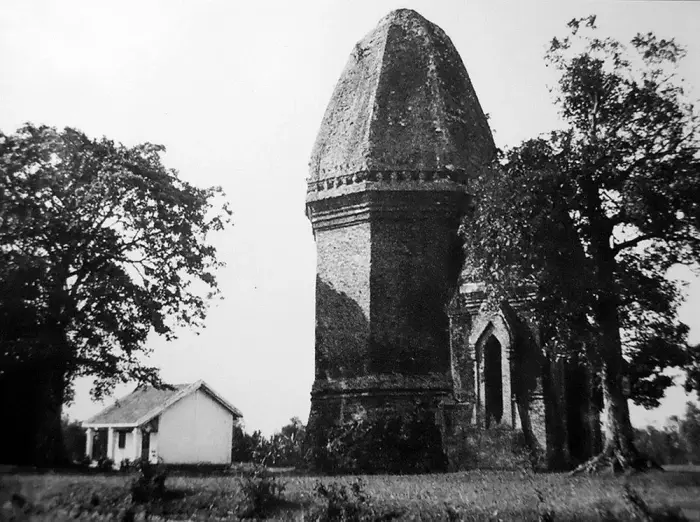
The shrine is almost 21 m tall, with base, body and roof. Base and body are octagonal, each side 4 m long. The walls are plain, with no false doors, pilasters or ornament. From afar the shrine looks like a giant linga.
In 1940 the French turned the two side doors of the vestibule into windows. Two sandstone gajasimha with bells stand before the gate. A stone linga once stood inside; only the pedestal remains.
The tower became a national monument in 1989. Only one main tower is left, about 21 m tall. A crack nearly 2 m long and 3 cm wide runs down its wall.
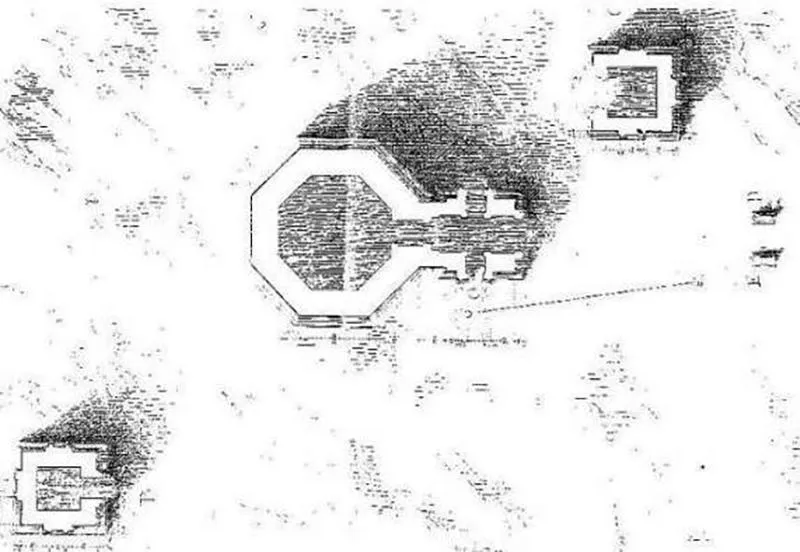
The photograph above was taken by the local photographer Vinh Tan around 1930. The plan below was drawn by Henri Parmentier in the early 20th century.
Khuong My: the “Three Towers” of Nui Thanh
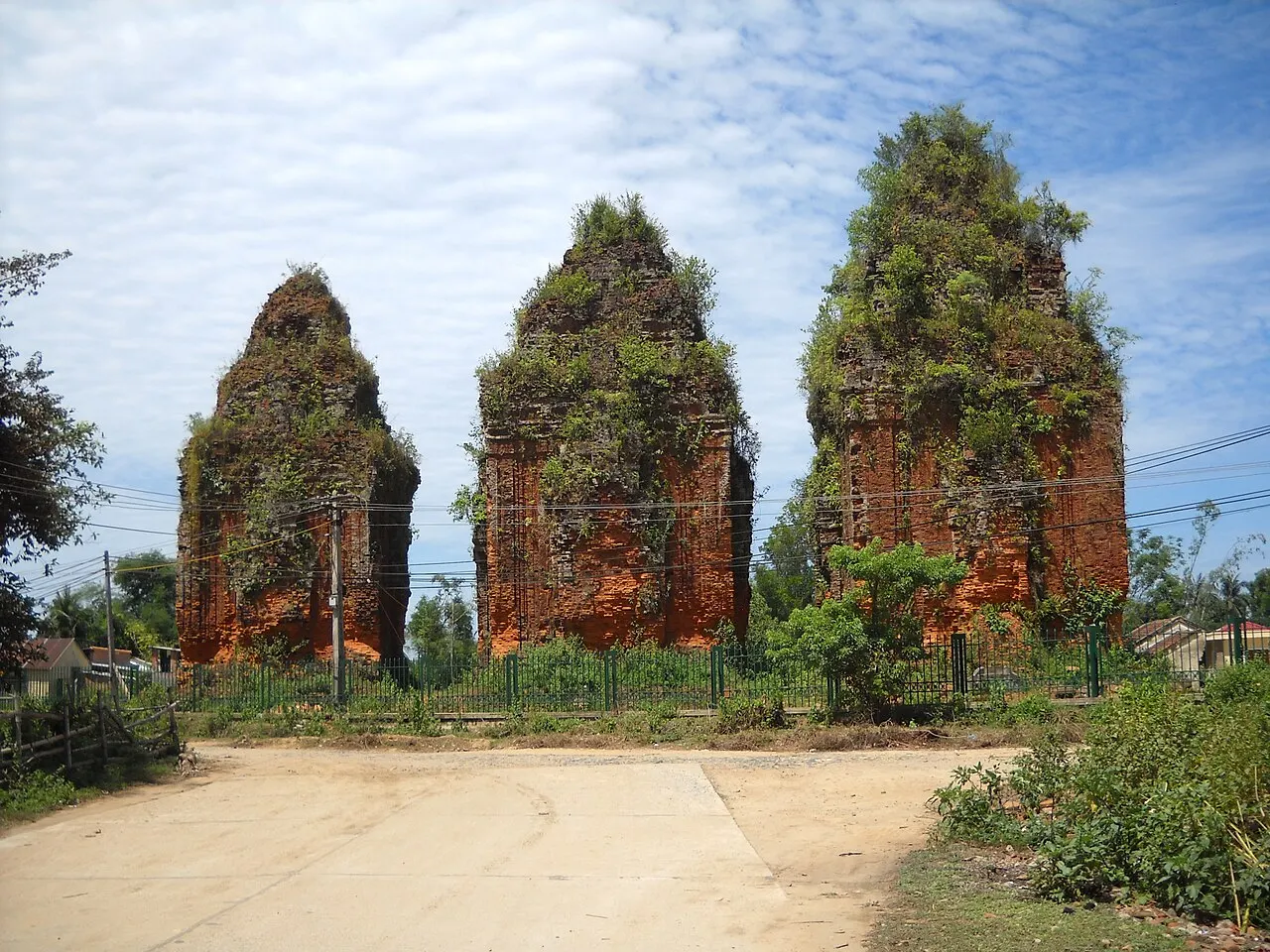
Locals call this group the “Three Towers”. The north, middle and south towers stand in a straight north-south line. The group became a national monument in 1989.
The roofs have three tiers, each a smaller copy of the one below, topped by a sandstone finial. Researchers think the south tower was built first and is the largest.
Recent excavations date the group to the early 10th century. Its style sits between Dong Duong and My Son A1. Two digs, in 2000 and 2007, exposed base decoration whose main subjects are monkeys and Naga snakes.
What is unique at Khuong My is that brick was laid tight with stone into one block before the carving was done. The towers are in Tam Xuan commune, Da Nang city, and are a paid attraction.
Chien Dan: three towers in Phu Ninh
About 10 km further on is the Chien Dan group in Tam An commune. It has three towers on a north-south line, with doors facing east.
The towers date to the end of the 11th and the start of the 12th century. In 1989 archaeologists dug up hundreds of stone objects, such as deities and animals.
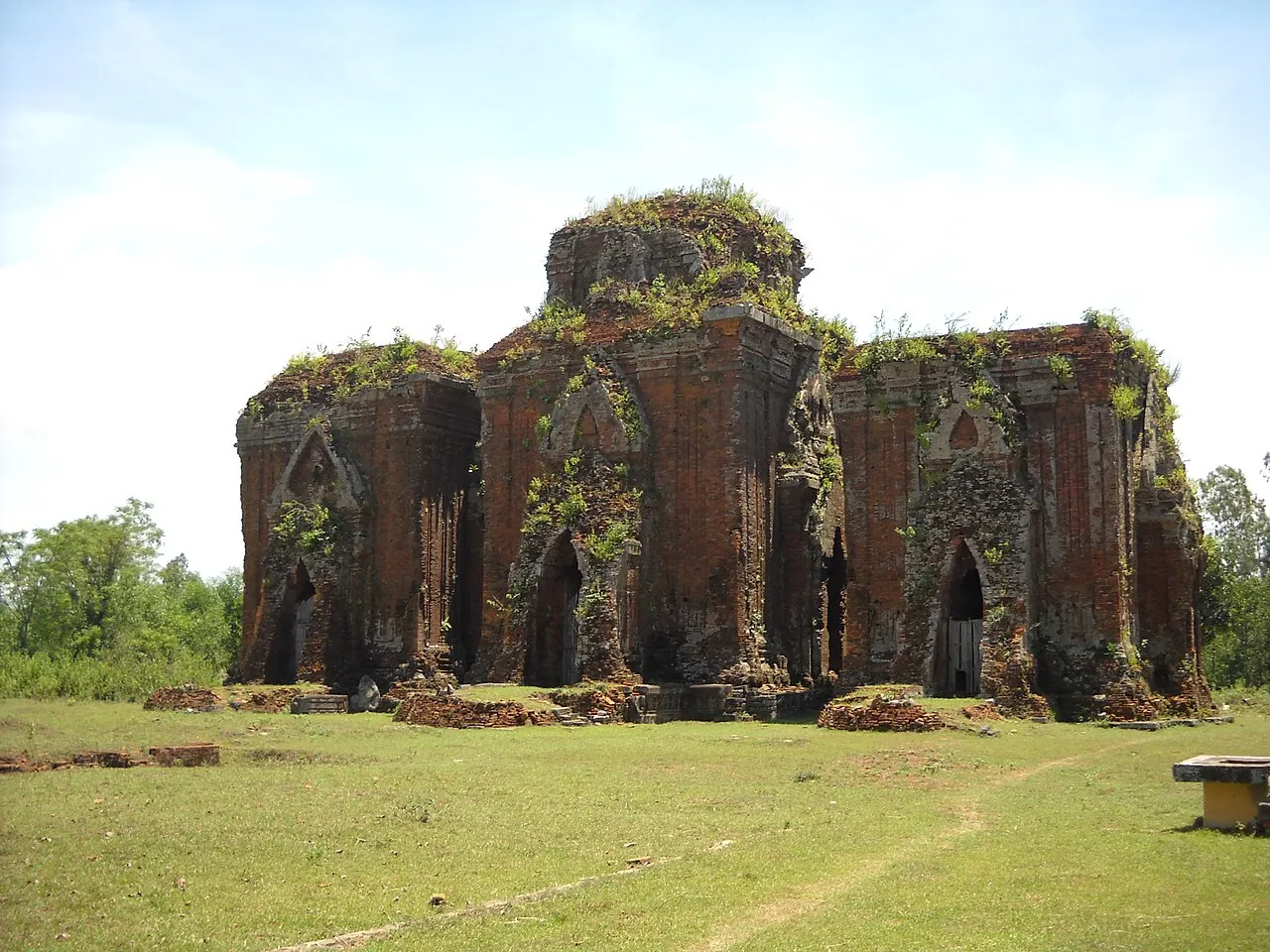
The middle and north towers are in bad shape, with tree roots in the walls and flaking brick. The north tower lost its roof and is covered with tin. In 2021 Quang Nam spent nearly 5.5 billion dong on the south tower. A project of nearly 17 billion dong for the other two has been approved.
The Dong Duong monastery
Dong Duong lies more than 30 km from Chien Dan. King Indravarman II built this monastery in 875 to worship the Bodhisattva who protected his dynasty. The name Dong Duong means sacred field.
Once the largest Buddhist monastery in South-East Asia, it is now a special national monument. The temple area is 155 m wide and 326 m long, in three clusters. The Dong Duong style flourished from 875 to 915.
The complex had four successive enclosures aligned west to east, reached by an avenue of nearly 800 m. Henri Parmentier described it in his Inventaire of 1909, when it was already very ruined.
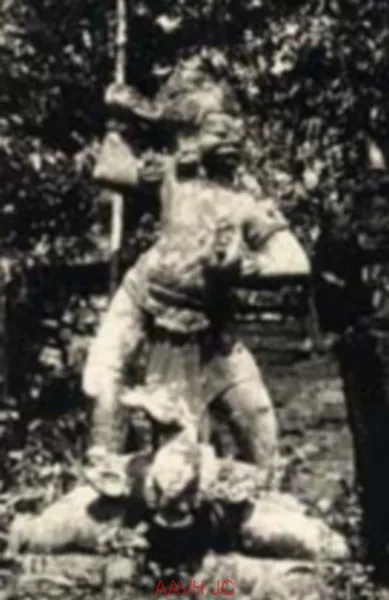
The photo above dates from 1930, when Dr Sallet was curator of the Cham museum in Tourane. It shows a dvarapala guardian of the second enclosure, standing on a buffalo and later moved to the Tourane museum. The dvarapala of the second enclosure are the finest.
Today only a wall fragment of a tower is left, braced with steel. Quang Nam spent 12 billion dong to shore up the Sang tower.
Tra Kieu: the citadel of Simhapura
Tra Kieu, near Hoi An in Duy Xuyen, was an imperial capital, called Simhapura in Cham, the Lion Citadel. The French discovered it in 1927 and it was excavated again in 1985. A 2013 dig targeted the eastern wall of the citadel, part of the Cham kingdom of the 4th to 11th century.
The lesson of Khuong My
The restoration of the north and middle towers finished at the end of 2022, after three years. Within months, salt had spread over the new bricks, moss covered them and many crumbled and flaked. Salt and crumbling are almost impossible to fix while the masonry is reinforced with replica brick.
For the south tower, the builders fired replica bricks at a higher temperature than old Cham brick. The project is finished and awaiting acceptance in September 2026.
Getting there
From Hoi An or Da Nang, Bang An is the closest: about 14 km from Hoi An and 27 km from Da Nang. Khuong My and Chien Dan are 10 km apart, and Dong Duong is more than 30 km from Chien Dan. Bang An is near the old town of Hoi An, and My Son has its own route on the My Son page.
Photo credits
- Bang An tower around 1930: Wikimedia Commons — Vinh Tan (Thai Te Thong), public domain (opens in a new tab), Vinh Tan (Thai Te Thong), c. 1930 (Public domain)
- Floor plan of Bang An drawn by Henri Parmentier: Wikimedia Commons — Henri Parmentier, public domain (opens in a new tab), Henri Parmentier (Public domain)
- The Khuong My towers: Wikimedia Commons — Nguyen Dong Son (opens in a new tab), Nguyen Dong Son (CC BY-SA 3.0)
- The Chien Dan towers: Wikimedia Commons — Nguyen Dong Son (opens in a new tab), Nguyen Dong Son (CC BY-SA 3.0)
- A dvarapala guardian of Dong Duong, 1930: Wikimedia Commons — Archives de la Planete, Albert Kahn collection (Sallet, 1930), public domain (opens in a new tab), Unknown photographer (Sallet fonds, 1930) (Public domain)
Common questions
Which Cham towers are there in Quang Nam besides My Son?
Bang An, Khuong My, Chien Dan and the Dong Duong monastery. Tra Kieu is the old citadel of Simhapura near Hoi An.
How far is Bang An tower from Hoi An and Da Nang?
About 14 km from Hoi An, 27 km from Da Nang and more than 1 km off Highway 1A.
Why is Bang An tower special?
It is the only intact octagonal Cham tower in Vietnam, almost 21 m tall, with plain walls and no false doors or ornament.
When was Chien Dan built?
The towers date to the end of the 11th and the start of the 12th century. The group has three towers on a north-south line with doors facing east.
What is the Dong Duong monastery?
King Indravarman II built it in 875, and it was once the largest Buddhist monastery in South-East Asia. Today only a wall fragment of a tower remains, braced with steel.
Did the Khuong My restoration damage the towers?
The new bricks did badly. The restoration of the north and middle towers finished at the end of 2022, after 3 years. Within months the new bricks showed salt, moss and crumbling.
When were these Cham towers listed as monuments?
Bang An and Khuong My were both recognised as national monuments in 1989. Dong Duong is a special national monument.
Which Cham tower is closest to Da Nang?
Bang An: about 27 km from Da Nang and 14 km from Hoi An. Khuong My and Chien Dan lie 10 km apart.
Read next
- My Son Sanctuary: History, Towers, Tickets and TransportVerified 18 October 2026
- Cham Sculpture Museum, Da Nang: The Tourane GardenVerified 18 October 2026
- Hoi An Old Town: Heritage, Assembly Halls, TicketsVerified 18 October 2026
- Cham Towers in Quang Nam Beyond My Son: Bang An, Khuong My, Chien DanVerified 18 October 2026
General information checked against the sources listed above, not legal advice for your situation. Rules and office practice change; confirm with the relevant office or a licensed adviser before you act. See how guides are checked.
Spotted an error? Report it.