Be Thui Cau Mong: Roast Veal on Highway 1, Dien Ban
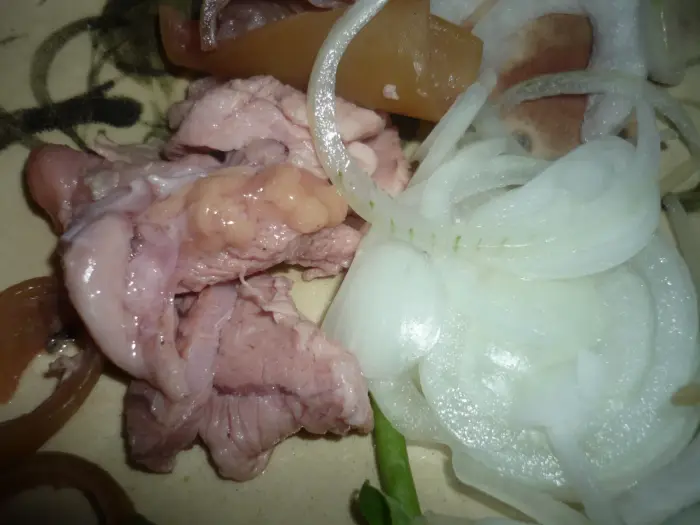
Be thui Cau Mong is a small calf roasted whole for over three hours, sliced thin and rolled in rice paper with raw herbs and mam cai. It comes from a village by the Cau Lau bridge on Highway 1, in Dien Phuong, Dien Ban. Older villagers place its rise in the sixties.
In this guide
Be thui (bê thui) means calf that is thui, singed and roasted over a fire. Cau Mong (Cầu Mống) is the village whose name the dish carries. A calf of about 25 to 30 kg is roasted whole, carved into thin slices and rolled at the table in rice paper with raw herbs and a bowl of mam cai.
If you are driving through Quang Nam on the main road, this is the stop Tuoi Tre once told travellers heading north or south not to skip.
Where Cau Mong is
Cau Mong is a small village at the northern end of the Cau Lau (Câu Lâu) bridge, where Highway 1 crosses the Thu Bon river. When Tuoi Tre wrote about it on 15 June 2015, that put it in Dien Phuong (Điện Phương) commune, Dien Ban (Điện Bàn) town, Quang Nam.
Place names have moved since then, so check the date of whatever you read. As of 16 October 2026 the area, once Dien Phuong in Dien Ban town of the former Quang Nam province, falls under Dien Ban ward, Da Nang city. Both names mean the same stretch of road; when you search a map, type “Cau Mong” and “Dien Phuong” together.
From Hoi An old town it is about 9 km. For Hoi An itself see the history of Hoi An.
How the calf is roasted
Stall owners pick only small calves of about 25 to 30 kg, grazed freely on the riverside flats of Go Noi (Gò Nổi) village. Tuoi Tre watched the older method: the roaster carries a torch of mulberry stalks and sugarcane bagasse back and forth along the body.
After more than an hour the skin blisters. The roaster scrapes it with a knife, wipes it with cloth and carries on. The skin turns golden only after more than three hours.
The job is mostly fire control. The roaster has to keep the flame just right, because one moment of neglect and the fire catches and the meat scorches. Locals later moved from bagasse to charcoal, for quality and for looks.
Slicing and the plate
The seller slices the calf into thin, even slices for diners. The plate is usually cut thin enough to taste both meat and skin, and carving starts only once a customer orders.
A full table has more than meat. Beside the plate comes a tray of Tra Que (Trà Quế) herbs: celery, basil, perilla, lettuce, bean sprouts, sour star fruit, banana blossom, astringent banana and pickled papaya. Two sides are indispensable: thin astringent banana and sweet-sour pickled papaya, which keep the richness in check.
The dip: mam cai
The bowl in the middle decides the meal. The sauce is pure mam cai (mắm cái) of anchovy or mackerel from the fishing villages by the Hoi An coast, strained and mixed with sugar, pounded chilli and garlic, a little ginger and roasted sesame. Other writers call the same bowl mam nem (mắm nêm). If you know banh trang cuon thit heo, the dip will feel familiar, though the fish and the seasoning change from kitchen to kitchen.
How to eat it
Spread a sheet of rice paper, lay a few slices of calf on it, roll with greens, dip in the mam cai and bite a green chilli. Chew slowly, so the sweetness of the meat, the saltiness of the sauce and the scent of the herbs all arrive.
Some shops also use the bones: bun xuong, calf-bone porridge, black-bean porridge or xi quach hotpot, depending on the kitchen. If you are staying in the region for a few days, pair this with mi Quang for a full day of Quang Nam eating.
The stalls on Highway 1
Nobody has a clean date for the start. Villagers told Tuoi Tre they do not know exactly when the dish began, only that it tastes right when made by people of Cau Mong on both banks of the Thu Bon. Older villagers place its appearance in the sixties, and it has stayed famous since.
One commercial guide of February 2026, citing local records it does not name, says a hat boi performer called Mr Doi (real name Nguyen Loi) started it in the late 1960s. Treat that as a story, not a fact: the 2026 article above says accounts of who built the trade differ.
What is clearer is the setting. The lower Thu Bon and the road through the Cau Lau area let the local dish meet travellers, and it grew into a food street along Highway 1A through Dien Phuong. From small stalls the name then spread to many places; Mia.vn adds that shops in central and southern provinces also use it. A “Cau Mong” sign far from Dien Ban therefore tells you about style, not address.
Where to eat, and what it costs
Be Thui Muoi is listed at Ql1A, Cau Mong, Dien Phuong commune, Dien Ban, on a Foody page of 23 December 2021, and Mytour (15 January 2024) gives QL 1A, Dien Phuong, Dien Ban, Quang Nam. No dated stall-level price or opening hour is confirmed, so ask when you sit down.
In Da Nang city, Mia.vn (undated) lists a Cau Mong calf shop at 100 Dien Bien Phu, with a reference price of VND 50,000 to 110,000.
As a general guide, a Hoi An IT price table of 23 February 2026 puts one portion shared by two at VND 50,000 to 150,000 and a family combo for 3 to 4 people at VND 300,000 to 500,000. These are guide-level ranges, not a quote from any stall.
Photos (1)
- Memberofc1, CC BY-SA 3.0 (opens in a new tab)
Not confirmed: No government or museum source on the dish was found. The story of Mr Doi rests on one commercial page. Current prices and opening hours at each stall are unconfirmed; ask before you order, and check the weight if you buy by portion.
Common questions
What is be thui Cau Mong?
It is young calf roasted whole, sliced thin and rolled in rice paper with raw herbs and a bowl of mam cai. The name points to Cau Mong village in Dien Phuong, Dien Ban.
Where is Cau Mong today?
A 16 October 2026 article places it in the former Dien Phuong of Dien Ban town, Quang Nam, now under Dien Ban ward, Da Nang. Older press such as Tuoi Tre (15 June 2015) still uses the commune name.
How long does it take to roast a calf?
More than an hour in, the skin blisters and is scraped; after more than three hours it turns golden. The calves weigh about 25 to 30 kg.
What do you dip it in?
Mam cai made from anchovy or mackerel, with sugar, chilli, garlic, ginger and roasted sesame. Other writers call the same bowl mam nem.
How much does a portion cost?
As of February 2026, one portion shared by two ran VND 50,000 to 150,000 and a family combo VND 300,000 to 500,000, by one guide's table. Stall-level prices are unconfirmed.
Who invented it?
Nobody is sure. Villagers do not know exactly when it began; older villagers place it in the sixties, and one commercial guide names a hat boi performer.
Read next
- Hoi An History: The Faifo Trading Port and Old TownVerified 18 October 2026
- Banh Trang Cuon Thit Heo: Dai Loc Roots and Tuy Loan Rice PaperVerified 18 October 2026
- Mi Quang: Origins, Phu Chiem Village, How It Is Made and Three ShopsVerified 18 October 2026
- Be Thui Cau Mong: Roast Veal on Highway 1, Dien BanVerified 1 November 2026
General information checked against the sources listed above. Ticket prices, opening hours and rules change; check with the place before you go. See how guides are checked.
Spotted an error? Report it.