Goi Ca Nam O: Fishing Village, Herring and Fish Sauce
Goi ca Nam O is the raw fish salad of Nam O, a fishing village over 700 years old below the Hai Van Pass. Fishermen say it dates back hundreds of years. Herring is served wet or dry with wild greens and a dip made with Nam O fish sauce. A Ministry of Health paper advises against raw fish salad.
In this guide
- Nam O village below the Hai Van Pass
- From the sea trade to the salad
- Herring: the fish that makes the salad
- Dry and wet goi ca: how each is made
- Nam O fish sauce: the soul of the dip
- Wild Hai Van greens and the herbs on the side
- How to eat goi ca Nam O the proper way
- Where to eat goi ca Nam O
- What goi ca costs
- A health note on raw fish salad
- Common questions
Goi ca Nam O (gỏi cá Nam Ô) takes its name from the fishing village where it was born. Nam O (Nam Ô) is a village hundreds of years old at the Cu De (Cu Đê) river mouth, below the Hai Van Pass (đèo Hải Vân). To see why this plate is special, start with the village. The dish grew out of its sea trade.
Nam O village below the Hai Van Pass
The old village of Nam O tucks in beside Da Nang Bay, about 3 km from the Hai Van Pass. Many researchers give it a village age of more than 700 years. Its position is rare too: the sea in front, a river beside, and the Hai Van Pass, the “foremost mighty gateway under heaven”, at its back.
The name is in the royal records. The Dai Nam nhat thong chi (Đại Nam nhất thống chí), gives Cu De mountain a second name: “Hoa O mountain (the former name of Nam O)”. For Da Nang Bay as it looked from the sea long ago, see Da Nang in old pictures and maps.
Princess Huyen Tran and the Phung forest
The village keeps a story about Princess Huyen Tran (Huyền Trân). Village records say King Che Man (Chế Mân) took her as his wife in June 1306. Villagers believe that on her way home from Do Ban (Đồ Bàn) to Thang Long she stopped in this land.
In 1999 villagers restored the shrine on the old foundation and dug up a set of three wooden spirit tablets, one of them the princess’s. The shrine is now open to villagers and visitors alike.
The Phung forest that covers the Hac headland is sacred to the villagers, and no one dares cut a single tree.
Cham wells, ruins and the whale shrine
Older traces lie right in the village: four ancient Cham wells still give sweet, cool water even beside the shoreline. There is a shrine holding dozens of whale (Ca Ong) skeletons, and archaeologists have found remains dated to the 10th century. The place is known for its historic relics, its old fish sauce craft village, its wild rocky shore and its goi ca.
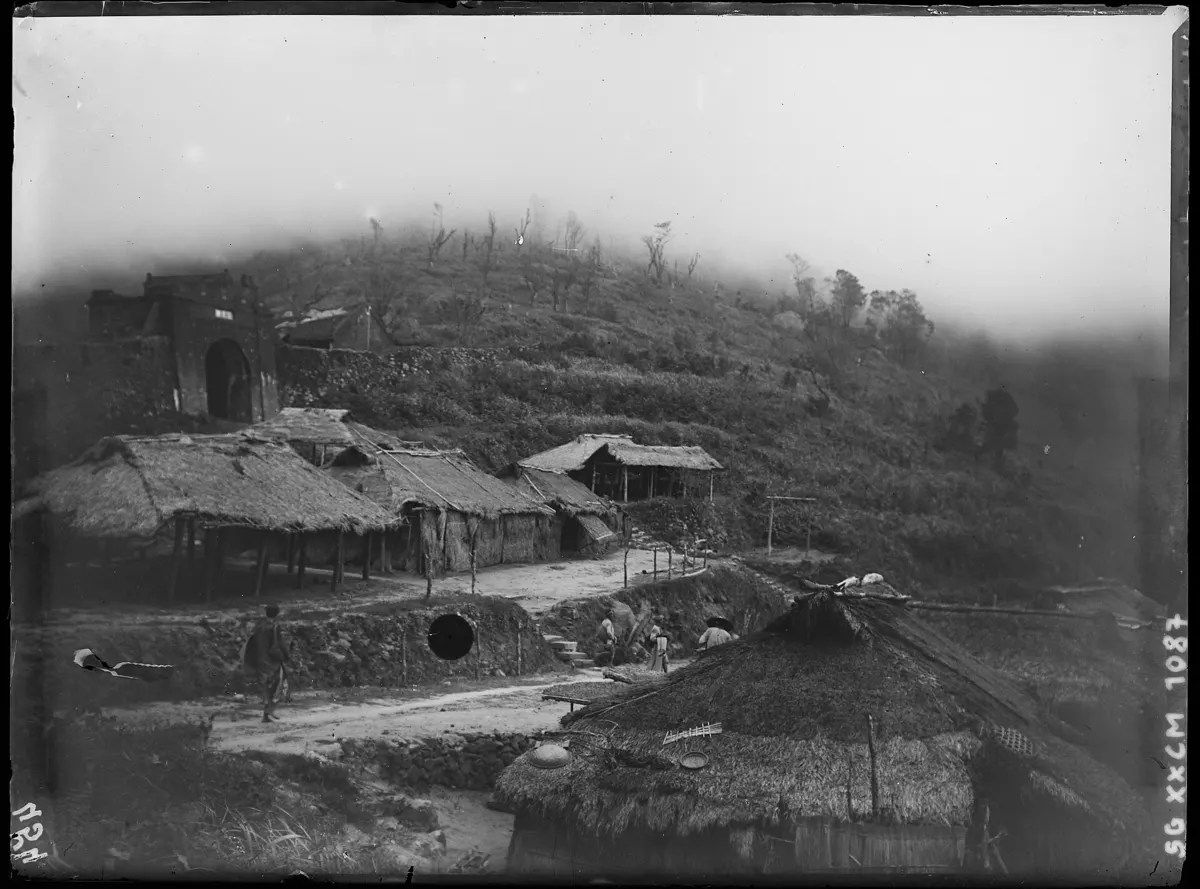
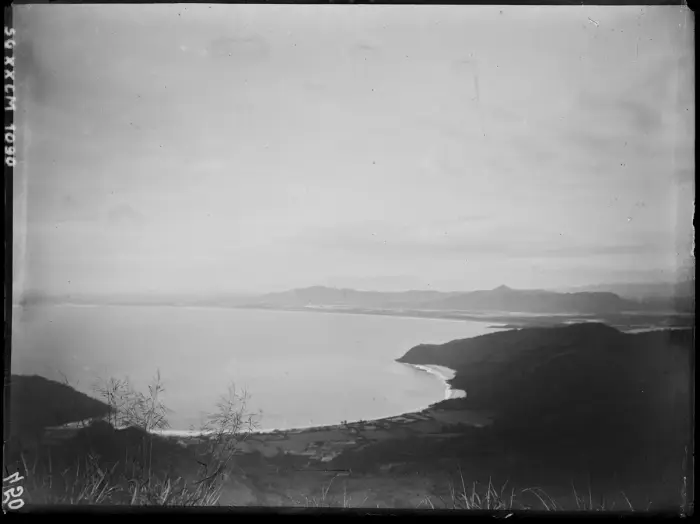
The old photographs of the foot of the Hai Van Pass on the Da Nang side are glass-plate pictures by Andre Salles, kept at the National Library of France. They show a bay curving under the mountains, thatched hamlets along the slope and the pass gate half hidden in mist. It is the scenery that fishing villages like Nam O lived in for generations.
From the sea trade to the salad
The village trade began with fishermen catching seafood to feed themselves every day. The salad followed the same road. The fishermen say goi ca Nam O appeared hundreds of years ago.
In the past it was only for seafarers: the fishing-village people made it themselves and ate it within the family. Later it was commercialised and became a speciality in two kinds, wet and dry.
“Hundreds of years” is how villagers tell the story of their own dish, not a date from the history books.
Herring: the fish that makes the salad
The salad can be made with ca moi, ca top or ca com, but the best fit is still herring, because its flesh is sweet and firm. Herring lives near the shore and fishermen catch it all year. The fish is about as big as two fingers, caught daily and brought ashore from early morning.
The fresh fish is cleaned, headed, filleted and cut into small pieces. From here the salad splits into two branches.
Dry and wet goi ca: how each is made
Goi ca Nam O is made in two ways: wet (goi uot) and dry (goi kho).
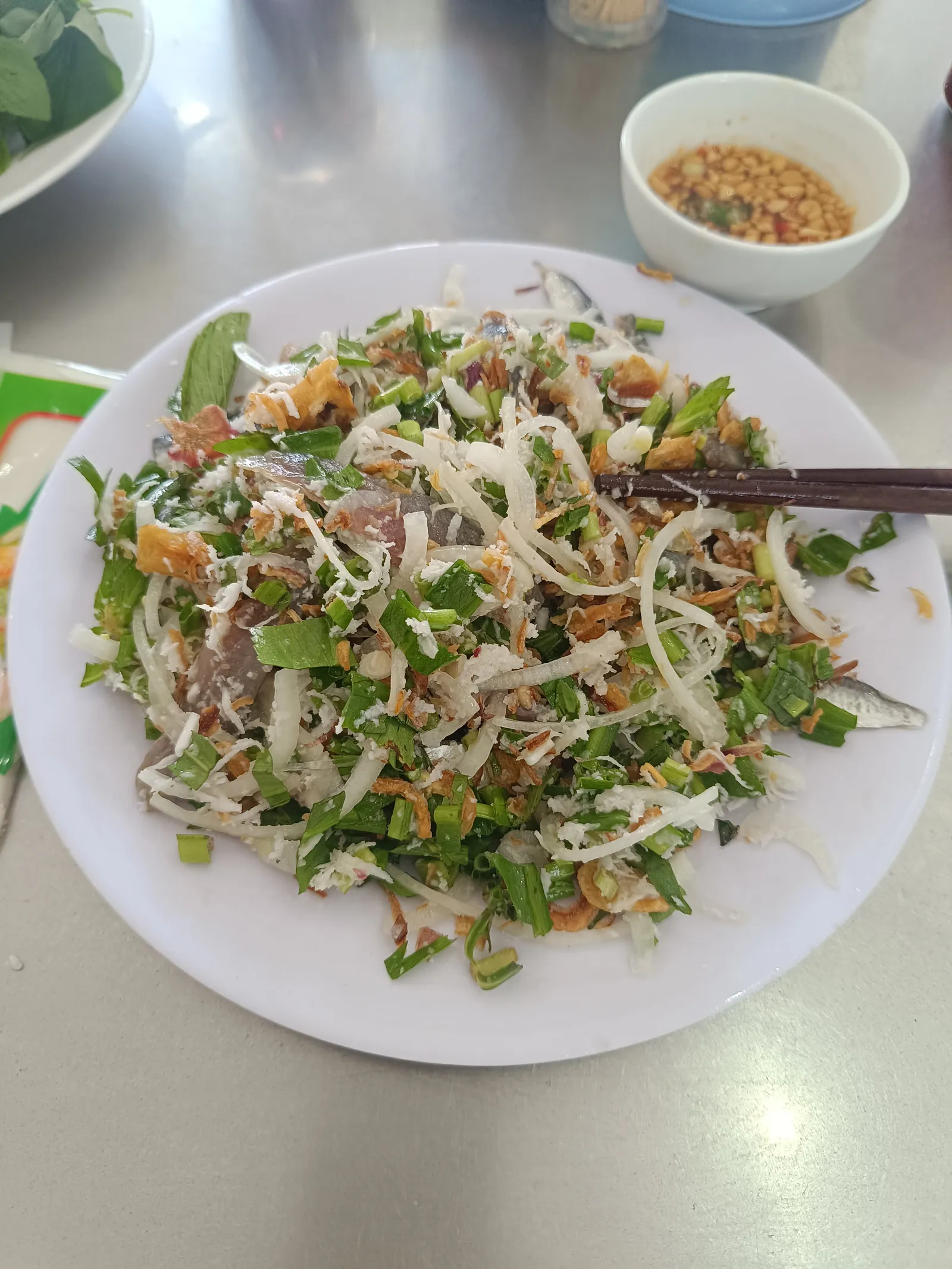
Dry goi ca. The filleted fish is lightly cured with vinegar and lemon and pressed fairly dry. Once drained, the flesh is mixed with hot seasonings such as chilli and ginger to take away the fishy smell, then thinh (a seasoned roasted-rice powder) is added. Villagers prefer galangal thinh to ordinary thinh, because it keeps the fish drier and scents it more.
Wet goi ca. The prepared fish is mixed with finely chopped garlic, ginger and galangal. It can also be soaked in a spicy broth made from Nam O fish sauce with a little ginger, garlic, chilli and sugar to soften the taste.
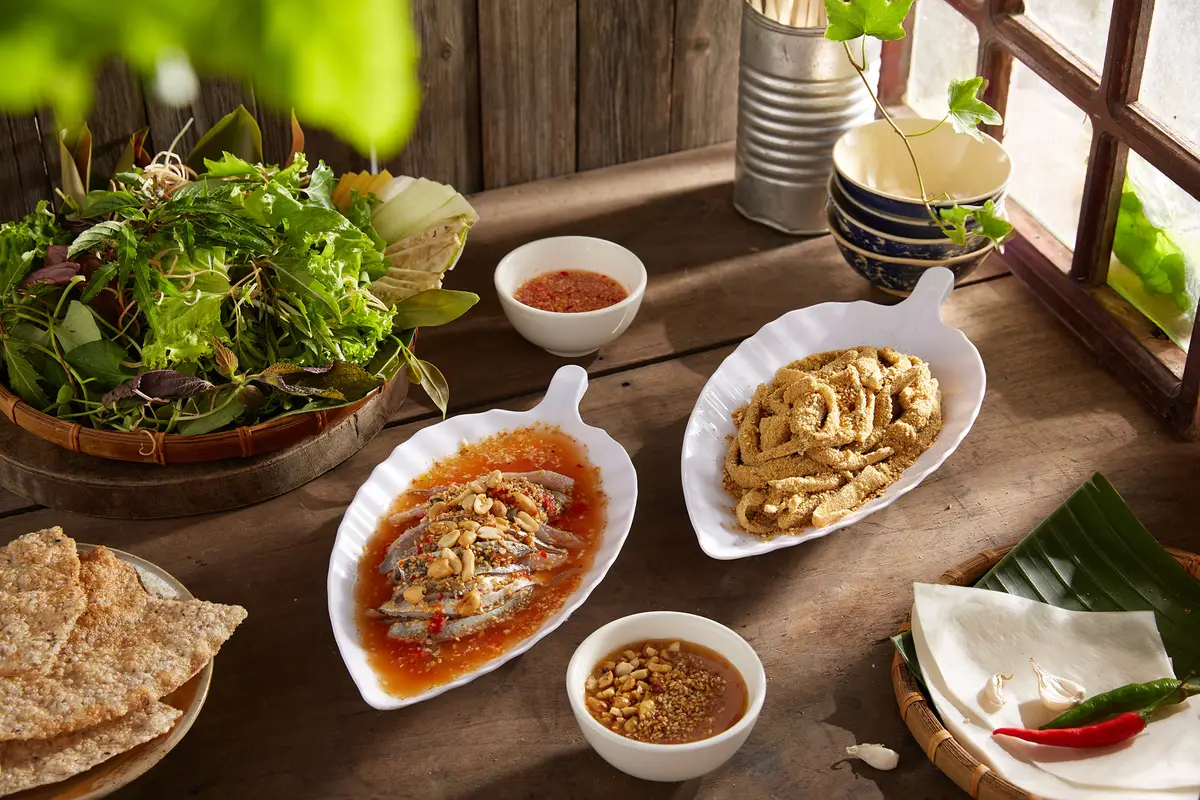
The juice pressed from the fish is not thrown away. It is boiled, mixed with Nam O fish sauce and chilli to make the dipping sauce, and at serving time roasted ground sesame and peanuts go in.
Nam O fish sauce: the soul of the dip
Every plate of goi ca in Nam O leans on the village’s own fish sauce. Villagers say the Cham brought fish-sauce making and the habit of using fish sauce to Nam O. The elders remember the craft growing strongly around the end of the nineteenth century and the start of the twentieth.
The sauce is made from ca com than (cá cơm than, a small anchovy) and salt, fermented in clay jars for 12 to 18 months. Each year the village makes sauce in the third and eighth lunar months, following the anchovy season.
At the start of the third lunar month the shoal reaches Da Nang Bay and villagers go out to fish. In the eighth month the shoals come into these waters again. The finished sauce is dark red with a natural sweetness.
Nam O fish sauce won a gold medal at the Giang Vo (Giảng Võ) fair in Hanoi. What villagers are proudest of is that it was once chosen to be presented to the king. It also holds a geographical indication, the first of Da Nang.
The national heritage listing for Nam O covers the fish sauce craft, not the salad. The craft has its own page: Nam O fish sauce.
Wild Hai Van greens and the herbs on the side
The salad comes with wild greens from the Hai Van forest and familiar herbs such as dinh lang, tia to, ngo tau and lettuce, plus unripe banana and sour mango. Villagers also use rau tram. In 2008 a roadside shop owner said he went out each morning to pick young shoots of coc rung, tim lan, lanh nganh, tram and dung leaves.
How to eat goi ca Nam O the proper way
There are two ways. One is to wrap the fish and greens in thin rice paper, dip in the sauce and eat grilled rice paper on the side. The other is to toss everything in one bowl.
For the dry version, fish and raw greens go into rice paper and are eaten with separately mixed fish sauce. The wet version is wrapped the same way but dipped into the broth in the salad bowl. Villagers also have their own way with the wet version: put fish, greens and young mango in a bowl, pour the salad broth over and eat it all at once.
Where to eat goi ca Nam O
Nam O village is in Hai Van ward, Da Nang City, about 15 km from the centre. In 2008 about ten households along the highway through the village sold goi ca.
The pick here is Google Maps 4.5 stars or more with many reviews, and only one shop on this page passes that bar. Details come from the shop’s Google Maps page on 18 October 2026.
Quan Co Hong (Quán Cô Hồng)
Most of the greens served at Co Hong are harvested at the foot of the Hai Van Pass. The first branch is at 38 Le Hong Phong, Hai Chau. It has 4.5 stars on Google Maps from 1,243 reviews. It is open 10 am to 9:30 pm every day.
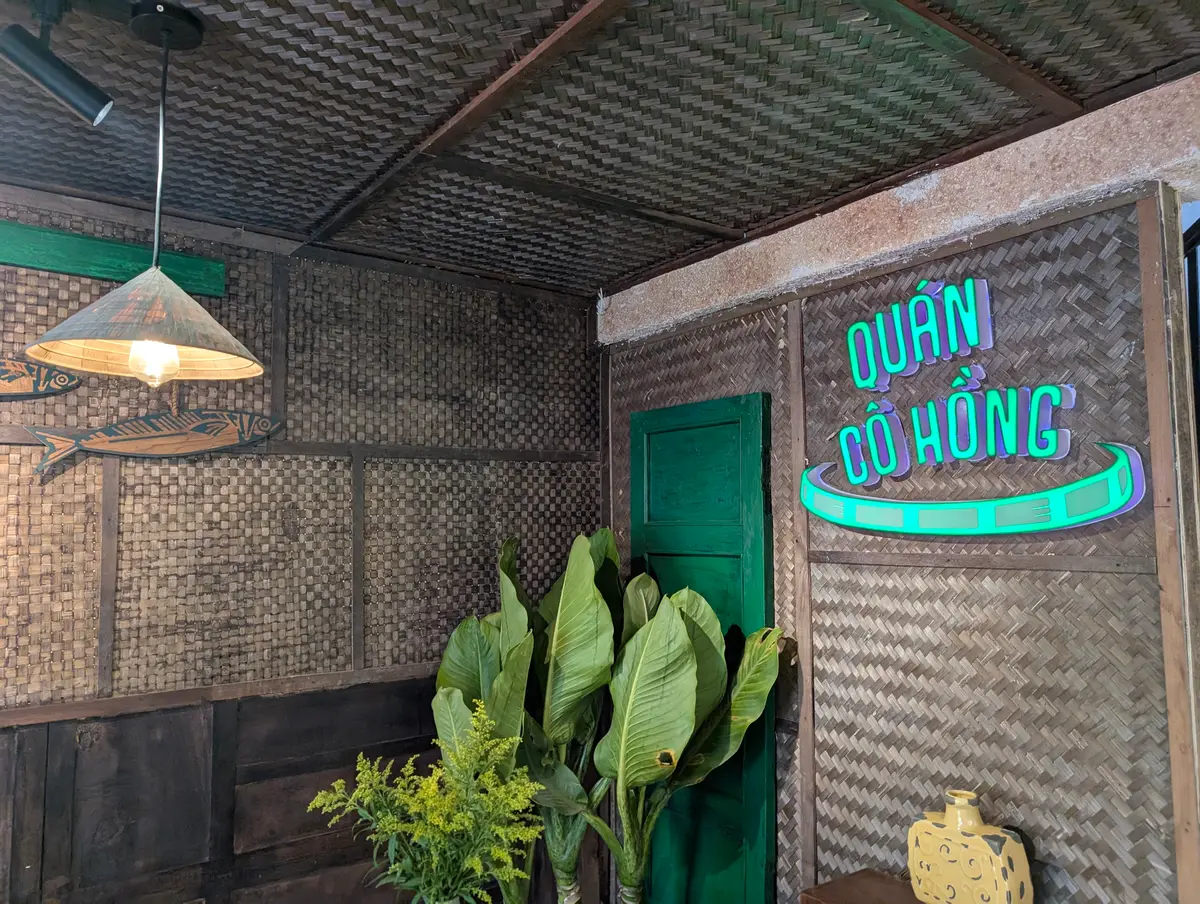
The shop is in the middle of the city, not in Nam O village. To eat right where the fish comes ashore, head out to the village. A fuller restaurant list is at danangoi.com/places (opens in a new tab).
What goi ca costs
In 2008 a portion of goi ca at a roadside shop cost VND 25,000 for two people. Prices today differ from shop to shop, so ask before you order.
A health note on raw fish salad
The Ministry of Health newspaper says people who often eat raw fish salad or undercooked fish easily catch the small liver fluke. To prevent it, do not eat raw fish salad or undercooked fish in any form.
Photo credits
- Da Nang Bay seen from the Hai Van Pass road, photographed by Andre Salles: Wikimedia Commons, André Salles, Bibliothèque nationale de France, 1898, public domain (opens in a new tab) (Public domain)
- A thatched hamlet on the Da Nang side of the Hai Van slope, photographed by Andre Salles: Wikimedia Commons, André Salles, Bibliothèque nationale de France, 1898, public domain (opens in a new tab) (Public domain)
- A plate of Vietnamese raw herring salad with herbs and a peanut dipping sauce. A general example, not a photo of Nam O: Wikimedia Commons, OlBoes, 2025 (opens in a new tab) (CC BY-SA 4.0)
- Photos and clips uploaded to Google Maps (Co Hong Restaurant on Google Maps (opens in a new tab)) by Quan Co Hong - Dac san Da Nang (co so 1).
Common questions
What is goi ca Nam O and what fish is used?
It is the raw fish salad of the fishing village of Nam O. The best-known version uses herring (ca trich), and cooks also make it with ca moi, ca top or ca com.
How old is goi ca Nam O?
Fishermen say the dish appeared hundreds of years ago. In the past it was only for seafarers, and villagers made it and ate it within the family.
What is the difference between wet and dry goi ca?
Dry: filleted fish is lightly cured with vinegar and lemon, pressed fairly dry, then mixed with thinh. Wet: the fish is mixed with finely chopped garlic, ginger and galangal, or soaked in a spicy broth made with Nam O fish sauce.
What do you eat goi ca Nam O with?
Wild greens picked on Hai Van and familiar herbs such as dinh lang, tia to, ngo tau and lettuce, plus unripe banana and sour mango.
How is goi ca Nam O eaten?
Wrap the fish and greens in thin rice paper, dip in the sauce and eat grilled rice paper on the side, or toss everything in one bowl.
Where is Nam O village and how far is it from central Da Nang?
The village sits beside Da Nang Bay, about 3 km from the Hai Van Pass, and about 15 km from the city centre. Its beach is in Hai Van ward.
How much does a portion of goi ca Nam O cost?
In 2008 a portion at a roadside shop cost VND 25,000 for two people. Prices differ from shop to shop today, so ask before you order.
What do health authorities say about raw fish salad?
The Ministry of Health newspaper Suc khoe & Doi song advises against raw fish salad or undercooked fish in any form, to prevent liver fluke.
Read next
- Da Nang Under Attack: The Landing in Old Prints and MapsVerified 18 October 2026
- Nam O Fish Sauce: Old Village, Families and FermentingVerified 18 October 2026
- Banh Beo of Quang Nam: From Hue Bowls to Hoi An and Da NangVerified 18 October 2026
- Banh Kho Me Cam Le: the Seven-Fire Cake of QuangVerified 18 October 2026
General information checked against the sources listed above, not legal advice for your situation. Rules and office practice change; confirm with the relevant office or a licensed adviser before you act. See how guides are checked.
Spotted an error? Report it.