Ma Chau Silk Village, Duy Xuyen: History, Revival, Visit
Ma Chau silk village lies in Nam Phuoc town, Duy Xuyen district, Quang Nam, beside the Thu Bon River. Press dates it to the fifteenth or sixteenth century. It peaked at over 4,000 looms in the 1960s, faded by the late 1990s and began to revive from 2015.
In this guide
A silk village between Hoi An and My Son
Ma Chau (Mã Châu) is a silk-weaving village in Nam Phuoc town, Duy Xuyen district, Quang Nam. It lies on the bank of the Thu Bon River, a village known for centuries for growing mulberry, reeling silk and weaving it. One local craftsman likes to point out that it sits between two World Heritage sites, My Son and Hoi An.
That position matters for a traveller. If you are already planning a day around My Son Sanctuary and Hoi An old town, the silk village is the third piece of the story. My Son holds the Cham temples and Hoi An was the port. Ma Chau is where the silk for that port was woven.
Where the silk came from: dates that do not agree
Press accounts give two start dates. A Cong Thuong journal paper says the village formed in the fifteenth century and wove silk for the nobles and mandarins of the dynasties. Phap luat Viet Nam also gives the fifteenth century and places the village beside the Tra Kieu capital. Saigon Giai Phong, quoting the weaver Tran Huu Phuong, says Ma Chau silk has existed since the sixteenth century, and Nhan Dan speaks of five centuries of fame.
So the safe answer is the fifteenth or sixteenth century. No source names a founder, and none confirms the popular story that the silk went as tribute to the Nguyen court. What the sources do say is that the cloth was made for nobles and mandarins.
The trade story is better documented. When Dang Trong opened to the world through the port of Hoi An, Ma Chau silk was the most exported good. For the port itself, read the history of Hoi An.
Mulberry, silkworms and about 20 steps
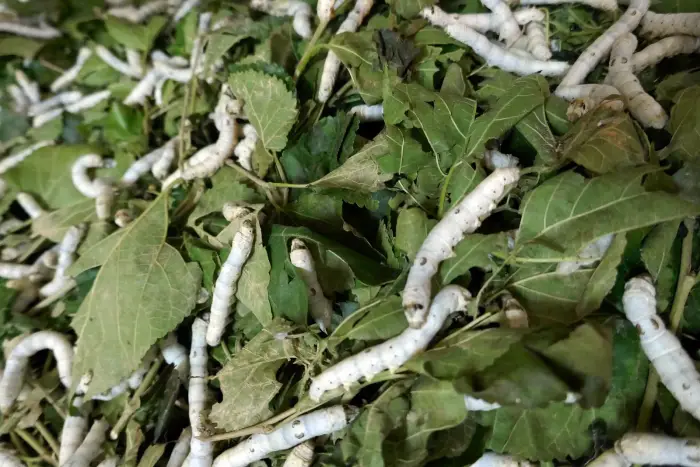
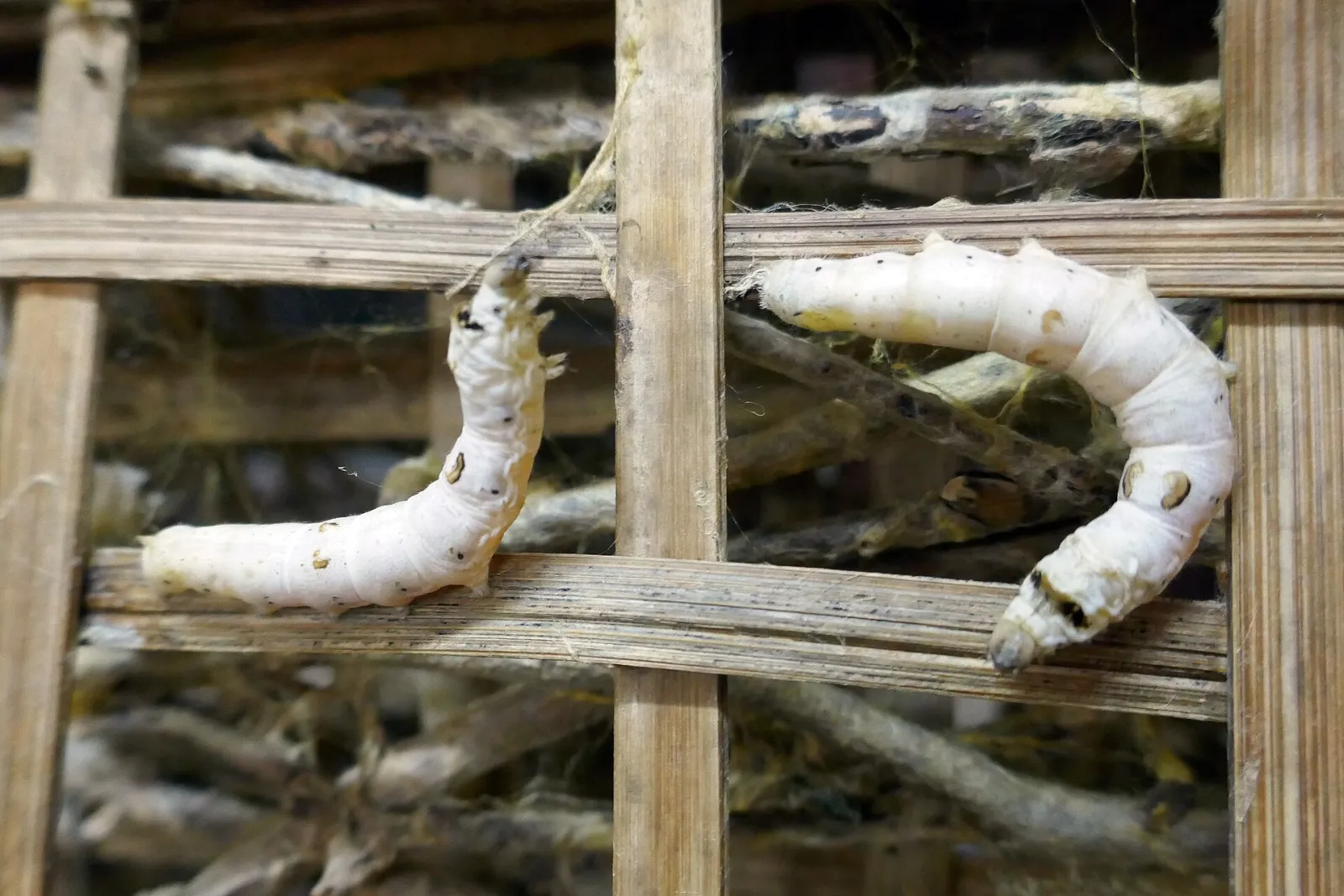
Making cloth the traditional way takes about 20 steps. The weaver grows the mulberry, raises the silkworms, steeps the silk, dries it in the sun and treats it with olive oil to strengthen the thread, until the cloth lies on the shelf. No step can be skipped, and chemicals are not allowed to interfere, which gives the cloth its slightly cool feel.
Colour comes from plants. In 2018 Tran Huu Phuong said he had collected 20 natural-dye colours from 15 families. Because every step is done by hand, the cloth shows flaws, and this is how buyers tell it from industrial silk.
The peak and the collapse
In the 1960s Ma Chau was famous for more than 4,000 looms working day and night. At its peak the village also had over 2,000 hectares of mulberry and silkworm land. The silk co-operative, founded in 1978, once had more than 300 members working for the home market and for export.
The 1990s changed that. As market reforms came in, the trade could not compete against cheap machine-made textiles and garments, and by the late 1990s it had faded. Mulberry land shrank and weavers moved to other jobs. Phuong said Chinese goods were overwhelming Ma Chau silk, and complained that cheap nylon silk was being sold under labels of traditional silk.
For a time, one man was left carrying the craft: Tran Huu Phuong, chair of the Ma Chau silk co-operative. A 2018 report describes him as the eighteenth heir of a family line of silk reelers and weavers, still producing around 100,000 metres of silk a year.
How the village stands today
A Cong Thuong paper gives the picture for 2017: one enterprise, 135 weaving households and 502 looms. Today’s output is mainly raw cotton and kate cloth, with very little silk, most of it from the Ma Chau Silk co-operative. Labour has fallen by half compared with earlier years.
The same paper says the district planned to move producers into the Tan An industrial cluster, which lacked water, power and waste treatment. Ma Chau was also one of 16 Quang Nam craft villages chosen for the craft-village and tourism scheme, under a provincial decision of 7 April 2015.
The revival from 2015
In 2015 Phuong’s daughter Tran Thi Yen came home to take over the co-operative. She stopped making raw cloth and switched to buying and producing finished silk, 100% from silkworm thread. The workshop made three changes: stronger yarn, mechanised looms for wider cloth, and modern patterns on traditional silk. In 2020 a cultural-tourism programme chose Ma Chau silk for its traditional costume designs.
The market stayed hard. Hoi An shop owners praised the silk but priced it at three to four times Chinese silk. At the launch of the new designs in Hoi An, a metre of pure silk with natural dyes sold at VND 480,000. Treat that as a launch-period price, not today’s price list.
Visiting the village
Phuong’s idea was to turn the village into a place that demonstrates each step of reeling and weaving, and displays and sells the cloth. The workshop has since built a visitor route, and a community tourism point where villagers take part.
No address, opening hours or ticket price is confirmed, so do not rely on a guess. Ask your hotel, or contact the co-operative, before you set out. Combine it with other craft villages near Hoi An: the red-clay Thanh Ha pottery village, the Kim Bong carpentry village and the Phuoc Kieu bronze village.
Lessons from the village
The village teaches three things. First, a craft can survive on the hands of one family when everything around it collapses. Second, the revival did not come from copying cheap silk but from the opposite: stopping raw cloth, selling finished 100% silk, and accepting a higher price. Third, a craft village still needs infrastructure; the industrial cluster planned for producers still lacked water, power and waste treatment.
If you buy silk here or in Hoi An, remember that cheap nylon cloth is sometimes sold under traditional labels, and that real hand-woven silk shows small flaws.
Photos (1)
- Ji-Elle, CC BY-SA 4.0 (opens in a new tab)
Not confirmed: The founder is unknown and the story of tribute silk for the Nguyen court is not confirmed. The origin date varies between outlets. Workshop address, opening hours, ticket prices and current weaver numbers are not confirmed.
Common questions
Where is Ma Chau silk village?
In Nam Phuoc town, Duy Xuyen district, Quang Nam, on the bank of the Thu Bon River. It sits between two World Heritage sites, My Son and Hoi An.
How old is Ma Chau silk?
Outlets give different dates. Cong Thuong and Phap luat Viet Nam say the fifteenth century, while Saigon Giai Phong, quoting the weaver Tran Huu Phuong, says the sixteenth. Nhan Dan speaks of five centuries of fame.
Why did the silk village decline?
Cheap machine-made textiles beat the trade in the 1990s and the craft faded by the late 1990s. Chinese goods also overwhelmed the market, and mulberry land shrank.
How is Ma Chau silk made?
The traditional cloth takes about 20 steps, from growing mulberry and raising silkworms to steeping, sun-drying and finishing the silk. No chemicals are allowed to interfere.
How much does Ma Chau silk cost?
At the debut of its new designs in Hoi An, a metre of pure silk with natural dyes sold at VND 480,000. Hoi An shop owners called it beautiful but priced it at three to four times Chinese silk. Treat this as a price from the launch period, not a current price list.
Can you visit a Ma Chau silk workshop?
The Tran family workshop built a visitor route where guests follow the steps of making silk. No address, opening hours or ticket price is confirmed, so ask your hotel or the co-operative before you go.
Read next
- My Son Sanctuary: History, Towers, Tickets and TransportVerified 18 October 2026
- Hoi An Old Town: Heritage, Assembly Halls, TicketsVerified 18 October 2026
- Hoi An History: The Faifo Trading Port and Old TownVerified 18 October 2026
- Thanh Ha Pottery Village, Hoi An: History, Clay and KilnsVerified 18 October 2026
General information checked against the sources listed above. Ticket prices, opening hours and rules change; check with the place before you go. See how guides are checked.
Spotted an error? Report it.