Phuoc Kieu Bronze Village: Gongs, Bells, Heritage
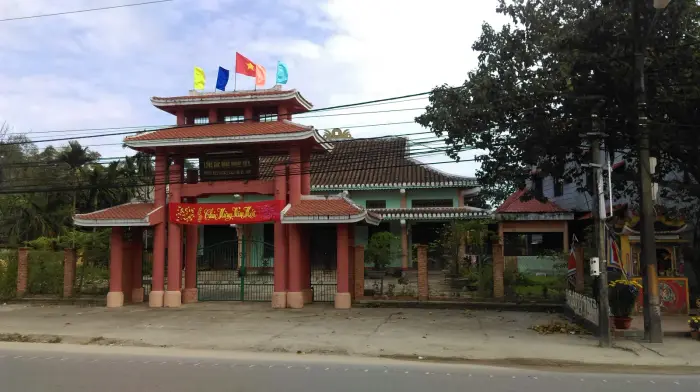
Phuoc Kieu (Phước Kiều) is a bronze-casting village in Dien Phuong commune, Dien Ban, now part of Da Nang. The press dates it to more than four centuries ago. It casts gongs, bells, incense burners and statues, and has supplied over 4,000 gong sets to Central Highlands peoples. Who founded it is still debated.
In this guide
A bronze village on Highway 1
Phuoc Kieu (Phước Kiều) sits in Thanh Chiem (Thanh Chiêm) hamlet, Dien Phuong (Điện Phương) commune, Dien Ban, Quang Nam. Quang Nam is now part of Da Nang, and the ward is given as Dien Ban. You reach it on National Highway 1, roughly 10 km from Hoi An old town by one count and 8 km from the Japanese Bridge by another.
Press calls it the oldest traditional craft village in Quang Nam and puts its age above 400 years. This page walks through the history, the argument over who founded it, what the foundries cast, the Central Highlands gong trade and a short visiting guide. It pairs with two other craft villages near Hoi An, Thanh Ha pottery village and Kim Bong carpentry village.
From a Nguyen headquarters to the royal court
Elders say the village began when the Quang Nam provincial headquarters of Lord Nguyen Hoang was set at Thanh Chiem in the early seventeenth century. Early products served ritual life: incense burners, bells, gongs, guns and shot, and everyday pots and pans.
The skill soon reached Hue. The court called craftsmen to Phu Xuan to cast tripods, cauldrons, guns and seals. A Hue University study adds the burden behind that honour: villagers took turns of three months a year in the capital, casting coins, tally cards, seals and court items. By the late eighteenth century there were two casting quarters, and in the early nineteenth century the Nguyen court merged them into one village unit named Phuoc Kieu.
After reunification the district set up a Phuoc Kieu aluminium-bronze cooperative to keep the trade going. In 2000 craftsman Duong Ngoc Thang founded the Phuoc Kieu Traditional Bronze Casting Village Company. Resorts and attractions such as BaNa Hills and Laguna Lang Co now order decorative castings.
Who founded Phuoc Kieu? Three answers
Sources do not agree, so treat the founder story as unsettled.
The first account comes from the Duong family genealogy as reported in a Hue University journal paper. It names the founding ancestor as Duong Khong Lo, born in 1019 and dead in 1094 at age 75. Viet Nam News repeats the idea, saying craftsmen who were his successors left Lang Son and settled in Dien Ban, and dating the village to the sixteenth century. Eleven centuries sit uneasily with a village that elders place in the early seventeenth century, so read this as lineage tradition, not a dated fact.
The second account is in the same paper. It says the early forebears (tien hien) of the Duong Ngoc and Nguyen Ba lineages taught casting to their kin and founded the village, and that the village was set up in the first days of the Nguyen lords. The name itself joins two home villages, Phuoc Ninh and De Kieu.
The third is a tour-company page that names the founder as Duong Tien Hien, a migrant from Thanh Hoa. The Hue paper calls the Duong Ngoc and Nguyen Ba founders tien hien, early forebears, not by a personal name.
Whichever you prefer, the village honours its ancestor. Descendants return on the 20th of the first lunar month for the death anniversary, and the press says villagers hold a festival and worship ceremony each spring around Tet. More than ten lineages besides the Duong cast bronze here. The oldest relic the villagers keep is a 45 kg bell cast in 1858 under Tu Duc.
What they cast
The village makes bells, gongs, incense burners, lamp holders, vases and musical instruments. Along Highway 1A in Dien Phuong, shops on both sides sell bronze goods, bells, incense burners, gongs and thanh la. Bronze for rites and festivals, such as gongs and phen la, sits next to everyday cookware. Pagodas order statues and bells too.
How a gong is cast
Artisan Duong Ngoc Tien told Bao Van hoa that a gong usually takes 10 basic steps. It starts with inner and outer moulds of clay, rice husk and loam. The founder then mixes an alloy of copper, tin and zinc, melts it until fluid and pours it into the mould. After demoulding, the blank is worked, cleaned, tuned and sound-tested before a chemical finish.
The craft steps run: kneading clay, joining moulds, mixing metal, engraving and sound testing. The village’s own craftsmen say they keep a stable temperature and blend several metals in their own proportions.
Gongs for the Central Highlands
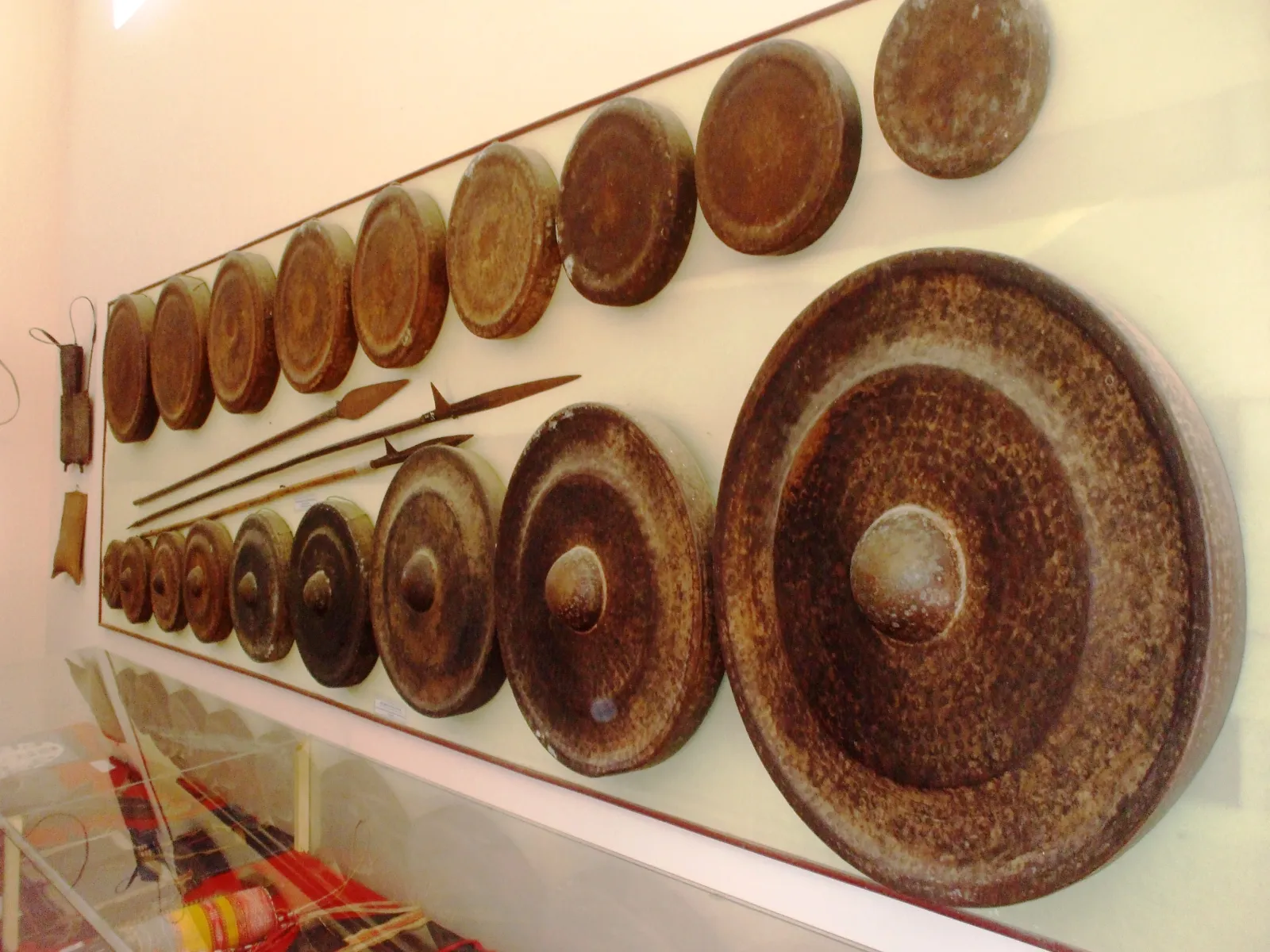
This is the part that surprises most visitors. The village has supplied more than 4,000 gong sets to Central Highlands peoples such as the Ede, Ba Na, Jrai, Xe Dang, M’nong, Ma and Chu Ru. In January 2018 workshops were making moulds for Ede gongs ordered from Dak Lak and Kon Tum, and the village finished over 500 gong sets in 2017. Viet Nam News adds that Dak Nong province once bought hundreds of new sets from Phuoc Kieu to rebuild its gong orchestras.
The named buyers are Ede, Ba Na, Jrai, Xe Dang, M’nong, Ma and Chu Ru. For the people of Quang Nam’s own mountains, see Co Tu people.
The trade has had its swings. The 1970s were the peak, with hundreds of visitors a day coming to see, buy and try gongs. From the 1980s cheap imports halted growth. By March 2019 artisan Duong Ngoc Tien said only 3 artisans, all over 60, could still cast Central Highlands gongs, while the Dak Lak culture department said the highland provinces had no artisan able to cast them.
Recognition and today
Phuoc Kieu is one of 6 craft villages in Dien Ban that Quang Nam province recognised as traditional, and it holds a collective trademark from the national IP office. In October 2006 it was chosen to welcome ministers from the APEC summit. We found no source listing it as national intangible heritage, so we do not claim that.
Size has shrunk and recovered. In January 2018 the village had over 45 organisations and households and about 100 workers; in March 2022 more than 20 casting households were back at work, giving jobs to over 100 people. In 2017 the village’s gong sets brought in over 7 billion dong.
Before you go
Tourists can take part in production and watch gong performances. You can also watch craftsmen play. A VinWonders page dated 12 December 2025 lists hours of 8:00 to 17:00, Monday to Saturday, and free entry. That is a commercial tour page, so check on the day.
Plan it as a half-day with Hoi An old town or Hoi An and My Son: the village is on the way to the My Son road. Pair it with a morning at Thanh Ha for clay and fire in one day.
Photos (2)
- Linhcandng, CC BY-SA 3.0 (opens in a new tab)
- Bùi Thụy Đào Nguyên, CC BY-SA 3.0 (opens in a new tab)
Not confirmed: The founder is unsettled. National heritage listing, current workshop numbers and the post-merger ward name are not confirmed. Hours and free entry come from one commercial page; check on the day.
Common questions
How old is Phuoc Kieu bronze village?
The press says it has lasted more than four centuries. Local elders tie its start to the Quang Nam provincial headquarters set at Thanh Chiem in the early seventeenth century.
Who founded Phuoc Kieu?
It is unsettled. A Hue University paper names Duong Khong Lo from the family genealogy, yet the same paper credits the early forebears of the Duong Ngoc and Nguyen Ba lineages. A tour page names Duong Tien Hien.
What does Phuoc Kieu cast?
Bells, gongs, incense burners, lamp holders, vases and musical instruments, plus statues and bells for pagodas.
How far is it from Hoi An?
About 10 km from Hoi An old town by one count and 8 km from the Japanese Bridge by another. It lies on Highway 1.
Is there an entrance fee?
A VinWonders page dated 12 December 2025 says entry is free and lists hours of 8:00 to 17:00, Monday to Saturday. Treat that as unconfirmed and check on the day.
Do they still make Central Highlands gongs?
In March 2019 only 3 artisans in the village, all over 60, could still cast them.
Read next
- Thanh Ha Pottery Village, Hoi An: History, Clay and KilnsVerified 18 October 2026
- Kim Bong Carpentry Village, Hoi An: History, Guilds, VisitVerified 18 October 2026
- Co Tu People of Quang Nam: Guol House, Weaving, FestivalsVerified 18 October 2026
- Hoi An and My Son Itinerary: One, Two or Three DaysVerified 1 November 2026
General information checked against the sources listed above. Ticket prices, opening hours and rules change; check with the place before you go. See how guides are checked.
Spotted an error? Report it.