Quang Nam Scholars: Laureates of the Nguyen Exams
Under the Nguyen dynasty Quang Nam produced 15 Tien si and 24 Pho bang. The first Tien si from the six provinces between Quang Nam and Ninh Thuan was Le Thien Tri, in 1838. In 1898 five Quang Nam candidates passed together and were called the Five Phoenixes. This page profiles them and other scholars through exams and works.
In this guide
- A land of scholars
- Le Thien Tri, first Tien si of six provinces
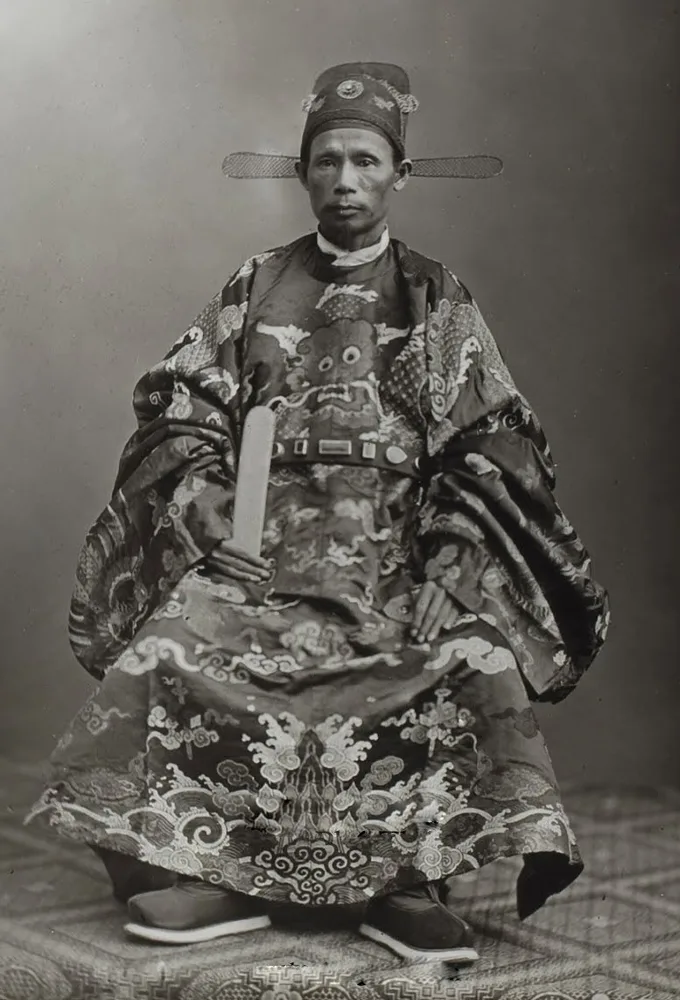
- Pham Phu Thu, the Tien si who went to Europe
- Hoang Dieu, a Pho bang from Dien Ban
- The Thanh Chiem school and Tran Dinh Phong
- Ngu phung te phi, 1898
- The Giap Thin exam: Huynh Thuc Khang and Tran Quy Cap
- Phan Chau Trinh: Pho bang and poet
- Read next
- Common questions
A land of scholars
From 1807 to 1919 the Nguyen court held Han-script exams to select talent. In that time there were 48 regional exams and 39 metropolitan and palace exams. Quang Nam scholars took part and placed in 42 regional exams and 22 palace exams.
The tally: Quang Nam produced 254 Cu nhan (Cử nhân), 6 of them first in their exam. It also produced 15 Tien si (Tiến sĩ) and 24 Pho bang. Prominent names are Pham Phu Thu, Pham Lieu, Phan Quang, Do Thuc Tinh, Huynh Thuc Khang and Hoang Dieu.
These figures were presented in an exhibition on Quang Nam through the Nguyen woodblock archive. UNESCO recognised that archive as Memory of the World documentary heritage.
This page does not list every laureate. It follows people whose lives and works are on record: the first Tien si, an envoy to Europe, the five “phoenixes” and three friends of one teacher. Place names follow today’s usage: Quang Nam, now part of Da Nang city.
Le Thien Tri, first Tien si of six provinces
The metropolitan exam of Mau Tuat, 1838, gave the six provinces from Quang Nam to Ninh Thuan their first Tien si. His name was Le Thien Tri (Lê Thiện Trị).
Le Thien Tri (1769-1872) came from Long Phuoc commune, Duy Xuyen district, Dien Ban prefecture. His father Le Thien Quang, a Han-script tu tai, served as magistrate of Hoa Vang for 11 years.
His road was not smooth at first. At 17 he took his first exam and passed tu tai. Every three years after that he sat again, but still only got tu tai.
Having passed several tu tai exams, and being a magistrate’s son, he was admitted to the Quoc tu giam by special favour. As a student there he could sit and pass the Tien si exam of 1838.
He then served in office, rising steadily from the seventh to the second rank. As governor of Thuan Khanh he spent a sum of public money against the rules and, on inspection, was reduced to commoner status. He kept his degree: his name still stands in the examination register and on the Tien si steles at Hue.
Back home he raised funds to build the Van Thanh temple of Duy Xuyen on 8 sao of land to honour Confucius. A grand ceremony was held every three years on 16 February by the lunar calendar.
A few couplets of his survive at Long Phuoc pagoda. The one at the gate reads “Long can nhat am bo de tho / Phuoc ly xuan nong bat nha hoa”. In translation: the dragon mound shades the bodhi tree by day, and the land of blessing is warm with prajna flowers in spring.
Pham Phu Thu, the Tien si who went to Europe
Pham Phu Thu (1821-1882) was born in 1821 in Dong Ban village, Dien Phuoc district, Dien Ban prefecture, now Go Noi commune in Da Nang. His family was poor and his mother died early. He was bright and hard-working, and Prince Tung Thien Mien Tham taught him.
In 1842, aged 21, he topped the regional exam. In 1843 he topped the metropolitan exam and went on to pass the palace exam as Tien si cap de.
In 1854 he became prefect of Tu Nghia in Quang Ngai, where he organised more than fifty charity granaries for famine relief. In early 1863 he was named deputy envoy and sailed with chief envoy Phan Thanh Gian and Nguy Khac Dan to France and Spain. On that trip he wrote Tay hanh nhat ky and Tay Phu thi thao and presented them to the king.
Later he had practical books printed that Chinese translators had made from English. They cover science, mining and seafaring: Bac vat tan bien, Khai moi yeu phap and Hang hai kim cham.
At home he showed the villagers of Dong Ban how to make water wheels and buffalo carts, useful irrigation tools. His poems in Gia Vien thi tap show the feelings of a man who had not forgotten he was a poor village student.
Hoang Dieu, a Pho bang from Dien Ban
Hoang Dieu was born on 14 March 1829 into a Confucian family in Xuan Dai village, Dien Phuoc district, now Go Noi commune in Da Nang. Under Emperor Tu Duc his family counted one pho bang, three cu nhan and two tu tai.
At 20 he passed the cu nhan exam with his brother Hoang Kim Giam in 1848. At 25 he passed the pho bang exam of 1853. In 1878 he became governor of Quang Nam. He is remembered as the official who fought to the death defending the Hanoi citadel when the French attacked in 1882.
The Thanh Chiem school and Tran Dinh Phong
Many scholars of the late nineteenth century shared one school. Phan Chau Trinh, Huynh Thuc Khang and Tran Quy Cap were all “favourite pupils” of the education chief Ma Son Tran Dinh Phong.
The three studied together at the Cam Y school under Le Cong Thuy, then at the Giao school in Thang Binh and the Doc school at Thanh Chiem. They became friends early and were “dong song”, study-mates.
Other outstanding pupils of Thanh Chiem were Pham Lieu, Nguyen Dinh Hien and Phan Quang. Duong Hien Tien studied there too, and Tran Dinh Phong praised and helped him. Both the 1898 exam of the “phoenixes” and the 1904 exam of Huynh and Tran drew on pupils of this circle.
Ngu phung te phi, 1898
“Ngu phung te phi” (Ngũ phụng tề phi) means five phoenixes flying together. In Vietnam it is best known as the name of five Quang Nam scholars who passed the great exams together in 1898.
In the Mau Tuat exam of 1898 five Quang Nam candidates passed. They were three Tien si, Pham Lieu, Phan Quang and Pham Tuan, and two Pho bang, Ngo Chuan and Duong Hien Tien. On the Tien si stele of 1898 at the Van Thanh in Hue, Dao Nguyen Pho placed first that year, outside the Quang Nam group.
Who named them is told in several ways, and researchers now give four explanations. In one, Governor-General Dao Tan and the education chief Tran Dinh Phong took the name from an old tale. They gave the five a banner with four characters, “Ngu phung te phi”.
The silk showed five phoenixes: three with spread wings for the three Tien si and two with folded wings for the two Pho bang. It was placed at the governor-general’s residence in Dien Ban. In another account, King Thanh Thai himself gave the four characters.
Pham Lieu
Pham Lieu (1873-1937) came from Trung Giang commune, Dien Phuoc district, Dien Ban prefecture. He passed the cu nhan exam in 1894 and placed first in the Tam giap group at 26.
After passing he stayed in Hue to study French at the Tu Dich quan interpreters’ school. In 1929 he was appointed Minister of War.
Phan Quang
Phan Quang (1873-1939), style name Que Nam, came from Phuoc Son commune, Que Son district, Quang Nam. He placed third in the regional exam at Thua Thien in the year Giap Ngo. In 1930 he was given the rank of Minister of Rites before retiring.
After retiring he lobbied the court to set up a primary school for the district, and Que Son primary school opened in 1937. He also gave land to the village for a market where people could trade on both sides of the road. War destroyed his writings. A few plain, gentle poems survive by word of mouth.
Pham Tuan
Pham Tuan (1852-1917) came from Xuan Dai commune, Dien Phuoc district. He passed the cu nhan exam in 1879. In 1898, aged 47, he sat the palace exam and placed fifth in the Tam giap group. In 1908 he became education chief of Ha Tinh.
Ngo Chuan
Ngo Chuan (1873-1899) was also called Ngo Truan, Ngo Tran or Ngo Ly. His family was poor and his father died early, so he moved with his mother to Cam Sa village. In 1898, at 26, he placed first in the Pho bang group. He died in 1899, aged 27.
Duong Hien Tien
Duong Hien Tien (1866-1907) came from Cam Lau commune, Dien Phuoc district. His family was poor, so his father asked a village teacher, Tu Doan, to take him in so he could study daily. He later studied at the Dien Ban Giao school and the Thanh Chiem Doc school, where Tran Dinh Phong praised and helped him.
In 1898 he placed third in the Pho bang group. A year later, tired of official life, he left office, went home and opened a school. Many pupils came to study with him.
The Giap Thin exam: Huynh Thuc Khang and Tran Quy Cap
Huynh Thuc Khang
Huynh Thuc Khang was born on 1 October 1876 in Thanh Binh village, Tien Phuoc district, now Thanh Binh commune in Da Nang. At 8 he began studying Chinese characters under his maternal uncle Nguyen Dinh Tuu, rector of the Quoc tu giam.
The surname Huynh in central and southern Vietnam is a change from Hoang, made to avoid the taboo name of Nguyen Hoang.
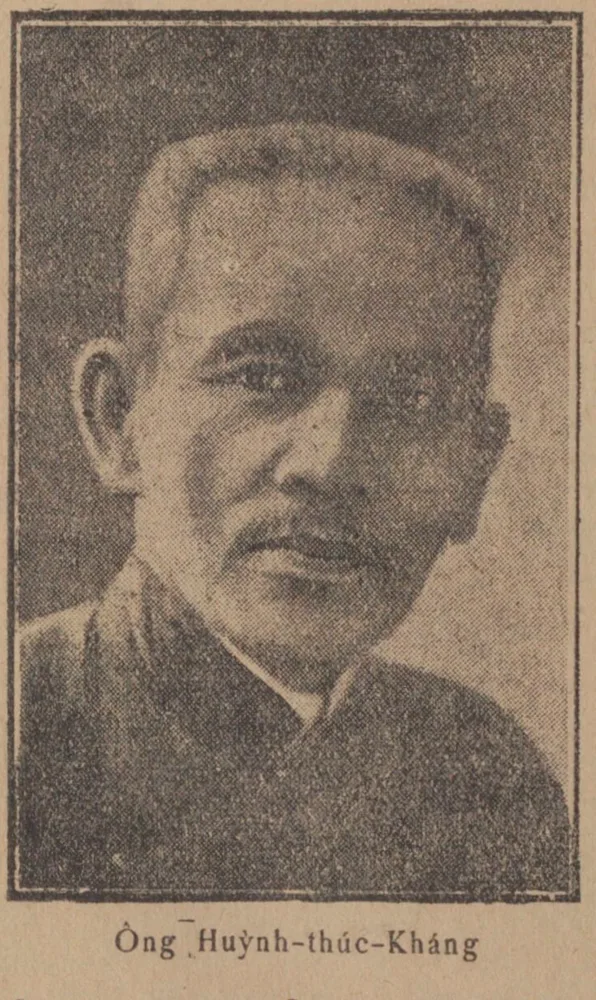
In the regional exam of Canh Ty, 1900, he placed first and Phan Chau Trinh third. In 1904, the year Giap Thin, he passed as Dong Tien si.
In 1927 he and Dao Duy Anh founded the newspaper Tieng Dan in Hue; it was suspended in 1943. Tieng Dan called for broader education and agriculture, reported social conditions, and asked for press freedom and the protection of good customs.
Apart from his public life he was a poet and a researcher of literature and history. His main surviving works include Thi tu tung thoai, Lich su Phan Tay Ho tien sinh and Tho van voi thoi dai.
Tran Quy Cap
Tran Quy Cap (1870-1908) was born into a poor farming family in Thai La hamlet, Bat Nhi village, Dien Ban, now Dien Ban Tay commune in Da Nang. He was one of six outstanding pupils of Tran Dinh Phong at Thanh Chiem school.
In 1904 he was allowed by special favour to sit the metropolitan and palace exams. He passed as Tien si of the Giap Thin exam, the same as Huynh Thuc Khang and Dang Van Thuy.
In 1907 he was teaching official of Thang Binh prefecture. He opened a French class in the school and brought in a teacher.
Phan Chau Trinh: Pho bang and poet
Phan Chau Trinh was born on 9 September 1872 in Tay Loc village, Tien Phuoc district, now Tay Ho commune in Da Nang.
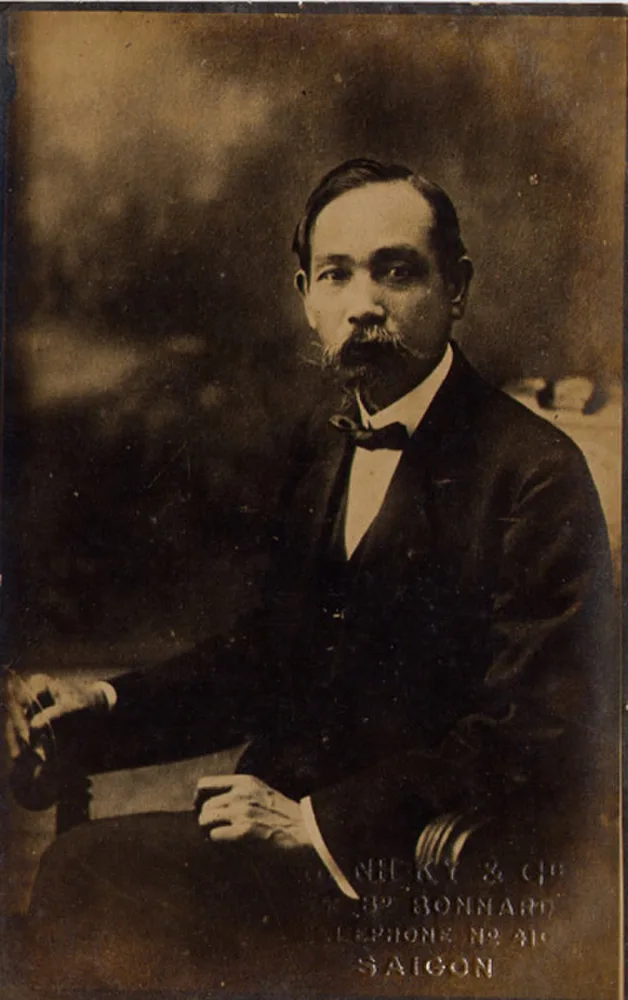
In the Canh Ty exam of 1900 he placed third in the regional exam at Thua Thien. The next year the court held a special exam and he passed as pho bang, the same year as Tien si Ngo Duc Ke. In 1903 he was appointed Thua bien of the Ministry of Rites.
His writing includes Tay Ho thi tap, poems collected from many years. His Giai nhan ky ngo dien ca runs to more than 7,000 luc bat verses, composed in 1912-1913. In 1910 he co-wrote the tuong play Trung Nu Vuong with Huynh Thuc Khang and Phan Thuc Duyen.
Read next
Phan Khoi, a Quang Nam journalist and translator of a later generation, has his own page: Phan Khoi. For the port town of the same era, read Hoi An history and the story of the Franco-Spanish landing at Da Nang.
Photo credits
- Pham Phu Thu in court robes, an old photograph in the public domain: Wikimedia Commons, Pham Phu Thu portrait, unknown author, public domain (opens in a new tab) (Public domain)
- Huynh Thuc Khang. Portrait printed in the book Phe binh va cao luan: Wikimedia Commons, portrait of Huynh Thuc Khang printed in the book Phe binh va cao luan by Thieu Son, public domain (opens in a new tab) (Public domain)
- Phan Chau Trinh, a portrait from the Khanh Ky studio in Saigon: Wikimedia Commons, portrait of Phan Chau Trinh from the Khanh Ky studio, Saigon, public domain (opens in a new tab) (Public domain)
Common questions
How many Quang Nam men passed the top exams under the Nguyen?
15 Tien si and 24 Pho bang, plus 254 Cu nhan, 6 of them first place in their exam.
Who was the first Tien si of Quang Nam?
Le Thien Tri of Duy Xuyen, in the metropolitan exam of 1838; he was the first from the six provinces between Quang Nam and Ninh Thuan.
What is Ngu phung te phi?
The name for five Quang Nam scholars who passed the great exams together in 1898. Three were Tien si: Pham Lieu, Phan Quang and Pham Tuan. Two were Pho bang: Ngo Chuan and Duong Hien Tien.
When did Pham Phu Thu become a Tien si?
In 1843, a year after topping the regional exam in 1842.
Did Huynh Thuc Khang and Tran Quy Cap pass the same exam?
Yes. Both passed as Tien si in the Giap Thin exam of 1904.
What degrees did Phan Chau Trinh earn?
He placed third in the 1900 regional exam, then passed the pho bang in the special exam of 1901.
Who taught Phan Chau Trinh, Huynh Thuc Khang and Tran Quy Cap?
The education chief Ma Son Tran Dinh Phong, who counted all three among his favourite pupils at the Thanh Chiem school.
What did Pham Phu Thu write?
Tay hanh nhat ky and Tay Phu thi thao, written on his mission to France and Spain.
Read next
General information checked against the sources listed above, not legal advice for your situation. Rules and office practice change; confirm with the relevant office or a licensed adviser before you act. See how guides are checked.
Spotted an error? Report it.