Ngoc Linh Ginseng: Where It Grows, Price, Real vs Fake
Ngoc Linh ginseng (Panax vietnamensis) grows on the Ngoc Linh range between Quang Nam and Kon Tum. An account on the Da Nang portal dates the first plant found to 19 March 1973, at 1,800 m. The name "Ngoc Linh" gained a geographical indication on 16 August 2016.
In this guide
- Where Ngoc Linh ginseng grows
- How the plant was found
- The Xo Dang gardens in the forest
- A protected name and a place on the heritage list
- The ginseng festival and the Ginseng Spirit ceremony
- What it costs, and why prices swing
- How to tell genuine from fake
- How local people use it
- Visiting the Nam Tra My market
- Common questions
Where Ngoc Linh ginseng grows
Ngoc Linh ginseng, scientific name Panax vietnamensis Ha et Grushv., grows naturally on the Ngoc Linh range on the border of Quang Nam and Kon Tum. If you are planning a trip, the part that matters is Nam Tra My, the highland area of Quang Nam. Its communes, such as Tra Linh, now belong to Da Nang.
The altitude depends on who you ask, and that is a useful warning not to trust a single number. The first plant was reported at 1,800 m. Local elders say it grows best at 1,700 to 2,100 m. The Xo Dang people plant it under primary forest at 1,200 to 2,000 m.
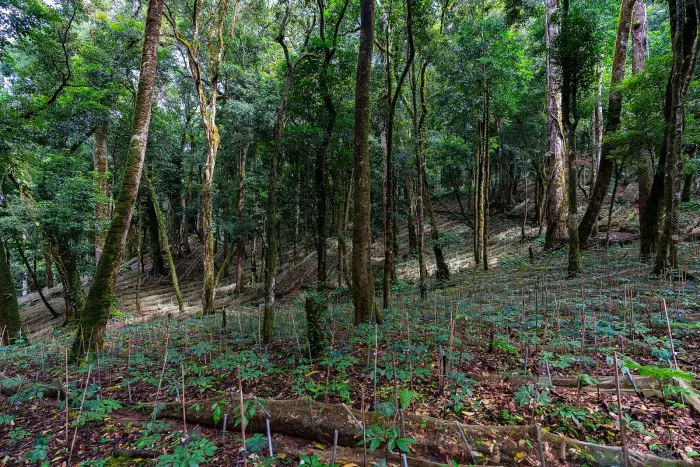
The forest is not decoration. A report on the 2024 festival states that the ginseng lives only under primary forest canopy, which is why growers tie planting to forest protection.
How the plant was found
The date comes from the pharmacist Dao Kim Long, who wrote the account on the Da Nang city portal. His expedition set out on 15 October 1972, after the rainy season, and at 9 a.m. on 19 March 1973 they found the first Ngoc Linh ginseng plant, at 1,800 m. The survey itself had been set up by the regional health service to look for ginseng species on Ngoc Linh mountain.
Read that as the date science noticed the plant, not the date anyone first knew it. A Da Nang newspaper writes that minority communities of Quang Nam, especially the Xo Dang of Nam Tra My, had found it long ago, through their habit of going into the forest.
The Xo Dang gardens in the forest
Press and official portals spell the group’s name Xo Dang (Xơ Đăng) or Xe Dang (Xê Đăng). Xo Dang growers of Nam Tra My took wild plants into cultivation under primary forest.
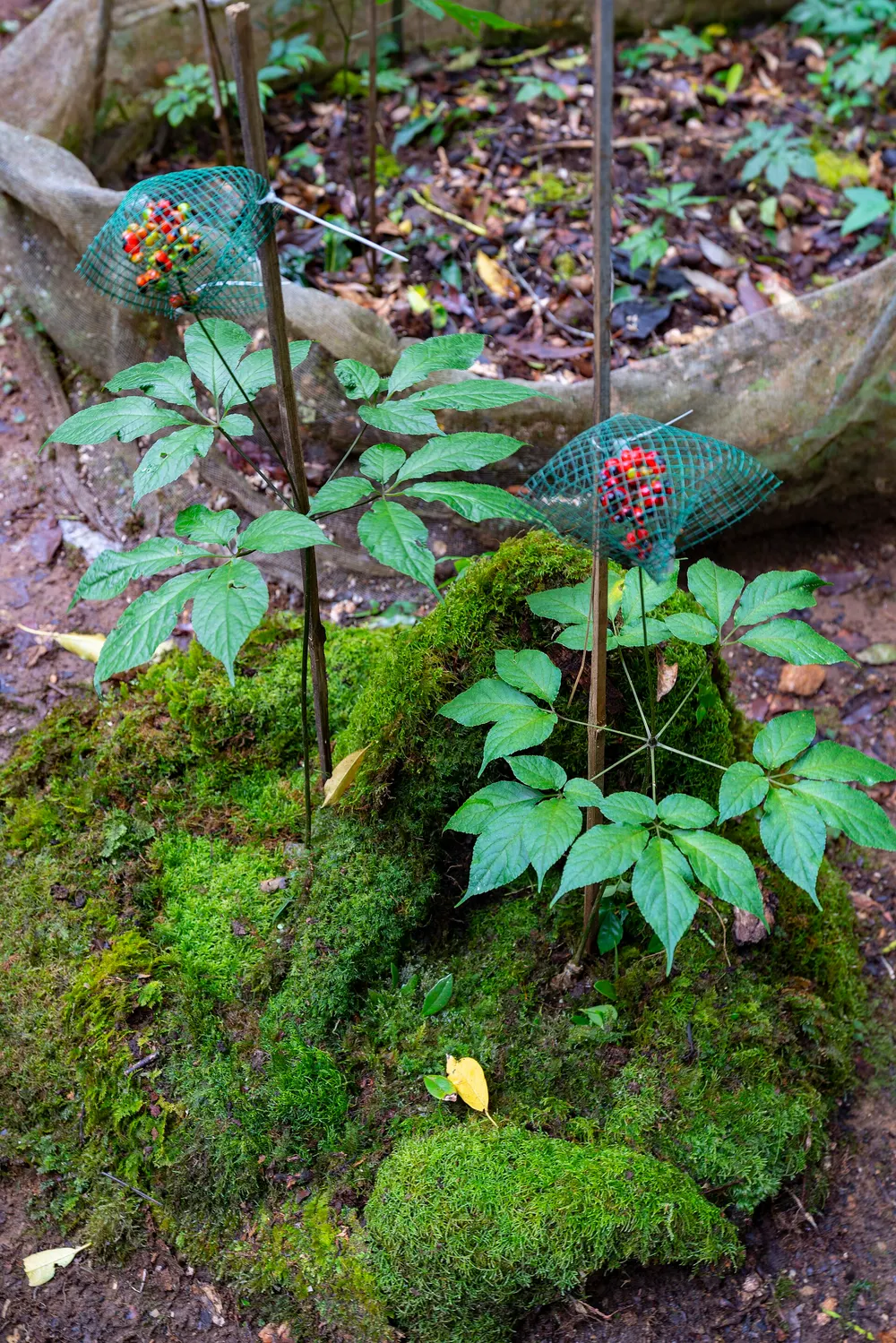
What you will not see from the road is how closely the gardens are watched. Each garden is a guarded post, called a chot, fenced with steel mesh over 2 m high, with one way in and out. Growers also say they use almost no chemical fertiliser or pesticide.
A protected name and a place on the heritage list
The name “Ngoc Linh” is protected for ginseng roots. Quang Nam filed its geographical indication application on 3 December 2013, and the Intellectual Property Office issued a joint certificate for Quang Nam and Kon Tum on 16 August 2016, valid without time limit. The certificate was handed over in Quang Nam on 29 August 2016. At that time the province said only 2 provinces, 5 districts and 16 communes had the plant. The plant has also been in the Vietnam Red Book since 1994.
Officials describe it as a worthy “national product” (san pham quoc gia), and the Prime Minister approved a scheme to conserve and develop Ngoc Linh ginseng to 2030. Nam Tra My planned over 15,000 ha for growing.
The culture around it has its own listing. The Ministry of Culture, Sports and Tourism entered “Folk knowledge of Ngoc Linh ginseng in Nam Tra My” in the national intangible heritage list by a decision of 14 May 2025. For another Quang Nam food on the same national list, see Mi Quang.
The ginseng festival and the Ginseng Spirit ceremony
If you want to see the plant and its people in one trip, go in early August. The Nam Tra My festival has become an attractive meeting point for visitors. The sixth festival ran 1 to 3 August 2024 under the theme “Ngoc Linh - Forever proud”.
In 2026 Da Nang planned a larger event, the Da Nang International Festival of Ngoc Linh Ginseng and Medicinal Herbs, for 1 to 3 August in the city centre and the ginseng communes. Its food area planned dishes made from ginseng and herbs, such as ginseng porridge and stewed chicken with ginseng.
The deeper tradition is the Ginseng Spirit ceremony. On 1 August 2026 Tra Linh commune held it as part of the festival. The Ginseng Spirit temple stands at over 1,500 m at Kon Pin, where the Xo Dang hold their ceremonies. Villagers prepare a ritual pole, boiled chicken and rice wine. The temple itself was inaugurated in 2020, continuing the old belief in a Forest Spirit and a Ginseng Spirit.
What it costs, and why prices swing
Prices are the part of this guide that goes stale fastest, so check the date on every figure. At the Nam Tra My market in August 2024, grade 1 (10 roots per kg) cost VND 100-120 million per kg, down 50% on the year before. Grade 5 (50 roots per kg) cost VND 40-50 million per kg, as of August 2024.
As of August 2024, a trader told VnExpress that grade 1 had sold for VND 240 million per kg in 2020. One stall owner blamed the fall on wider planting and a large supply.
Do not read the auction figure as a shopping price. On 1 August 2026 a 0.9 kg root over 35 years old was auctioned for VND 725 million at the Da Nang festival, with the proceeds going to social welfare programmes.
How to tell genuine from fake
Fake Ngoc Linh ginseng is a known problem, and Quang Nam leaders have called for reporting and fighting fraud in breeding, growing and selling fake plants. The tips below come from growers and officials quoted in the press; none replaces buying from a place that checks origin.
The head of Tu Mo Rong district (Kon Tum) says a genuine root has rough, knobbly skin, while ginseng grown elsewhere has smooth, glossy skin. He adds that the nodes are uneven and staggered like bamboo joints. A grower says traders buy Chinese-grown ginseng to pass it off as Ngoc Linh.
Price is a signal too. The same grower advises you to be suspicious of a suddenly cheap quote and to verify before buying. In April 2023 the General Department of Market Management opened a themed exhibition on recognising genuine Ngoc Linh ginseng.
How local people use it
Ask what people do with it and the cultural answer comes first. A Da Nang newspaper says local tradition mostly prepared it by soaking it in rice wine or in honey. The same newspaper lists newer products such as ginseng tea and ginseng sweets, and the 2026 festival plan had a food area with dishes cooked from ginseng and herbs.
This guide makes no claim about what it does for the body. If you want that, read what the product label and the maker’s documents state, and ask the seller for the paperwork.
Visiting the Nam Tra My market
The easiest place to see the trade is the ginseng market, held on the 1st to 3rd of every month. The market stands in the Tac Po administrative centre of Nam Tra My (names as of 2024). Ginseng and ginseng products are priced openly there, and an appraisal team checks origin. At the August 2024 market, more than ten stalls sold ginseng that the authorities vouch for as genuine.
Plan around those three days if you want the market and not only the gardens.
Photos (1)
- Sâm Ngọc Linh K5, CC0 (opens in a new tab)
Not confirmed: Altitude figures differ and no single official range exists. No market price newer than the one in the body was found. The planned Ginseng Day is unconfirmed. "National product" is an official's phrase; no decision text was read. Recheck prices and festival dates before a trip.
Common questions
When was Ngoc Linh ginseng discovered?
Pharmacist Dao Kim Long wrote that his team found the first plant at 9 a.m. on 19 March 1973, at 1,800 m. Another source adds that Xo Dang people had found the plant long before, through their forest-going customs.
Where does Ngoc Linh ginseng grow?
On the Ngoc Linh range on the border of Quang Nam and Kon Tum. The Xo Dang people of Nam Tra My grow it under primary forest canopy at 1,200 to 2,000 m.
Is the name Ngoc Linh protected?
Yes. The Intellectual Property Office issued a geographical indication certificate on 16 August 2016, valid without time limit, for ginseng roots of Quang Nam and Kon Tum.
How much does Ngoc Linh ginseng cost?
At the Nam Tra My market in August 2024, grade 1 (10 roots per kg) cost VND 100-120 million per kg and grade 5 (50 roots per kg) VND 40-50 million. These are the latest market prices the sources give; prices move.
How do I tell real Ngoc Linh ginseng from a fake?
Officials and growers quoted in the press say a genuine root has rough, knobbly skin and uneven, staggered nodes like bamboo joints. Be wary of a suddenly cheap price and buy where origin is checked.
When is the Ngoc Linh ginseng festival?
In Nam Tra My it has been held at the start of August; the sixth edition ran 1 to 3 August 2024. In 2026 Da Nang planned an international festival for 1 to 3 August.
How do local people use the ginseng?
A Da Nang newspaper says local tradition mostly prepared it by soaking in rice wine or in honey. The Xo Dang also honour a Ginseng Spirit in a ceremony each year.
Read next
- Mi Quang: Origins, Phu Chiem Village, How It Is Made and Three ShopsVerified 18 October 2026
- Be Thui Cau Mong: Roast Veal on Highway 1, Dien BanVerified 1 November 2026
- Hoi An Chicken Rice: Origins, How It Is Made, Ba BuoiVerified 1 November 2026
- What to Eat in Hoi An: Beyond Cao Lau and Chicken RiceVerified 1 November 2026
General information checked against the sources listed above. Ticket prices, opening hours and rules change; check with the place before you go. See how guides are checked.
Spotted an error? Report it.