Cu Lao Cham: History, Monuments, Boats and Calm Season
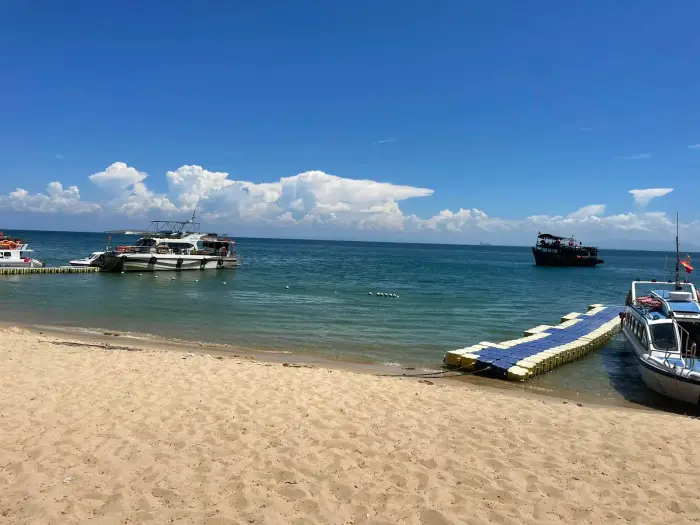
Cu Lao Cham is a cluster of 8 islands in Tan Hiep island commune, Da Nang, 18 km off the Cua Dai coast. People have lived here for about 3,000 years, and seven monuments are nationally ranked. Speedboats from Cua Dai take 15-20 minutes; the all-in ticket is VND 350,000. The sea is calmest from March to August.
In this guide
- Where Cu Lao Cham is and who it belongs to
- The name and the old charts
- From Sa Huynh to Champa: 3,000 years of settlement
- The Xom Cam well: fresh water for people crossing the sea
- The shipwreck and Chu Dau ceramics
- The seven national monuments
- Getting there and what it costs
- When the sea is calm
- What to do on the island
- What to eat on the island
- Staying overnight
- Before you go
- Where to next
- Common questions
Where Cu Lao Cham is and who it belongs to
Cu Lao Cham (Cù Lao Chàm) is a cluster of 8 islands covering about 15 sq km. They lie 18 km off the Cua Dai coast and 45 km from Da Nang city.
Today the islands form Tan Hiep island commune in Da Nang city; they used to belong to Hoi An city in the former Quang Nam province. Older books still call it an island of Hoi An for that reason.
The eight islands are Hon Lao (also called Hon Cu Lao, the largest), Hon Kho Me, Hon Kho Con, Hon La, Hon Dai, Hon Mo, Hon Tai and Hon Ong. Hon Lao covers 13.82 sq km and rises to 517 m; it is where most tourism activity happens. About 3,000 people live on the islands.
The Cu Lao Cham Nature Reserve was set up in October 2003. On 29 May 2009, UNESCO recognised Cu Lao Cham - Hoi An as a world biosphere reserve. The decision came at the 21st session of the Man and the Biosphere international coordinating council on Jeju island, South Korea. The reserve protects more than 950 aquatic species.
The name and the old charts
The islands have carried many names: Chiem Du (Chiêm Dự) under Emperor Tu Duc, Puliciam, Chiem Bat Lao (Chiêm Bất Lao) and Tien Bich La (Tiên Bích La). Old Western maps often wrote it as “Champello”.
One old nautical chart of this coast is the 1787 map by Le Floch de la Carrière, who had visited Vietnam in 1755-1756. It is his second version of the region.
The chart labels the island “Cham collao” and draws both Fayfo (Hoi An) and the Bay of Tourane (Da Nang). On the left you see the large island with a few small ones offshore, facing the mouth of the Fayfo river.
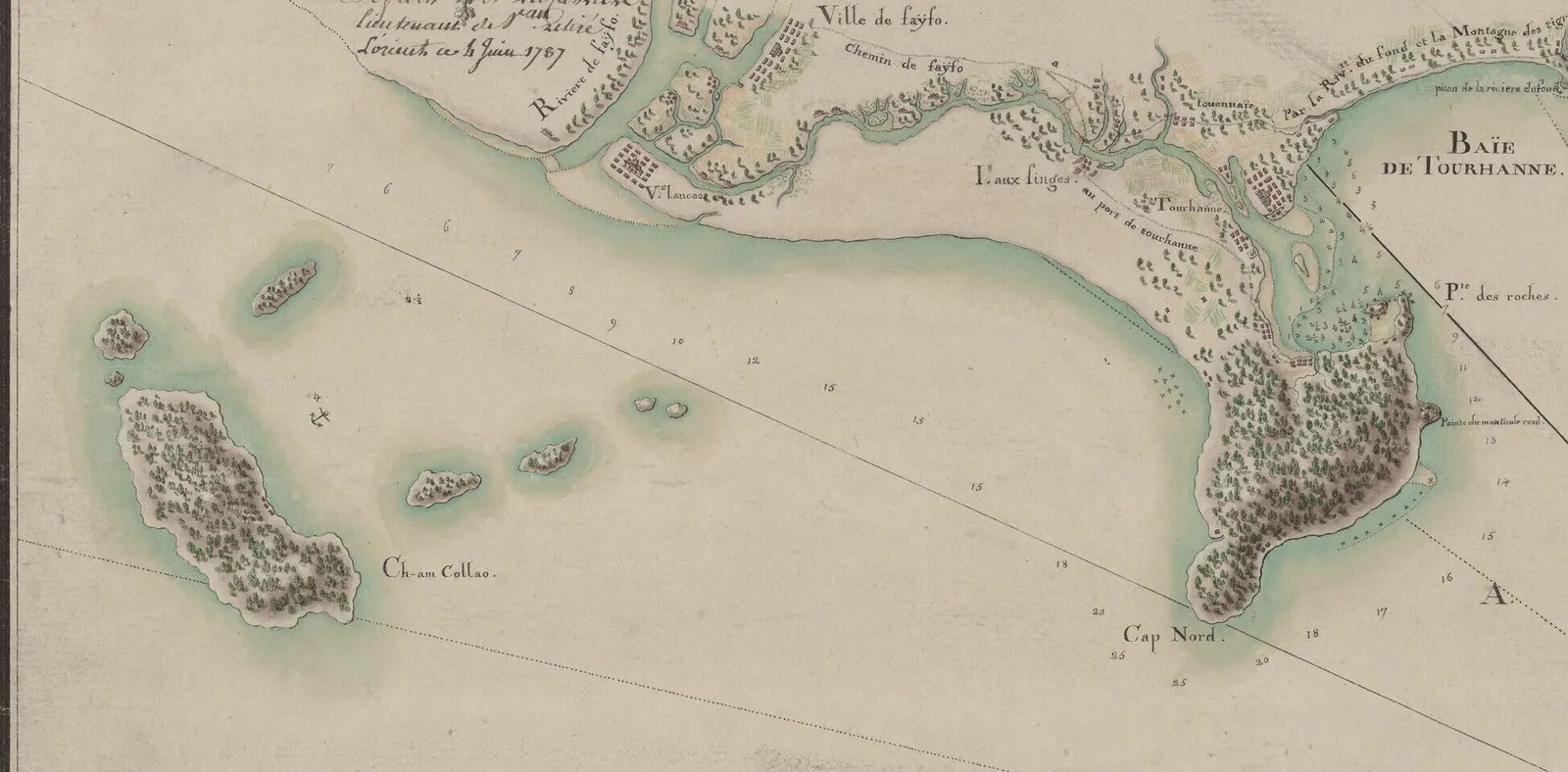
Cu Lao Cham is a historical-cultural site tied to the formation and growth of the trading port of Hoi An. To follow that link, read more on the history of Hoi An and the story of the Hoai River.
From Sa Huynh to Champa: 3,000 years of settlement
Traces of people on the island go back about 3,000 years. The islands hold remains of the Sa Huynh (Sa Huỳnh), Champa and Dai Viet cultures.
Bai Ong. Today it is where day groups stop to rest. On a sand dune at the foot of the mountain lies the earliest-dated archaeological site found in Hoi An. Finds here show that Sa Huynh people lived in Hoi An continuously from the early to the late phase of that culture.
Bai Lang. Bai Lang is where boats usually dock, and it was also a Cham settlement from the seventh to the tenth century. The settlers worked in many trades: forest and sea products, pottery and glass. Finds show that Chinese and Middle Eastern trading ships stopped here to trade.
These two sites, together with five other monuments, make up the seven national monuments on the island.
The Xom Cam well: fresh water for people crossing the sea
The Xom Cam (Xóm Cấm) well, also called the Champa well, stands at a concrete-road junction in the Xom Cam residential area. It is about 200 years old.
In the past, fishermen and merchants sailing in from elsewhere often landed at Cu Lao Cham to take on fresh water. The well mattered as much as a harbour. How it was built is also a source for understanding the technique of Cham wells in Hoi An, and shows that the Vietnamese on the island inherited that know-how.
Islanders pass on the saying that the well water cures seasickness. That is local word of mouth: take it with a smile, and still stop by to see the well once.
The shipwreck and Chu Dau ceramics
Offshore lies a merchant ship wrecked with a cargo of Chu Dau (Chu Đậu) ceramics, the finest proof of the heyday of Chu Dau ware exported abroad. The first to find it were Quang Nam fishermen in the early 1990s: their nets brought up many ceramics, which they sold to dealers.
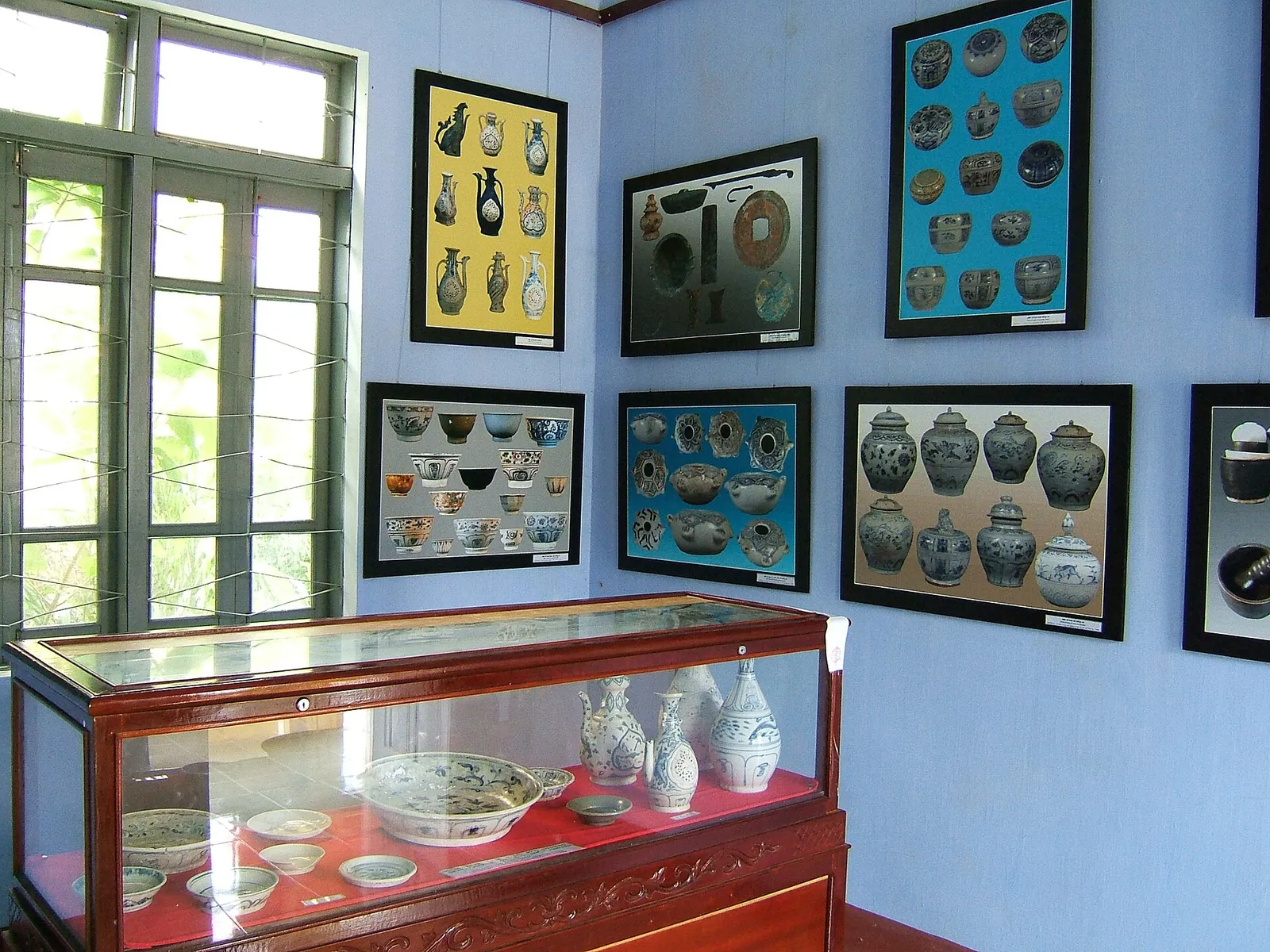
The excavation that followed cost over USD 6 million and lasted four years, ending in 2000. The wreck lay deeper than 70 m, and the team recovered more than 240,000 objects. The ceramics are painted in a purely Vietnamese brushwork: outline first, colour afterwards.
The seven national monuments
The Ministry of Culture and Information (now the Ministry of Culture, Sports and Tourism) ranked seven national monuments on the island. They are the Tien Hien shrine, the swiftlet-guild shrine, Hai Tang Pagoda, the Ong Ngu shrine, the Xom Cam well, and the Bai Lang and Bai Ong sites. The well and the two sites are covered above; the other four are places worth a stop.
Hai Tang Pagoda
Hai Tang (Hải Tạng) Pagoda sits against the western foot of Hon Lao, looking out on the only rice field on Cu Lao Cham. The stele kept at the pagoda (erected in 1848) records that it was built in 1758. At first the pagoda stood about 200 m to the northeast of today’s spot; storms damaged it badly, so in 1848 it was moved to the present site.
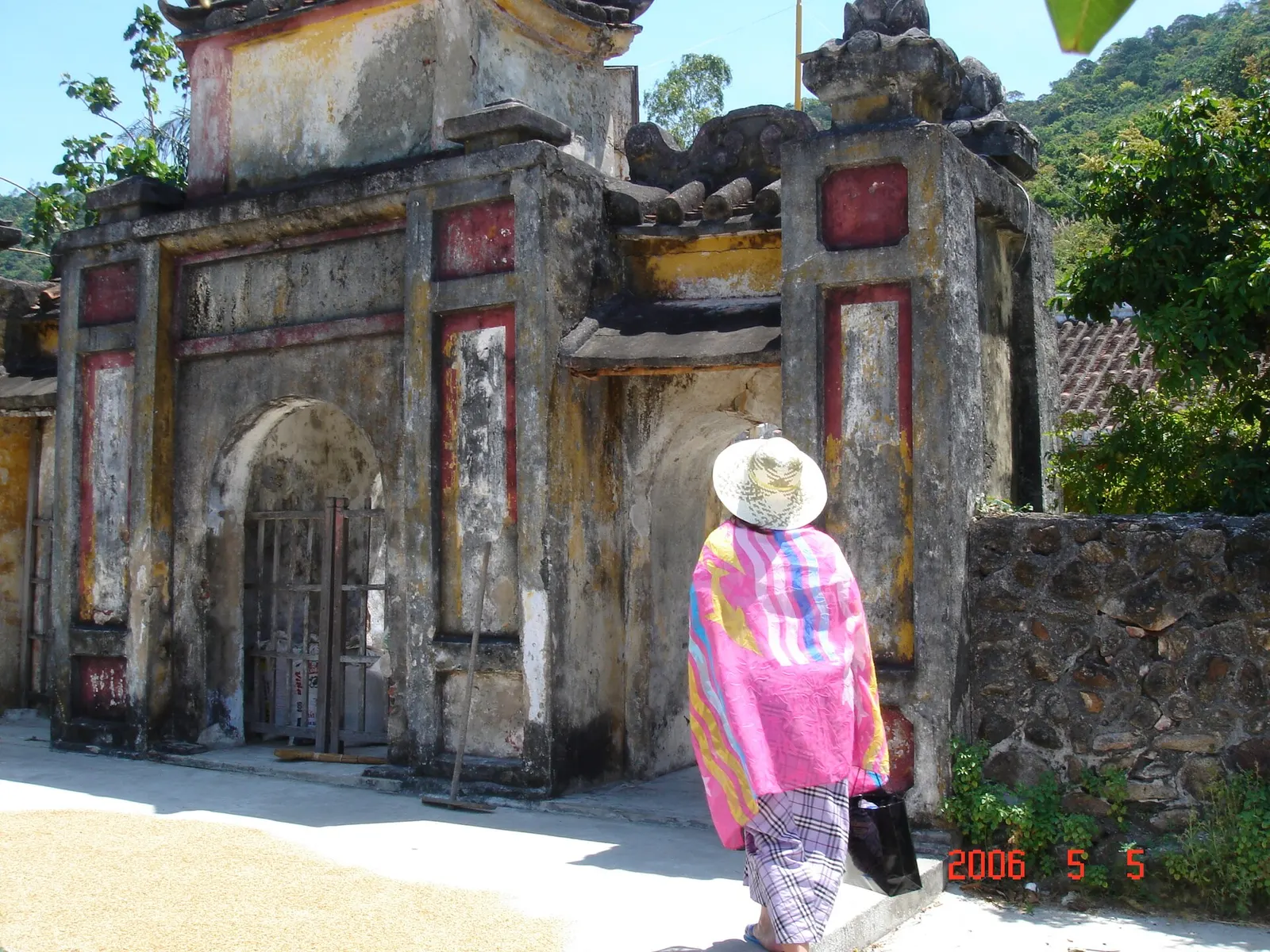
It was built so islanders had a place to worship and so merchant crews from many countries could stop to pray to the Buddha for good trade. According to the Dai Nam Nhat Thong Chi, Zen master Huong Hai and many other renowned monks once practised here. Its bronze bell was cast in the Canh Dan year, 1770.
A stone wall around the pagoda was built to keep out pythons and venomous snakes. The three-entrance gate is 5 m high, 1.5 m wide and 6 m long.
Ong Ngu shrine
Fishermen regard the whale (Ca Ong) as a sea god who often appears to rescue people in distress at sea. When a whale dies and drifts ashore, it gets a proper funeral, is buried, and its bones are later placed in the shrine. The Ong Ngu (Ông Ngư) shrine stands among houses, about 10 m from the shore.
Tien Hien shrine
The Tien Hien (Tiền Hiền) shrine is important evidence for how people settled and cleared land on the island. According to village elders, it was built around the end of the eighteenth or the start of the nineteenth century. Inside are three carved wooden tablets bearing the title of the Phuc Ba (Phục Ba) generals.
Swiftlet-guild shrine
Swiftlet nests in the island caves were already known to the Cham. Under Emperor Gia Long, Ho Van Hoa (Hồ Văn Hòa), an official in charge of swiftlet harvesting, built a shrine to honour the craft’s forebears. The surviving shrine is an early nineteenth-century building that honours the founder of the swiftlet trade and the village’s tutelary spirit.
To see swiftlets nesting up close, hire a boat for about VND 300,000 to visit them.
Getting there and what it costs
You reach the island mostly by speedboat from Cua Dai pier. A ticket costs VND 350,000: VND 260,000 for the boat, VND 70,000 sightseeing fee, VND 20,000 environment and security fee. Children under 12 months go free; ages 1 to under 8 pay half price. The crossing takes about 15-20 minutes, and boats usually land at Bai Lang.
Wooden boats still run but carry only cargo and local people, and take about an hour and a half. Visitors should take the speedboat.
For the easy route, book a full-day tour at an agency or hotel. It covers transfers, lunch, the sightseeing fee and a few activities for VND 500,000-700,000 per person. Going independently, you arrange the motorbike, the dive tickets, meals and timing yourself.
One practical July 2024 itinerary left Cua Dai pier at 9:00 by speedboat. The latest boat back to the mainland that day was at 14:30, so plan your time on the island around it. Carry your ID papers. Most visitors come for a day only.
When the sea is calm
March to August: clear sky, calm sea, little rain. In the other months storms and big waves mean most tourist boats do not run. Plan your trip around this season. It also overlaps with the stone crab season: crab may only be caught from March to June.
What to do on the island
Beaches. Bai Lang and Bai Huong lie next to the fishing village and have the homes and homestays. Bai Ong is where day groups usually stop. Bai Bac is a turtle conservation area where boats may not land, and no speedboats or motor boats land at Bai Xep either, which suits anyone after quiet.
Snorkelling over coral. The island has plenty of coral, and most tours include snorkelling. Snorkelling and sea-walking cost VND 200,000 to 1 million depending on the type.
Anyone with a heart or blood-pressure condition should consult a doctor first. Protect the marine ecosystem.
Eo Gio. A striking spot for sunrise, about 3 km from Bai Lang. From here you can see the Cu Lao Cham lighthouse.
Getting around. Motorbike hire for a day is VND 120,000-150,000. To visit the other islands, charter a boat for the session at about VND 700,000, up to 10 people.
Tan Hiep market. The market, also called Cu Lao Cham market, is right by the pier. It sells forest and sea specialities and souvenirs, mostly dried seafood. Food at the market is cheaper than at Bai Lang and Bai Ong.
What to eat on the island
Cu Lao Cham stone crab is purple, lives in mountain crevices and moves down to the shore in the rainy season. A kilo of stone crab costs about VND 1 million. Crab may only be caught from March to June.
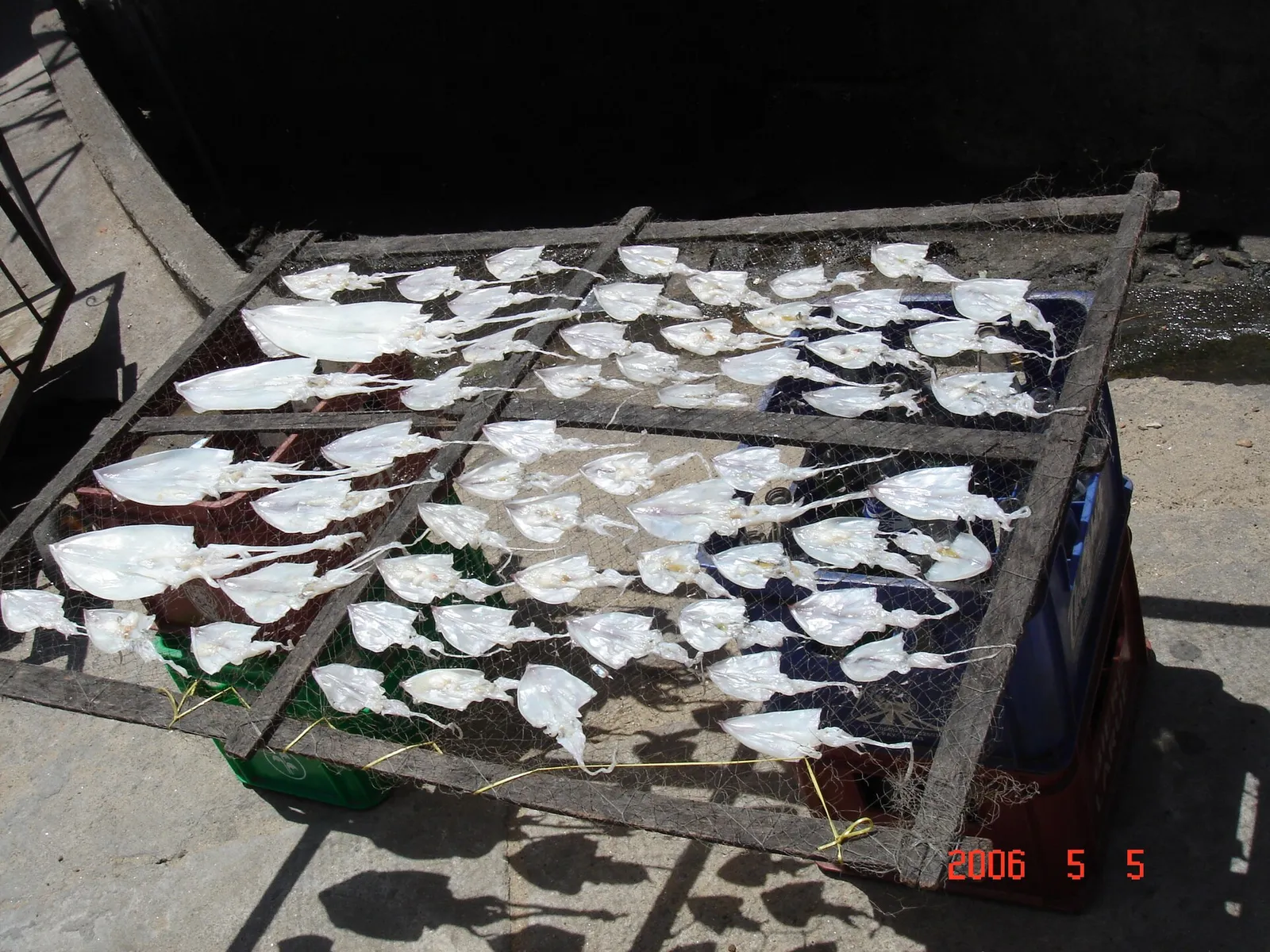
Breast-shaped snails (ốc vú nàng) are a rare speciality, most plentiful around the full moon. Lobster and sun-dried squid are also good local dishes, and sun-dried squid is something many visitors look for to take home as a gift.
Early March is the wild-vegetable harvest, more than 10 kinds, boiled and dipped in mam nem (mắm nêm).
Staying overnight
The island is still fairly wild and has no comfortable resorts. To stay the night, rent a homestay or simple guesthouse, clustered around Bai Lang and Bai Huong, with rooms at VND 200,000-500,000 a night.
Before you go
The island is campaigning against plastic, so do not bring nylon items. Carry your ID papers. Do not book the last boat of the day too tightly: there are no boats late in the afternoon.
Where to next
Back on the mainland, eat a bowl of Cao Lau or Mi Quang in the evening for the true Hoi An flavour. Then stroll the Hoai River at night and visit Hoi An Ancient Town. To follow the Cham story further, continue to My Son Sanctuary.
Photo credits
- A beach on Cu Lao Cham: Wikimedia Commons — Theguywithkpdomain (opens in a new tab) (CC0)
- Left part of Le Floch de la Carrière's 1787 nautical chart (held by the BnF, Gallica): the island is labelled Cham collao, with the Fayfo (Hoi An) coast and Tourane (Da Nang) bay: Gallica (BnF) via Wikimedia Commons — René-Julien Le Floch de la Carrière (opens in a new tab) (Public domain)
- Chu Dau ceramics raised from the Cu Lao Cham shipwreck, photographed at the display on the island: Wikimedia Commons — Viethavvh (opens in a new tab) (CC BY-SA 3.0)
- The gate of an old pagoda on Cu Lao Cham: Wikimedia Commons — User:Blon (opens in a new tab) (CC BY-SA 3.0)
- Squid drying in the sun on Cu Lao Cham: Wikimedia Commons — User:Blon (opens in a new tab) (CC BY-SA 3.0)
Common questions
Which commune is Cu Lao Cham in, Hoi An or Da Nang?
The islands belong to Tan Hiep island commune, Da Nang city; they used to belong to Hoi An city in the former Quang Nam province. Older books and articles still call it an island of Hoi An for that reason.
How far is Cu Lao Cham from Hoi An, Cua Dai and Da Nang?
The islands lie 18 km off the Cua Dai coast and 45 km from Da Nang city. The speedboat from Cua Dai pier takes about 15-20 minutes.
How much is the speedboat ticket to Cu Lao Cham, and should I go independently or on a tour?
A ticket costs VND 350,000: VND 260,000 for the boat, VND 70,000 sightseeing fee and VND 20,000 environment and security fee. A full-day tour with transfers, lunch, the sightseeing fee and a few activities costs VND 500,000-700,000 per person. Going independently, you pay extra for a motorbike at VND 120,000-150,000 a day and for any diving services.
What is the best month to visit Cu Lao Cham?
March to August: clear sky, calm sea, little rain. In the other months storms and rough sea mean most tourist boats do not run.
What is the history of Cu Lao Cham?
Traces of people on the island go back about 3,000 years. Bai Ong is the earliest-dated site found in Hoi An, and Bai Lang was a Cham settlement from the seventh to the tenth century. Offshore lies a merchant ship wrecked with Chu Dau ceramics; the excavation recovered more than 240,000 objects.
When did UNESCO recognise Cu Lao Cham?
On 29 May 2009, at the 21st session of the Man and the Biosphere international coordinating council on Jeju island, South Korea.
Can you stay overnight on Cu Lao Cham?
Yes. Homestays and simple guesthouses cluster around Bai Lang and Bai Huong, with rooms at VND 200,000-500,000 a night. The island is still fairly wild and has no comfortable resorts.
What is the latest boat back to the mainland?
On a July 2024 itinerary the latest boat back to the mainland left at 14:30. Ask for the return time when you buy the ticket.
Read next
- Hoi An History: The Faifo Trading Port and Old TownVerified 18 October 2026
- Hoai River, Hoi An: History, Lanterns and Boat RidesVerified 18 October 2026
- Cao Lau Hoi An: History, Noodle Makers and Three PlacesVerified 18 October 2026
- Mi Quang: Origins, Phu Chiem Village, How It Is Made and Three ShopsVerified 18 October 2026
General information checked against the sources listed above, not legal advice for your situation. Rules and office practice change; confirm with the relevant office or a licensed adviser before you act. See how guides are checked.
Spotted an error? Report it.