Tra Que Vegetable Village, Hoi An: Seaweed, Herbs and Visits
Tra Que is a herb-growing village about 3 km north-east of Hoi An old town. Farmers feed the beds with seaweed from the lagoon and river. Its herbs go into cao lau and mi Quang. The craft joined the national intangible heritage list in April 2022.
In this guide
A herb village beside the old town
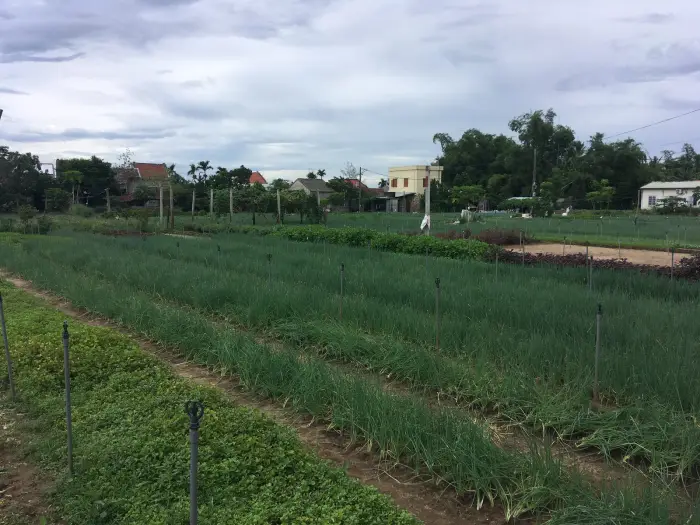
Tra Que (Trà Quế) lies about 3 km north-east of Hoi An old town, between the Co Co River and Tra Que lagoon. It now belongs to Hoi An Tay ward in Da Nang city, and the village took shape in the 16th century. Settlers from the north of Dai Viet came to clear land and found the village.
If you read older travel pages you will meet other numbers: the land is described as opened up more than 400 years ago in 2016 and as more than 300 years old in 2022. Treat the age as a few centuries, with the 16th century as the founding date.
The first villagers were not farmers. They fished on the De Vong River before they turned to the fields. In the past they also made a living by fishing and shrimping along the Co Co River. Today the village covers more than 18 ha, with 202 households in the trade, per Tien Phong in September 2026.
Seaweed in the beds
The village’s best-known method sits under the soil. Farmers skim seaweed (rong) from Tra Que lagoon and the De Vong River to feed the beds. They haul it home and compost it into fertiliser. Nhan Dan described the same practice in 2018: the seaweed is spread along the bed, covered with 10 to 15 cm of soil, and rots down into organic nutrients for the plants.
Why bother? The compost loosens and enriches the soil. One farmer, Nguyen Thi Thu, says only this natural seaweed suits Tra Que soil. The Hoi An heritage centre adds that the lagoon yields the soft aquatic seaweed that helps the vegetables grow lush with a rich fragrance.
The trade-off is yield. Yields are low, but the vegetables have a character few places match. If you want to see the method rather than read about it, the festival and farm tours below put it in your hands.
What grows here
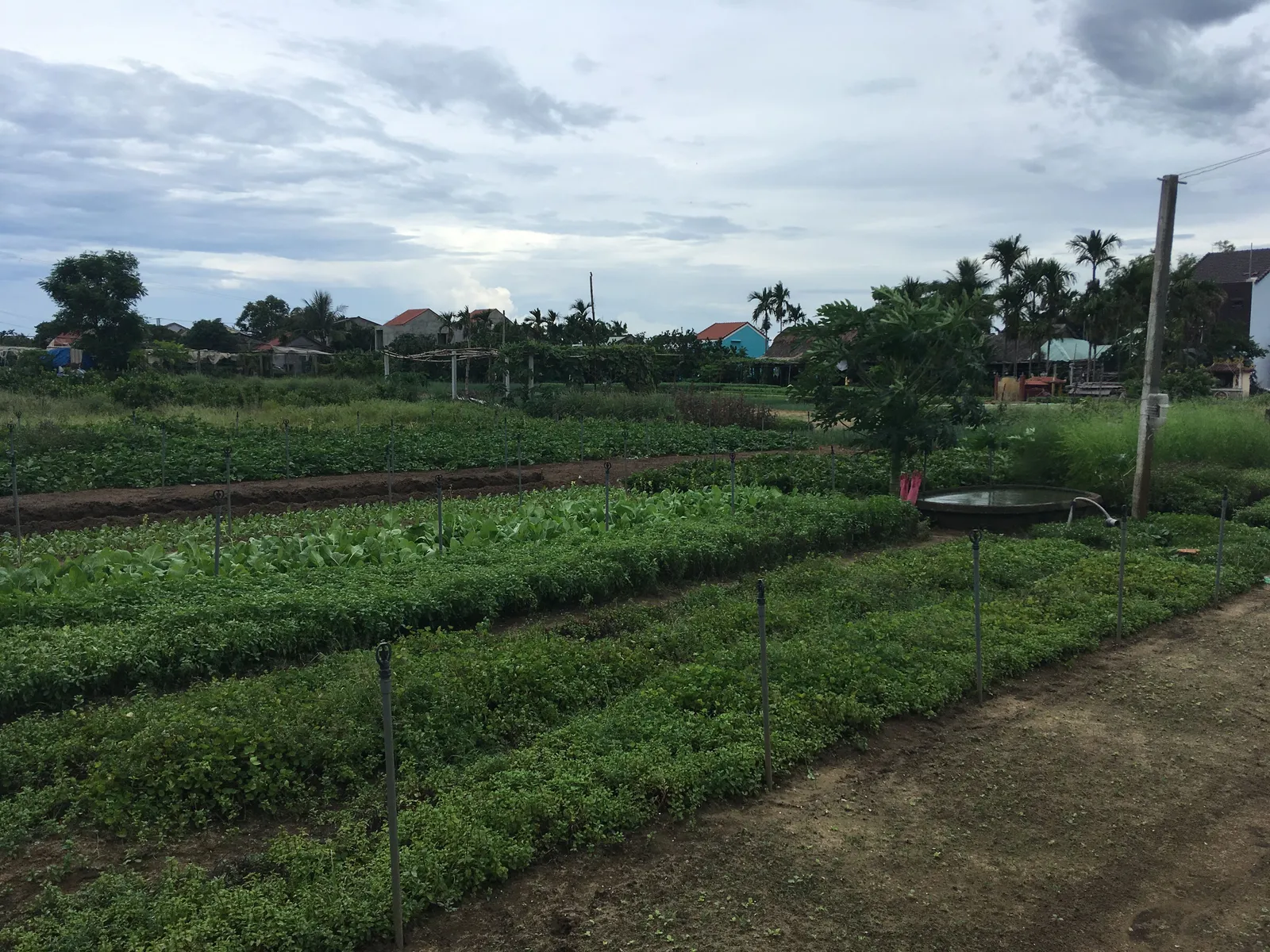
Think herbs first, vegetables second. Basil (hung), e, chives, perilla (tia to), rau ram, spring onion, coriander and fish mint are the signature varieties. The village counts about 40 kinds with a distinct flavour; a 2014 visit lists more than 20 kinds of leaf vegetables and herbs. The number depends on who counts and when.
A bed in winter smells of coriander and spring onion, with a spicy bite from basil and a sweeter note from cai, mong toi and muong. The village also sells to restaurants, hotels, resorts and some supermarkets.
The plate: cao lau, mi Quang and tam huu
This is where the village meets Hoi An’s food. Hung, e, rau ram, spring onion and coriander appear in cao lau, mi Quang, banh xeo, salads and fresh-herb plates. To taste the herbs at full strength, try cao lau, mi Quang and tam huu. Tam huu is described as a special dish of the village people.
So when you eat cao lau in the old town, the green handful beside the noodles is the kind of thing Tra Que grows. The same goes for the herb plate beside a bowl of mi Quang. Hoi An chicken rice is another plate of the same town, though its herb supply is undocumented.
Heritage titles
The village holds three recognitions, each with a date from a source:
- On 14 February 2016 it received the traditional craft village title from the Quang Nam People’s Committee.
- In April 2022 the Ministry of Culture, Sports and Tourism put the vegetable-growing craft on the national intangible cultural heritage list, under folk knowledge and traditional craft. Hoi An authorities held a reception ceremony for the title.
- In 2024 Tra Que was Vietnam’s only village recognised by UN Tourism as a Best Tourism Village.
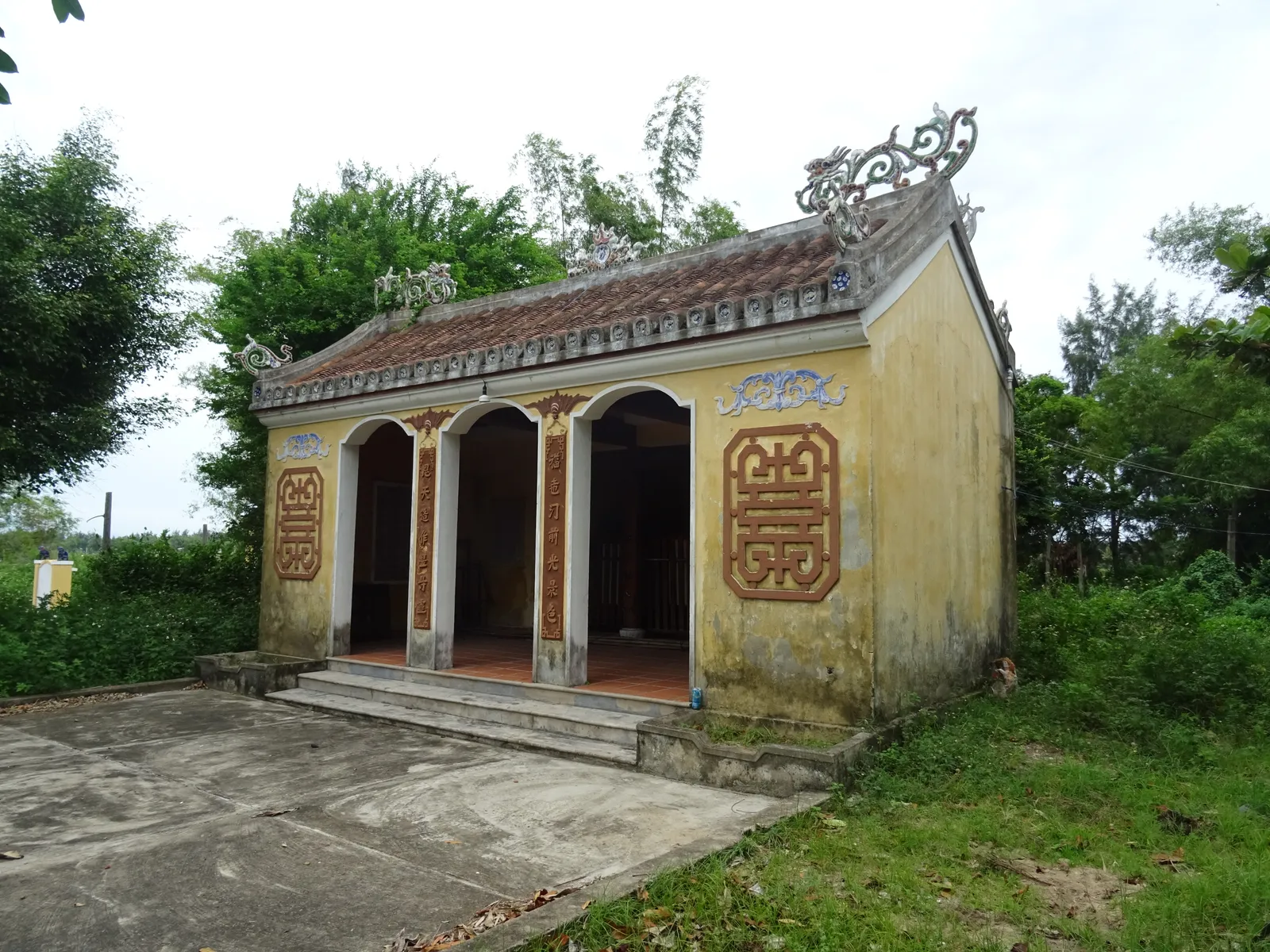
Beyond the herbs, the village keeps a Cham stone well, shrines, the tomb of Nguyen Van Dien and the Cau Bong rite. Village elders say the first name was Nhu Que, a vegetable scent like cinnamon. Treat it as local tradition, not a dated record.
The Cau Bong festival
Each year on the 7th day of the first lunar month, villagers prepare offerings from local produce. At the festival, visitors can join farmers in hoeing, preparing beds, applying seaweed fertiliser, transplanting and watering. Go in the Tet season and you see the whole method in a morning.
Visiting: farm tours and cooking classes
Hoi An city has run a community tourism plan for the village since 2019. The headline offer is a “One day as a Tra Que farmer” tour (September 2026): tilling, watering, fertilising and harvesting. Cooking classes teach banh xeo, salads and mixed dishes from vegetables grown in the village. A 2014 account says visitors are shown how to hoe, plant, water and fertilise, then eat dishes including mi Quang and cao lau.
Many visitors cycle out early from the old town towards the north-east. Tour and class prices are unpublished here as of November 2026; ask the operator when you book.
If the village sparks your interest in Hoi An’s craft villages, Thanh Ha pottery village is the natural next stop.
Photos (1)
- Christophe95, CC BY-SA 4.0 (opens in a new tab)
Not confirmed: Prices for the farming tour and cooking class are unpublished here; ask the operator. The herb supply of Hoi An chicken rice is undocumented. The village age and the crop count differ by report.
Common questions
Where is Tra Que vegetable village?
About 3 km north-east of Hoi An old town, between the Co Co River and Tra Que lagoon. It now belongs to Hoi An Tay ward, Da Nang city.
How do Tra Que farmers fertilise the beds?
They skim seaweed from the lagoon and the De Vong River. One report says it is spread along the bed under 10 to 15 cm of soil, then rots into organic nutrients.
Which herbs does Tra Que grow?
Signature varieties include basil, e, chives, perilla, rau ram, spring onion, coriander and fish mint. Sources count about 40 kinds.
Is Tra Que a national heritage?
Yes. In April 2022 the Ministry of Culture, Sports and Tourism listed the vegetable-growing craft as national intangible heritage, under folk knowledge and traditional craft.
What can visitors do in Tra Que?
Join a one-day tour of tilling, watering, fertilising and harvesting, or take a cooking class using village vegetables.
How old is Tra Que?
It formed in the 16th century. The age is given as more than 400 years in 2016 and more than 300 years in 2022.
Read next
- Cao Lau Hoi An: History, Noodle Makers and Three PlacesVerified 18 October 2026
- Mi Quang: Origins, Phu Chiem Village, How It Is Made and Three ShopsVerified 18 October 2026
- Hoi An Chicken Rice: Origins, How It Is Made, Ba BuoiVerified 1 November 2026
- Thanh Ha Pottery Village, Hoi An: History, Clay and KilnsVerified 18 October 2026
General information checked against the sources listed above. Ticket prices, opening hours and rules change; check with the place before you go. See how guides are checked.
Spotted an error? Report it.