Phan Khoi: Bao An Writer Who Opened New Poetry
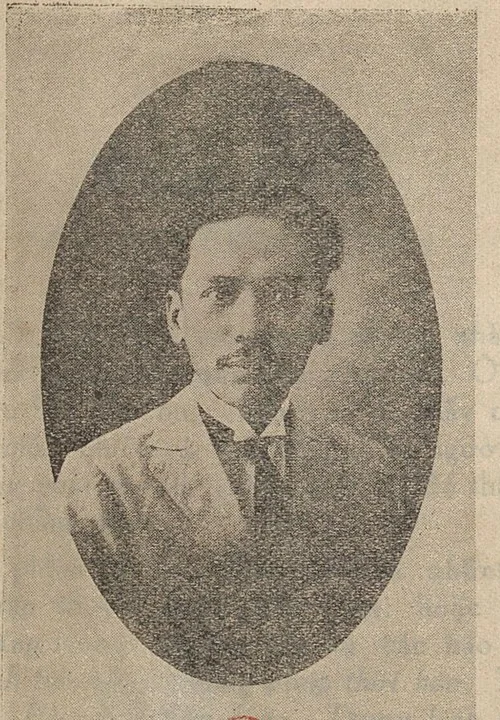
Phan Khoi (Phan Khôi, 1887–1959), pen name Chuong Dan, was born in Bao An village, Dien Ban, Quang Nam, now in Da Nang. He wrote for about 30 newspapers and was chief translator of the Vietnamese Bible. His 1932 poem Tinh gia opened the New Poetry movement.
In this guide
Who Phan Khoi was
Phan Khoi was born on 6 October 1887 and died on 16 January 1959. He came into the world in Bao An village, Dien Ban prefecture, Quang Nam, now part of Go Noi commune in Da Nang. His best-known pen name is Chuong Dan.
People remember him in three roles: journalist, translator and poet. The researcher Lai Nguyen An sums up that through his journalism Phan Khoi proved himself a scholar, a thinker, a writer, a Bible translator, a linguist and a literary critic. This page follows him from the village of Bao An through the newsrooms of Hanoi, Saigon and Hue to the poem that split the literary world of its day.
Bao An village and a Confucian family
Phan Khoi’s family belonged to the Confucian scholar class. Both his paternal and maternal lines came from Dien Ban, Quang Nam. His father was Deputy Laureate (Phó bảng) Phan Tran, and his mother was a daughter of Hanoi Governor-General Hoang Dieu.
His paternal grandfather served as Provincial Judge of Khanh Hoa under Emperor Tu Duc. His maternal grandfather, Governor-General Hoang Dieu, took his own life when the Hanoi citadel fell in 1882.
Growing up in that household, the young Phan Khoi followed the path of Chinese characters. He excelled at Confucian literature and passed the bachelor (tú tài) exam at 19. That was in 1905, but he disliked the road of the imperial examinations and taught himself quoc ngu and French instead. He studied Chinese characters, passed the Han-script bachelor exam at 19, then switched to Western learning.
A solid grounding in Chinese learning served him for the rest of his writing life. When he translated the Bible, he used the Chinese text to check against the French.
From Hanoi to the Quang Nam jail
In 1907 Phan Khoi went to Hanoi, joined the Dong Kinh Nghia Thuc movement and worked for the magazine Dang Co Tung Bao. He was later arrested and held in the Quang Nam jail until he was granted amnesty in 1914.
Ten years translating the Bible
In 1916 the missionary Irwin recognised his deep learning and invited him onto the committee translating the Bible into quoc ngu. He worked on it for 10 years, from 1916 to 1925.
The committee had representatives from the North, Centre and South, and both modern-educated and classically educated members. Phan Khoi was given the main translation job because he was the strongest in quoc ngu. The translation was finished in 1925, printed in China and brought to Vietnam; according to the Bible Society’s own records, it was officially released in 1926.
The surprising part: he used the Chinese text alongside the French text to translate for the Protestant church. Vietnamese Wikipedia also lists him as one of the translators of the Protestant Bible into Vietnamese.
One pen, three regions
His career took him across three regions. He worked with most of the big papers of his time. In Hanoi these were Dong Co Tung Bao, Nam Phong, Huu Thanh and Thuc Nghiep Dan Bao. In Saigon they were Than Chung and Phu Nu Tan Van, and in Hue Trang An.
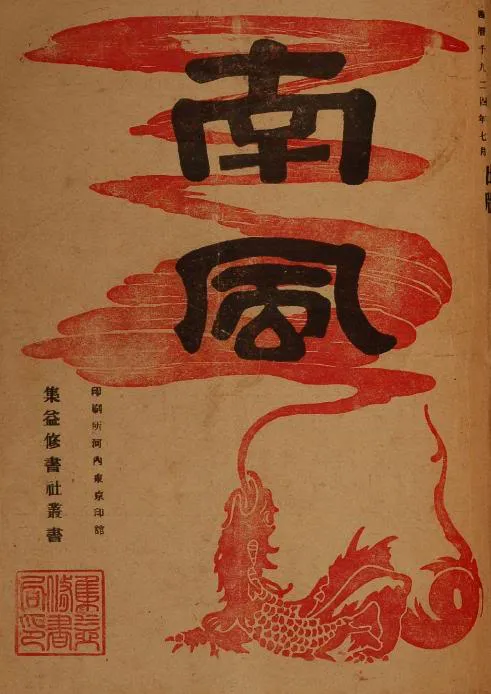
His route, milestone by milestone:
- He ran the Vietnamese-language section of Nam Phong in Hanoi for about two years, then left Hanoi for Saigon to write for the paper Luc Tinh Tan Van.
- In 1919 he worked with Nguyen Van Vinh’s Luc Tinh Tan Van.
- In 1931 he went back to Hanoi as editor-in-chief of Phu nu thoi dam.
- In 1936 he moved to Hue to write for Trang An and got permission to publish the paper Song Huong.
His writing career ran for more than half a century, with about 30 different papers. The Da Nang portal estimates he wrote over a thousand articles, on literature, history, culture, linguistics and more. Under the French he was regarded as a veteran journalist who had worked with a dozen papers and led the paper Song Huong.
A man who liked an argument
He also sparked many pen-duels, such as the debates on Quoc hoc (national learning) and on The Tale of Kieu. People summed up that argumentative streak as “Quang Nam hay cai”, Quang Nam folk who love to argue.
Professor Hoang Tue introduces the book Viet ngu nghien cuu (World Publishers, 2020). There he quotes Phan Khoi’s view of Quoc hoc: Vietnamese learning of its own consists only of literature, the works of literary art.
In Nha van hien dai, Vu Ngoc Phan observed that when Phan Khoi criticised poetry he often spoke boldly, yet those bold passages were the most charming ones.
Tinh gia and the New Poetry movement
Tinh gia (Tình già) is Phan Khoi’s best-known poem. It appeared in the paper Phu nu tan van, issue 122, on 10 March 1932. The researcher Lai Nguyen An argues it was printed earlier.
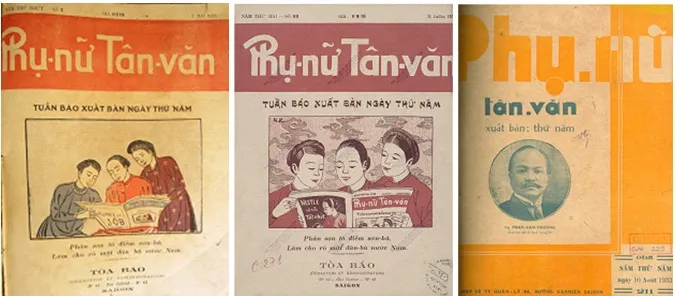
The poem came with an introduction titled Mot loi tho moi trinh chanh giua lang tho (A new style of poetry, presented to the poets’ village). In it he describes the poet’s dilemma: in Nom verse, the great Tien Dien and Madame Thanh Quan “press across my chest until I can’t breathe”.
The poem opens with the line “Hai muoi bon nam xua, mot dem vua gio lai vua mua” (Twenty-four years ago, one night of both wind and rain). It is the love story of two people past their youth. There are no classical allusions and no rigid rules of tone and rhyme; instead the voice is natural and close, like someone telling a story.
The uproar and the debate
The poem caused a strong stir as soon as it appeared. It set off a string of debates between the “old poetry” and “new poetry” camps. Phu nu tan van stood with Phong hoa and Ngay nay on the side defending new poetry.
By 1941 the quarrel between new and old poetry had closed. In Thi nhan Viet Nam, Hoai Thanh wrote that New Poetry had won the right to live.
Judgements on Tinh gia itself are level-headed: Vu Ngoc Phan saw it as a poem of opening significance rather than a peak. Even so, the press and researchers still name Phan Khoi as the man famous for the poem that opened the New Poetry movement. Tinh gia is counted among the new-style poems of 1932.
Hue, the paper Song Huong and Chuong Dan thi thoai
In 1936 he went to Hue, wrote for Trang An and got permission to publish the paper Song Huong. The weekly Song Huong, with him as editor-in-chief, ran 32 issues, from 1 August 1936 to 27 March 1937. From its columns people nicknamed him “Ngu su Van dan” (Imperial Censor of the Literary World).
That same year he reprinted his collection of poetry criticism as Chuong Dan thi thoai, after changing his pen name from Nam Am to Chuong Dan. The book is dated 1936. In 1939 he went to Saigon and published the novel Tro vo lua ra.
Main works
- Ban ve te giao (1918).
- Tinh gia (new-style poem, 1932).
- Chuong Dan thi thoai (1936).
- Tro vo lua ra, a novel (1939).
- Tim toi trong tieng Viet (1950).
- Viet ngu nghien cuu (1955).
- Translations of Lu Xun, from 1955 to 1957.
- A share in translating the Protestant Bible into Vietnamese.
Where to read him? The series Phan Khoi: Tac pham dang bao, collected by the researcher Lai Nguyen An, has published its first volumes. His daughter, Phan Thi Mieu, wrote the book Nho cha toi Phan Khoi (Da Nang Publishing House, 2001).
Remembered at home
In 2007, on the 120th anniversary of his birth, Xua va Nay magazine and the Vietnam Historical Science Association held a seminar on him. In October 2014 Quang Nam province held a conference on his contribution to culture.
Two streets carry his name:
- Phan Khoi Street in Da Nang, 615 m long, named in 2013.
- Phan Khoi Road in Tam Ky, 310 m long, named in March 2015.
Lai Nguyen An writes that Phan Khoi appeared before society only as a journalist. His name still sits on streets in his home region, where his writing began in a village called Bao An.
Read next
For the land he came from, read about the Franco-Spanish landing at Da Nang and the Quang dish Mi Quang.
Photo credits
- Phan Khoi. Portrait printed in a book published around 1942-1945: Wikimedia Commons, from Gallica (BnF); portrait in a book of c. 1942-1945 by Vũ Ngọc Phan (opens in a new tab) (Public domain)
- Cover of the magazine Nam Phong, Hanoi. Phan Khoi wrote the Vietnamese-language section for it for about two years: Wikimedia Commons, cover of Nam Phong Tạp chí (1917-1945), public domain (opens in a new tab) (Public domain)
- Covers of the weekly Phu nu tan van, Saigon, published before 1945. Tinh gia first appeared in this paper: Wikimedia Commons, cover of Phụ nữ tân văn, public domain (opens in a new tab) (Public domain)
Common questions
When and where was Phan Khoi born?
He was born on 6 October 1887 in Bao An village, Dien Ban prefecture, Quang Nam, now Go Noi commune in Da Nang. Both his paternal and maternal families came from Dien Ban.
What is Phan Khoi best known for?
His journalism and the poem Tinh gia (Tình già), which opened the Tho moi (New Poetry) movement. He was also called the Ngu su Van dan (Ngự sử Văn đàn).
Where and when was Tinh gia published?
Tinh gia appeared in the paper Phu nu tan van, issue 122, on 10 March 1932. The researcher Lai Nguyen An argues it was printed earlier.
When did Phan Khoi translate the Bible?
In 1916 the missionary Irwin invited him onto the committee translating the Bible into quoc ngu. He worked on it for 10 years, from 1916 to 1925.
Which newspapers did Phan Khoi write for?
Dong Co Tung Bao, Nam Phong, Huu Thanh and Thuc Nghiep Dan Bao in Hanoi; Than Chung and Phu Nu Tan Van in Saigon; Trang An in Hue. Over his career he worked with about 30 papers.
Who or what is Chuong Dan?
Chuong Dan is Phan Khoi's pen name. He changed his pen name from Nam Am to Chuong Dan.
Is any street named after Phan Khoi?
Two. Da Nang named a 615 m Phan Khoi street in 2013. Tam Ky has a 310 m Phan Khoi road, named in March 2015.
When did Phan Khoi die?
He died on 16 January 1959, in Hanoi.
Read next
- Da Nang Under Attack: The Landing in Old Prints and MapsVerified 18 October 2026
- Mi Quang: Origins, Phu Chiem Village, How It Is Made and Three ShopsVerified 18 October 2026
- Cham Sculpture Museum, Da Nang: The Tourane GardenVerified 18 October 2026
- French Tourane: The Chessboard Town on the Han RiverVerified 18 October 2026
General information checked against the sources listed above, not legal advice for your situation. Rules and office practice change; confirm with the relevant office or a licensed adviser before you act. See how guides are checked.
Spotted an error? Report it.